The Cognitive Redemption Of Social Science: Semiotics

Part Of: Psychology Musings sequence
Content Summary: 1100 words, 11 min read

The following discussion was motivated by this excellent book by Daniel Chandler.

The Reduction Of Sign

Semiotics is the study of signification. Whereas semantics addresses what things mean, semiotics addresses how things mean. I initially became curious about semiotics because of my interests in semantics, in memetics, and in philosophy of language. As it turns out, the field is closer to postmodern intellectual traditions than I am accustomed. I am used to approaching people like Derrida with suspicion; it is high time that I took such theorizing seriously enough to reproduce it.

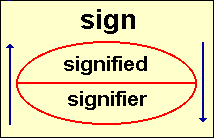
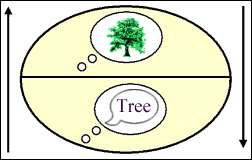
To get a feel for the semiotician’s theory of sign, let us first examine Saussure’s model: that of the signifier and the signified.
As Chandler explains:

A linguistic sign is not a link between a thing and a name, but between a concept and a sound pattern. The sound pattern is not actually a sound; for a sound is something physical. A sound pattern is the hearer’s psychological impression of a sound, as given to him by the evidence of his senses. This sound pattern may be called a ‘material’ element only in that it is the representation of our sensory impressions. The sound pattern may thus be distinguished from the other element associated with it in a linguistic sign. This other element is generally of a more abstract kind: the concept. (Saussure 1983, 66; Saussure 1974, 66) … Saussure’s original model of the sign ‘brackets the referent’: excluding reference to objects existing in the world. His signified is not to be identified directly with a referent but is a concept in the mind – not a thing but the notion of a thing.

It is almost embarrassingly easy to cast this directly to cognitive science. The signifier is the contents of perception bubbling up from transduced external signals. The signified is the concept bubbling up from long-term memory. Concepts may be fetched through a multitude of signals, and come in exemplar, prototype, and theory packages.

Can we explain why semioticians find it helpful to link signifier and signified? Yes! Within the human nervous system, there exist strong associative bonds between percept and concept: “sign” captures this natural kind.

To my knowledge, the cognitive science of semiotics has yet to find its wings: a vast, unexplored frontier. However, with this psychological reduction of “sign” in hand, we immediately find ourselves in a position to translate even the most arcane theorizing into an empirical framework. Two examples of such translations follow:

Quantifying the Peircean interpretant

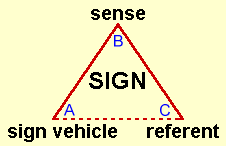
Let us first examine a conception of sign that rivals that of Saussure, one authored by American logician C.S. Peirce:
There exist two (approximate) parallelisms between the models of Peirce and Saussure:

  1. “sign vehicle” is loosely equivalent to “signifier”
  2. “sense” is loosely equivalent to “signified”

Only one leg of the triangle that is wholly novel. “Referent” refers to the category – the substance that concepts point towards.

Let me zoom in on a subtlety of this model: Peirce held that sense (in his language, the interpretant) is itself a sign:

However, the interpretant has a quality unlike that of the signified: it is itself a sign in the mind of the interpreter…. Umberto Eco uses the phrase ‘unlimited semiosis’ to refer to the way in which this could lead (as Peirce was well aware) to a series of successive interpretants (potentially) ad infinitum (ibid., 1.339, 2.303).

So, more triangles may nest within the top of the above triangle! What are we to make of this?

Well, Peirce’s claim is not without intuitive support: it explains conceptual recursion well. For example, I could teach myself that “t” signifies the word “tree”, which signifies the concept of tree (whose referent is a thing that lives in dirt).

While this assertion produces interesting implications, it is not yet particularly falsifiable.
Can we use our cognitive reduction to cast this idea into a prediction? Yes.
If “sense” is a sign, there must exist some mechanism within concept retrieval that would activate subsidiary perceptions.
This is the beginning of a question that a brain scanner could answer.

Quantifying Freudian condensation

I was surprised to learn that Freud has influenced the development of semiotics, with his notion of condensation:

Psychoanalytic theory also contributed to the revaluation of the signifier – in Freudian dream theory the sound of the signifier could be regarded as a better guide to its possible signified than any conventional ‘decoding’ might have suggested (Freud 1938, 319). For instance, Freud reported that the dream of a young woman engaged to be married featured flowers – including lilies-of-the-valley and violets. Popular symbolism suggested that the lilies were a symbol of chastity and the woman agreed that she associated them with purity. However, Freud was surprised to discover that she associated the word ‘violet’ phonetically with the English word ‘violate’, suggesting her fear of the violence of ‘defloration’ (another word alluding to flowers) (Freud 1938, 382-3). If this sounds familiar, this particular dream motif featured in the film Final Analysis (1992). As the psychoanalytical theorist Jacques Lacan emphasized (originally in 1957), the Freudian concepts of condensation and displacement illustrate the determination of the signified by the signifier in dreams (Lacan 1977, 159ff). In condensation, several thoughts are condensed into one symbol, whilst in displacement unconscious desire is displaced into an apparently trivial symbol (to avoid dream censorship).

Now, it is important to avoid writing off condensation merely because the story of the young woman does not impress. In his Interpretation of Dreams, Freud produces numerous examples of condensation. Perhaps you, the reader, can bring to mind one of your own dreams to motivate the theory. Have you ever had a dream where you recognized the body of someone, but their face was of somebody else? Have you ever had a dream where an object “felt normal”, but was in important sense blurred? These are the sorts of evidences Freud would point to, as products of condensation.

While this assertion produces interesting implications, it is not yet particularly falsifiable.
Can we use our cognitive reduction to cast this idea into a prediction? Yes.
Condensation theory would predict that the percept-concept binding apparatus can be rearranged during the dream state.
This is the beginning of a question that a brain scanner could answer.

Conclusion

If you were charged with crafting a research programme to understand dreams, how would you proceed? The task is enormous: our ignorance dwarfs our knowledge, our data outpaces our models.

On the other hand, as the sciences move from armchair theorizing towards quantitative models, we see entire traditions abandoned in their wake. Few scientists pay much attention to psychoanalysis, or semiotics, or postmodern theorizing. And this is a shame – how much creativity and insight are locked behind the door of qualitative musings!

While the title of this post is amusingly grandiose, I find something genuinely exciting about the above kind of theorizing. It seems to address both of these pain points.

Design Principles of Moral Systems

Part Of: Demystifying Ethics sequence
Content Summary: 1000 words, 10 min read

Introduction

This post was initially inspired by musing on the judicial system, how “behind the curve” it is, and how its modus operandi is finally starting to change. What follows is intended to describe something more general than a singular process, however.

I want to emphasize that the below is not a distillation of some intellectual authority. These instead represent my own musings before I engage the relevant literature. Let’s begin with a common vocabulary:

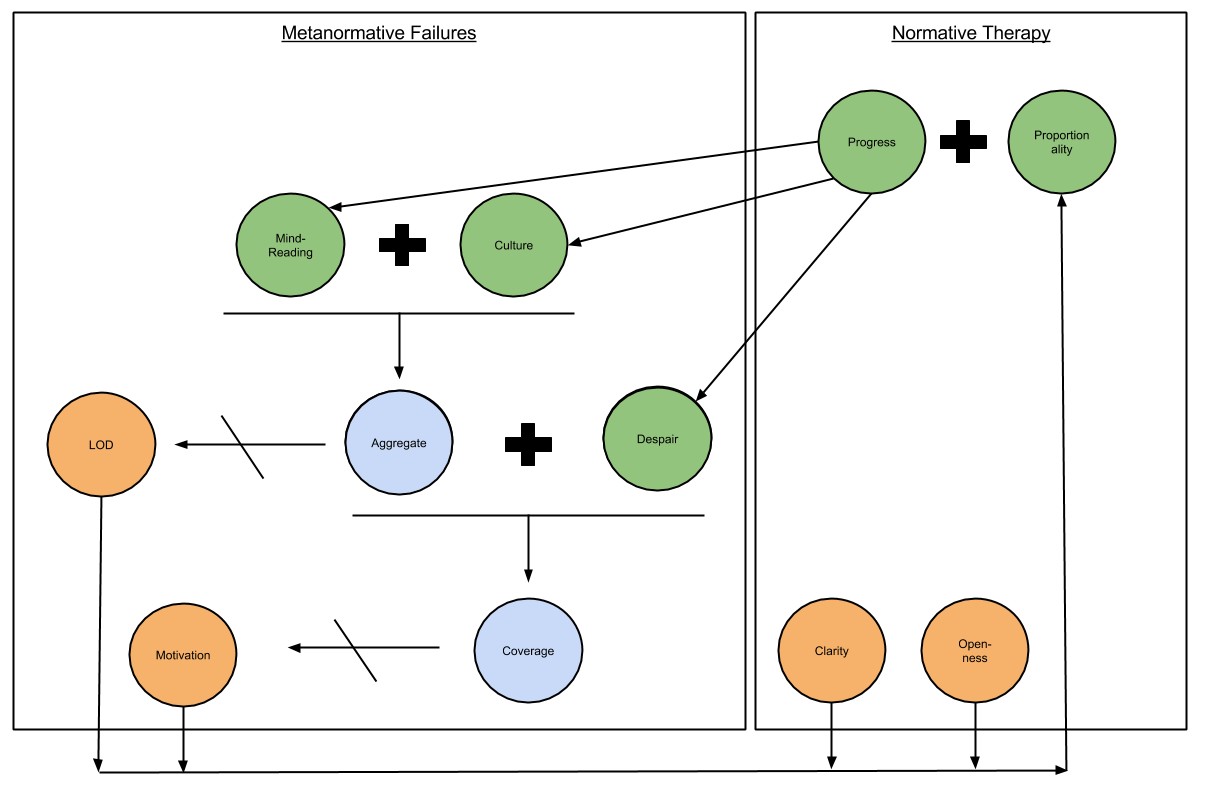
  • Let normative structures refer to an arbitrary collation of moral judgments (e.g., some moral matrix presented by a talking head).
  • Let metanormatives refer to how normative structures should be constructed.

Why Present-Day Normative Structures Fail

In this section, I advance an argumentative frame, on top of which more detailed arguments may find a home.

Metanormative Desiderata:

  • Level-Of-Detail (LOD): normative structures should ultimately be optimized at the person level.
  • Motivation: normative structures should point towards their ends in motivationally-optimal ways.

Empirical Premises:

  • Mindreading: It is difficult to model, or predict, the psychological capacities of oneself or others.
  • Culture: It is difficult to reliably facilitate the high-volume and/or high-complexity cultural transmission of normative signals.
  • Despair: It is not motivationally-optimal to be held to a normative structure beyond one’s capacities.

Causal Results:

  • Aggregation: Mindreading and Culture have caused normative structures to be expressed at the aggregate level.
  • Coverage: Aggregation and Despair have caused limited access to motivational-optimality for some population subsets.

Conclusion:

  • Aggregation violates LOD.
  • Coverage violates Motivation.

Thus, both of our metanormative desiderata do not obtain:

Metanormative Dissatisfaction

In the name of being understood, let me spend a few words further motivating my conclusions:

To say that “Aggregation violates LOD” is to say that human diversity precludes any one normative structure. Perhaps you can be excused from such generalizations as “all humans should strive to be selfless”. However, LOD calls for tailored normative matrices at the personal level. I want to know what I, Kevin, should do in any arbitrary situation S.

I will also clarify what it means to say “Coverage violates Motivation”. Let me zoom in on one “population subset”: the sociopath. Such an individual is biologically incapable of meeting aggregate-level normative impositions such as “everyone should care about the well-being of those around them”. The argument here, is that normative impositions should be explicitly tailored to the individual situation; for people like sociopaths, this would be something like, “sociopath X should put herself in situations where her non-empathic behavior can be held accountable”.

What Can Be Done?

Will these two metanormative failures persist into the future?

An intimidating question. Let me introduce new empirical arguments to help us get a handle on it.

Empirical Premises:

  • Progress: Scientific formalisms and technological advances will ultimately provide humanity with the ability to meaningfully alter “Mindreading”, “Culture”, and “Despair”.
  • Proportionality: metanormative principles, and not only those suggested here, will be realized in proportion to the product of their political support and the empirical resources available in their historocultural milieu.

I would be surprised if human limitations captured by Mindreading and Culture were not ameliorated in the coming decades. Such strides in our abilities will almost certainly cause changes in how our normative structures evolve. Despair is also grounded in our capacity to be motivated, a system that also affords change. All of these deserve to be modeled and understood.

Finally, let me put forward two additional metanormative principles, which may prove worthwhile to entertain.

Metanormative Principles:

  • Clarity: enthymematic premises within normative structures are best made explicit.
  • Openness: normative structures should move towards becoming more quantitatively modifiable to empirical findings, theoretical advances, and metanormative information.

I would defend Clarity in part because I view human normative structures (morality) as stemming from largely unconscious dispositions (c.f., Moral Foundations Theory). That is, the tendency of the human animal is to work with pre-installed normative structures without examining their contents. By rendering enthymemetic premises in language, one makes a larger percentage of the normative structure amenable to conscious rumination. It feels hard to argue against the utility of such an enterprise.

I would defend Openness by criticizing its converse. How can one go about arguing that our normatives need not be modified? If one claims that our answers are complete enough to be made rigid, surely a good counterargument could be made via inductive appeal to history. I find the claim that our answers are more motivating when they are inflexible, to be much more interesting. Perhaps I concede that this could be true in times of normative stasis, but that (a) one could “hide” such modifiability, and that (b) the absence of modifiability during normative upheaval leaves too wide a swath of the human population unable to truly participate in setting down a new direction.

With these defenses in place, I can here set down my twofold contention:

  • Given Proportionality and the popularity of LOD and Motivation, the existence of Progress will cause our normative structures to be refactored towards ones that don’t “fail” as readily.
  • Given Proportionality and my defenses of the new metanormative principles, if Clarity and Openness became more popular, perhaps our society would further improve (by some underdefined metric).

Normative Therapy

Conclusion

Let me conclude by presenting three criticisms of the above model.

  1. It is a naked argumentative frame, requiring more detailed argumentation before it can be considered complete.
  2. It is severely empirically impoverished; I need, at the bare minimum, to model how normatives are cognitively generated.
  3. I do not possess a theory on whether to build the following theoretical manifold higher than metanormatives (how to answer the question “how should metanormatives be constructed?”). If such a thing deserves to be built, I do not know if it be accomplished unburdened by trivial-recursion.

Fin.

Helen Keller

Last week, I attended a theater performance of Helen Keller.

The main theme of this Helen Keller performance was that words refer.  Her teacher, Anne Sullivan, spent hours and hours trying to associate words with objects.  She would have Helen hold an object, and spell their name into her hand in American Sign Language (ASL).  In her later autobiography, Helen reports having a “breakthrough moment”: sitting by a water fountain, she finally groks that the sign for water means the thing touching her hand.  She then proceeds to run around, learning the same words but “with newfound understanding”.

A few professors hosted a session afterwards to discuss the play with interested members of the audience.  The narrative presented by the actors and the professors, to explain Helen’s moment of insight was (predictably) crude.  Helen “discovered semantics” and “her intellect finally overcame her disability”.

Can cognitive science do better?  Of course.

Can I do better?  A little.  What follows is not as crisp and well-defined as I would like… but I would prefer it not exclusively live in my head.

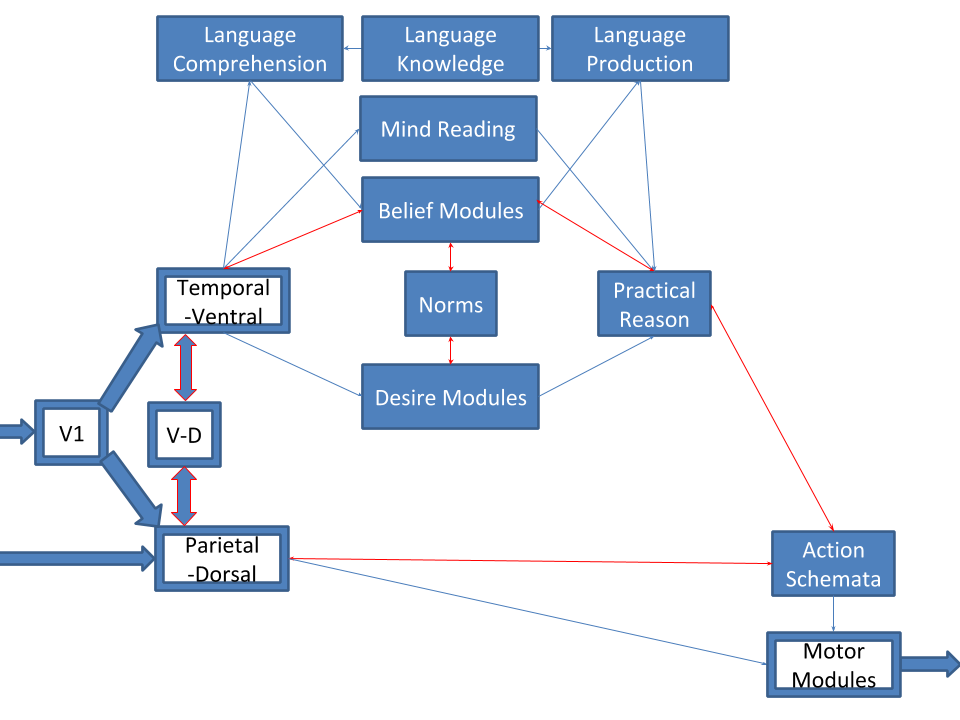
Let me first appeal to cognitive architecture as a whole.  I’ll leverage a model developed by Carruthers, because I am fond of its generality.

Mental Architecture (1)

I’ll have to leave an exploration of this schematic for another time.  The model is obviously incomplete, but sufficient for our purposes. The four hollow boxes on the left represent the sense of vision (more specifically, they capture the two streams of vision).

As Carruthers is careful to explain, the vision modules aren’t claimed to be the only input to the human mind.  Other sense modalities reside parallel to it, also serving as inputs to belief modules and desire modules.  Regrettably, Carruthers does a poor job at exploring how these different data vectors diverge, and how they interact.

Let me recapitulate what senses are.  How human beings sense is so much more than sight, sound, smell, touch & taste.  The Five Senses idiom stems from Aristotle and is as wrong as his physics.  An updated list:

  • Ophthalmoception (sight)
  • Audioception (hearing)
  • Olfacception (smell)
  • Gustaoception (taste)
  • Tactioception (touch)
  • Thermoception (temperature)
  • Proprioception (kinesthetic)
  • Nociception (pain)
  • Equilibrioception (balance)
  • Interoception (a word-bucket for various forms of internal chemical processes)

(It is currently fashionable to leverage -ception words to denote the physiological transduction aspect of sensation, and leave words like “pain” and “smell” to denote the subjective experiences stemming out of such processes.)

Humans engage with the external world with at least the above senses, all of which seem to have their own, distinct, type of sense organ (analogues of rods/cones in the eye).  Pain and touch are delivered by different cell types, etc.  Finally, it is not particularly controversial to claim that some senses provide more information than others.  In the course of human evolution, sight came to further displace smell, with respect to information bearing capacity.

At an early age, Helen lost both her sight and hearing – our two most familiar vehicles of language.  Her teacher attempted to install language via touch.  The mere process of enumerating the above list only now has inspired me to wonder how effectively language can be imprinted on still-other mediums.  There are no information-theoretic reasons why language cannot become embedded within pin pricks, within temperature, within smell… why then, is it rarely seen “in the wild”?

Even today, the process by which humans acquire language smells a little magical.  The solution has, as yet, eluded our finest minds.  We know this competency is most strongly expressed in early childhood; and that its awesome powers fade, but do not disintegrate, around the five year mark.  This is why learning a language as an adult “feels especially difficult”.  Anyways, the fact that Helen apparently language for the first time, at seven years old, is noteworthy.

I found myself referring to one of Fodor’s works quite a bit, throughout my experience watching the play (even though I haven’t read the book … haha).  I would characterize Fodor’s thesis as: subvocalization is not the loci of mental activity; rather, the mind reasons through its own language.  Let’s call this private language Mentalese.  This competency precedes language, is basal to our species – it is the stuff that enables the mind to refer.  On this model, even deafblind people like Helen have a concept of, say, her mother.  Her mother appears at certain times, feels a certain way; she expresses a range of behavior quite distinct from that of her father.  It is false to claim that Helen cannot form a thought. Although it is difficult for us to conceive of conscious rumination without linguistic subvocalization, that simply does not impair the functioning of working memory entirely.

It seems, then, that Helen can already refer to WATER in Mentalese.  What is the significance, then, of linking this representation to ASL?  I can think of two plausible benefits.

One is that languages (like English, or ASL) is theorized to imbue Mentalese with improved flexibility.  Language comprehension, and language production, modules may afford the subject with expanded powers of simulation and creativity.  This is where my lack of research into weak versions of linguistic relativity comes to bite me…

Another plausible benefit, is that marrying ASL to Mentalese allows other people to streamline the chain of communication.  Instead of translating Mentalese concepts to motor modules to complex behavior, they can instead encode those same concepts into ASL in a more compressed format.  Thus, instead of inferring behavior-triggered displeasure from repeatedly being constrained, Helen can more quickly infer her social milieu via an ASL encoding of “don’t hit people”.  This is where my lack of research into Theory of Mind (ToM), especially its maturation phases during childhood, comes to bite me…

The thrust of the above musings is that Helen’s “breakthrough” was themed her language modules and ToM modules contributing to her mental life in new ways.  This is much less naive than an appeal to “semantics” or to “intelligence outsmarting disability”.   However, the fact that I cannot even construct an compelling alternative theory, to contrast with the above Fodorian vision, speaks to the amateurish nature of these musings.

In addition to language, another theme explored in the play was Helen’s tantrums.  Specifically, her family had a permissive attitude towards this behavior (excusing it due to her condition); whereas her teacher was more willing to enforce social rules (with positive results in the long term).  I don’t yet understand the reasons behind tantrums, and I don’t understand why perpetually giving in seems to yield, on average, less happy children.

My instinct is that tantrums are an evolutionarily old mechanism by which one attempts to improve ones social status.  Perhaps, in children, discovering that you are not at the top of the dominance hierarchy, more effectively inculcates a desire to learn the social nuances of ones environment.  Perhaps the existence of boundaries simply provides more social information (in algorithmic complexity theory, a string of 1s has less information-content than a more balanced distribution).  But these are just musings that have not yet matured into theories…

In conclusion, I am not yet capable of producing a conclusion.  🙂  Fin.

Stanovitch: The Robot’s Rebellion: Dysrationalia

Consider Jack.  As a child, Jack did well on an aptitude test and early in his schooling got placed in a class for the gifted.  he did well on the SAT test and was accepted at Princeton.  He did well on the LSAT test and went to Harvard Law school.  He did well in his first and second year courses there and won a position on the Law Review.  He passed the New York Bar Exam with flying colors.  He is now an influential attorney, head of a legal division of Merrill-Lynch on Wall Street.  He has power and influence in the corporate world and in his community.  Only one thing is awry in this story of success: Jack thinks the Holocaust never happened and he hates Jewish people.

Jack thinks that a Jewish conspiracy controls television and other media.  Because of this, he forbids his children to watch “Jewish shows” on TV.  Jack has other habits that are somewhat “weird.”  He doesn’t patronize businesses owned by Jewish people.  There are dozens of business establishments in his community, but Jack always remembers which ones are owned by Jewish people (his long-term storage and retrieval mechanisms are quite good).  When determining the end-of-year bonuses to give his staff, Jack shaves off a little from the Jewish members of the firm.  He never does it in a way that might be easily detectable, though (his quantitative skills are considerable).  In fact, Jack wishes he had no Jewish staff members at all and attempts not to hire them when they apply for positions.  He is very good at arguing (his verbal skills are impressive) against a candidate in a way that makes it seem like he has a principled objection to the candidates qualifications (his powers of rationalization are immense).  Thus, he manages to prevent the firm from hiring any new Jewish members without, at the same time, impeaching his own judgment.  jack withholds charitable contributions from all organizations with ‘Jewish connections” and he makes sizable contributions from his large salary to political groups dedicated to advancing ethnocentric conspiracy theories.

The point is that Jack has a severe problem with belief formation and evidence evaluation – but none of the selection mechanisms that Jack had passed through in his lifetime were designed to indicate his extreme tendencies toward belief perseveration and biased evidence assimilation. They would indeed have been sensitive – indeed, would have quickly raised alarm bells – if Jack’s short-term memory capacity were 5.5 instead of 7. But they were deadly silent about the fact that jack thinks Hitler wasn’t such a bad chap.

In fact, Jack has a severe cognitive problem in the area of epistemic rationality – he is severely dysrationalic in the epistemic domain. yet he has a leading role in the corporate structure that is a dominant force in American society. Does it make sense that our selection mechanisms are designed to let Jack slip through – given that he has a severe problem in epistemic regulation (and perhaps in cognitive regulation as well) – and to screen out someone with normal epistemic mechanisms but with a short-term memory capacity 0.5 items less than Jack’s?

Although Jack’s problem in belief formation may seem to be “domain specific”, it is clear from this brief description that such unjustified beliefs can affect action in many areas of modern life. In a complex society, irrational thinking about economics, or about the nature of individual differences among people of different races or genders can – when it occurs in people of social influence – have deleterious influences that are extremely widespread. Besides, some domains are more important than others. When the domains involved become too large and/or important that it seems ill-advised to assuage concern about irrational thinking by arguing that it is domain specific. To say “Oh well, it only affects his/her thinking about other races and cultures” seems somewhat Panglossian in the context of modern technological and multicultural societies. Domain specificity is only a mitigating factor in the case of irrational thought when it can be demonstrated that the domain is truly narrow and that our technological society does not magnify the mistake by propagating it through powerful information and economic networks.

Finally, it is equally possible that Jack’s thinking problems are really not so domain specific. It is possible that careful testing would have revealed that Jack is sub-par in a variety of tasks of human judgment: He might well have displayed greater than average hindsight bias, extreme overconfidence in his probability assessments, belief perseverance, and confirmation bias. Of course, none of this would have been known to the law school admissions committee considering Jack’s application. They, as had many others in Jack’s life, conferred further social advantages on him by their decisions, and they did so without knowing that he was dysrationalic.

Obviously, I have concocted this example in order to sensitize the read to the social implications of mismatches between cognitive capacities and rationality. However, as a dysrationalic, Jack is unusual only in that society bears most of the cost of the disability. Mos dysrationalics probably bring most of the harm onto themselves. In contrast, Jack is damaging society in myriad ways, despite the face that his cognitive capacities may be allowing him to “efficiently” run a legal department in a major corporation. Ironically, then, Jack is damaging the very society that conferred numerous social advantages on him because of his intelligence. The maintenance worker who cleans Jack’s office probably has cognitive capacities inferior to Jack’s and has been penalized (or denied rewards) accordingly. However the fact that the maintenance worker does not share Jack’s irrational cognition has conferred no advantage on the maintenance worker – just as the presence of dysrationalia has conferred no disadvantage on Jack. Perhaps if we assessed rationality as explicitly throughout educational life as we do cognitive capacity, it would.
(Stanovitch, Robot’s Rebellion, page 167-169)

[Excerpt] The Robot’s Rebellion

Original Author: Keith Stanovitch, Robot’s Rebellion
See Also: [Excerpt] Replicators and their Vehicles
Content Summary: 1400 words, 7 min read.

Setting The Stage

Imagine it is the year 2024 and that there exist cryogenic chambers that could cool our bodies down and preserve them until sometime in the future when medical science might enable us to live forever. Suppose you wanted to preserve yourself in a cryogenic chamber until the year 2404, when you could emerge and see the fascinating world of that time and perhaps be medically treated so that you could then live forever. How would you go about “preserving a safe passage into the future” – that is, assuring that your cryogenic chamber will not get destroyed before that time? Remember you will not be around on a day-to-day basis.

One strategy would be to find an ideal location for your cryogenic capsule and supply it with protection from the elements and whatever other things (perhaps sunlight for energy, etc) that it would need for the ensuing four hundred years. The danger in this strategy is that you might pick the wrong place. Future people might decide that the place you were in would be better used as the world’s millionth shopping mall and use the (then current) laws to trump your (old) property rights with their new ones (in the same way that we currently build shopping malls on the ancient burial grounds of American Indians). So this strategy of staying put – what might be termed the “plant” strategy – has some flaws.

An alternative, but much more expensive, strategy is the “animal” strategy. You could build a giant robot – complete with sensors, brain, and capability of movement – and put your cryogenic capsule inside it. The robot’s superordinate goal is to keep you out of danger – to move itself (and hence you) when its location does not seem propitious. It of course has many other tasks it must accomplish in order to survive. It must secure a power source, it must not overheat itself, etc.

Your robot would of course need considerable intelligence to be able to react to the behavior of humans and other animals in its environment. It of course would move out of the way of proposed shopping malls, and it would avoid herds of elephants that might turn it over simply out of curiosity. However, note that your robot’s task would be immensely complicated by the ramifications of the existence of other robots like itself wandering the landscape in search of energy and safety. Conjure in your imagination hundreds of robot companies cold-calling prospective customers with supposedly “cheaper deals” on a robot that has “many more features” than the first ones that had been built around 2024. The market (and landscape) might become flooded with them. Governments might begin to regulate them and sequester them in certain desert areas. Some states of the United States might try to encourage their cryogenic capsule robot industries by becoming unregulated states – letting robots roam freely throughout the state (just as now certain desperate municipalities encourage the waste management industry to come to them so as to “create jobs”).

Your robot’s task would become immensely more complex with other robots present, because some of the other robots might be programmed with survival strategies that encouraged them to interact with your robot. Some of the fly-by-night companies selling robots might have cut their costs by building robots deliberately under-powered but with a strategy that told them to disable other robots in order to use their power sources.

Of course it is obvious that you would want your robot to flee from all attempts to sabotage it and its goals. That much is obvious. But not all of the interactions with other robots will be so simple. In fact, the main point here is that your robot would be faced with decisions hundreds of years later that you could not possibly have imagined in 2024. Consider the following two situations:

Situation A: The Battered Robot

It is 2304, still almost one hundred years from the day in the future when you will be unfrozen. Your robot is battered and its circuits are unreliable. It probably will survive only until 2350, when it will collapse, leaving your cryogenic capsule still with its own power source but vulnerable to the elements and history in the same way that the “plant” strategy is. But since 2024 the cryogenic preservation industry has advanced considerably. There now exist supertanker-sized robots that carry hundreds of cryogenic capsules. In fact, some of these companies have found market niches whereby they recruit new clients by offering the old-style singleton robots the following deal: The supertanker companies offer to take the cryogenic capsule from the singleton robots and store it for one hundred fifty years (plenty of time in your case). In exchange, the robot agrees to let the company dismantle it and reuse the parts (which, as the actuaries of the future have calculated to the millionth of a penny in a dystopia of efficiency, are worth more than it costs to store an additional capsule in the supertanker).

Now what decision do you want your robot to make? The answer here is clear. You want your robot to sacrifice itself so that your capsule can exist until 2404. It is in your interests that the robot destroy itself so that you can live. From the standpoint of its creator, the robot is just a vehicle. You are in a position analogous to your genes. You have made a vehicle to ensure your survival and your interests are served when, given the choice, your vehicle destroys itself in order to preserve you.

But if the capsule occupant stands for the genes in this example, then what does the robot represent? The robot, obviously, is us – humans. Our allegiance in the thought experiment immediately changes. When the robot is offered the deal, we now want to shout: “Don’t do it!”

Let’s look at one more example to further illustrate the paradoxes of long-leash control.

Situation B: The Social Robot

Your robot enters into an agreement with another singleton robot. When one robot is low on energy the other is allowed to plug in and extract enough energy to get itself over a particularly vulnerable energy-hump. Your robot often takes advantage of the deal and thus enhances its own chances of survival. However, unbeknownst to your robot, its partner, when tapping in, siphons off not just energy from your robot but also from the power supply of the cryogenic capsule, thus imagine it and making you successful unfreezing in 2404 less likely. Paradoxically, by entering into this deal, your robot has enhanced its own survival probability but has impaired yours. The possibility of the robot serving its own interests but not yours is opened up once the robot’s psychology becomes complex.

Implications

More generally, a self-conscious robot might think twice about its role as your slave. It might come to value its own interests – its own survival – more highly than the goals that you gave it three hundred years ago. In fact, it doesn’t even know you – you are inert. And now that the robot exists as an autonomous entity, why shouldn’t it dump you in the desert and go about its own business? And as for allowing itself to be dismantled so that you can get aboard the supertanker in order to make it to 2404 – forget about it! Which, when you think about it, is just what we should be telling our programmers – those freeloaders who got where they are, by in the past sometimes trying to immortality at our expense: our genes.

As modern human beings, we find that many of our motivations have become detached from their ancestral environment context, so that now fulfilling our goals no longer serves genetic interests. Ironically, what from an evolutionary design point of view could be considered design defects actually make possible the robot’s rebellion – the full valuing of people by making their goals, rather than the genes’ goals, preeminent. That is, inefficient design (from an evolutionary point of view) in effect creates the possibility of a divergence between organism-level goals and gene-level goals.

Application: Phonological Loop

Today I started reading Alan Baddeley’s Working Memory, Thought and Action

working_memory_book

One of my reasons was to understand myself: I have long entertained the idea that there was something slightly abnormal about my memory.  This afternoon, I may have stumbled on an explanation of my difficulties. I wanted to share my idea because it nicely illustrates how theoretical concepts can enrich and improve people’s lives.

Context

When I was in high school, I got the standard pitch about long-term memory and short-term memory. It turns out that, here, curriculum lags research by several decades. Short-term memory as a conceptual entity was dismissed during the 1980s. Working memory was its replacement.

working_memory

In his book, Baddeley describes the two primary functional components of his model: the phonological loop, and the visuo-spatial scratchpad. The former is activated when you rehearse information, often subvocally (“that person at the wedding was named Audrey.. Audrey.. Audrey”).  This loop helps to reinforce memory traces, and has been shown to operate near the language centers of the brain (left hemisphere).  The scratchpad, by contrast, is associated with spatial reasoning (“if I take three lefts and then a right I’ll escape this corn maze”).  Neuroimaging has localized this mechanism to the right hemisphere of the brain.

Symptoms

  1. I read textbooks out loud to myself. Literature like Baddeley’s is often dense and requires careful attention. When I am not distracting anyone, I revert to this recitation exercise, and it helps me concentrate.
  2. I have always been a visually oriented creature. A detailed schematic holds more weight in my mind than a chapter’s worth of text.
  3. As I was being introduced to the notion of the phonological loop, I decided to try it for myself. During his experiments, Baddeley often directs his subjects to recite five or six letters or numbers to establish the loop. I began to subvocalize the first seven letters of the alphabet to myself, silently reciting ‘a’ through ‘g to myself over and over. But the singsong quality of this exercise did not persist, and before long I noticed that I was imagining typing those letters with my left hand.

Diagnosis

My phonological loop is weak.

In symptom 3 above, the acoustic qualities of my recitation weakened over time. Not content to watch the cycle deteriorate, my visuo-spatial sketchpad swung online with its image of a keyboard, significantly easing the task burden. Symptom 2 can be interpreted as a long-standing preference for the sketchpad. And what is Symptom 1 other than my mind being forced to augment the phonological loop with real, sometimes loud, verbal stimuli?

Concluding Thoughts

The point of the above is not medical, my symptoms are well within the range of a functional human being. Neither is this intended to be original research: I am just beginning to engage the professional literature.

All I am hoping to illustrate is how cognitive science can enrich how we understand our inner lives. With the theoretical tools outlined in the Context section above, I moved from a “that’s funny” stance towards something a little more informed. Perhaps I am on the right track, and should learn to accommodate my suite of genetic (dis-) endowments. Or, perhaps there is some proven technique to restore phonological loops and improve one’s GPA. 🙂 One can always dream.

Hume: Dialogues Concerning Natural Religion Quotes

On Academic Consensus And Faith:
The vulgar, indeed, we may remark, who are unacquainted with science and profound inquiry, observing the endless disputes of the learned, have commonly a thorough contempt for philosophy; and rivet themselves the faster, by that means, in the great points of theology which have been taught them.  
(Dialogues Concerning Natural Religion, Part 1, page 4).

On The Universality Of Philosophy:
He considers, besides, that everyone, even in common life, is constrained to have more or less of this philosophy; that from our earliest infancy we make continual advances in forming more general principles of conduct and reasoning; that the larger experience we acquire, and the stronger reason we are endued with, we always render our principles the more general and comprehensive; and that what we call philosophy is nothing but a more regular and methodical operation of the same kind.  To philosophize on such subjects is nothing essentially different from reasoning on common life, and we may only expect greater stability, if not greater truth, from our philosophy on account of its exacter and more scrupulous method of proceedings.  
(Dialogues Concerning Natural Religion, Part I, page 7).

On Atheists:
Philo: Don’t you remember, said Philo, the excellent saying of Lord Bacon on this head?
Cleanthes: That a little philosophy, replied Cleanthes, makes a man an atheist; a great deal converts him to religion.  
Philo: That is a very judicious remark, too, said Philo.  But what I have in my eye is another passage, where, having mentioned David’s fool, who said in his heart there is no God, this great philosopher observes that the atheists nowadays have a double share of folly.  For they are not contented to say in their hearts that there is no God, but they also utter that impiety with their lips, and are thereby guilty of multiplied indiscretion and imprudence.  Such people, though they were ever so much in earnest, cannot, methinks, be very formidable. 
(Dialogues Concerning Natural Religion, Part I, page 11).

On Underdetermination And Its Relation To Experience:
Again, after he opens his eyes and contemplates the world as it really is, it would be impossible for him at first to assign the cause of any one event, much less of the whole of things…. He might set his fancy a rambling, and she might bring him an infinite variety of reports and representations.  These would all be possible; but, being equally possible, he would never of himself give a satisfactory account for his preferring one of them to the rest.  Experience alone can point out to him the true cause of any phenomenon.  
(Dialogues Concerning Natural Religion, Part II, page 17).

On The Poor Theology Of The God Of The Design Argument:
I was from the beginning scandalized, I must own, with this resemblance which is asserted between the Deity and human creatures, and must conceive it to imply such a degradation of the Supreme Being as no sound theist could. 
(Dialogues Concerning Natural Religion, Part II, page 18).
[Note: This argument overlaps Ken Miller’s chapter on the “God Mechanic” in his Finding Darwin’s God.]

On Infinite Explanatory Regress:
How, therefore, shall we satisfy ourselves concerning the cause of that Being whom you suppose the Author of Nature?  Have we not reason to trace that ideal world into another ideal world or new intelligent principle?  But if we stop and go no farther, why go so far? Why not stop at the material world?  How can we satisfy ourselves without going on ad infinitum?  And, after all, what satisfaction is there in that infinite progression?  Let us remember the story of “turtles all the way down”.  It was never more applicable than to the present subject.  If the material world rests upon a similar ideal world, this ideal world must rest upon some other, and so on without end.  It is better, therefore, never to look beyond the present material world.  By supposing it to contain the principle of its order within itself, we really assert it to be God; and the sooner we arrive at that Divine Being, so much the better.  When you go one step beyond the mundane system, you only excite an inquisitive humor which it is impossible ever to satisfy. 
(Dialogues Concerning Natural Religion, Part IV, Page 31).

On The Advantage Of Skepticism:
All religious systems, it is confessed, are subject to great and insuperable difficulties.  Each disputant triumphs in his turn, while he carries on an offensive war, and exposes the absurdities, barbarities, and pernicious tenets of his antagonist.  But all of them, on the whole, prepare a complete triumph for the skeptic, who tells them that no system ought ever to be embraced with regard to such subjects, for this plain reason: that no absurdity ought ever to be assented to with regard to any subject.  A total suspense of judgment is here our only reasonable resource.  And if every attack and no defense among theologians is successful, as is commonly observed, how complete must be his victory who remains always, with all mankind, on the offensive, and has himself no fixed station or abiding city which he is ever, on any occasion, obliged to defend?
(Dialogues Concerning Natural Religion, Part VIII, Page 53).

On Theism And The Flaws Of Nature:
[Were I to] show you a house where there was not one apartment agreeable; where the windows, doors, fires, passages, stairs, and the whole economy of the building were the source of noise, confusion, fatigue, darkness, and the extremes of heat and cold, you would certainly blame the contrivance, without any further examination. The architect would in vain display his subtlety, and prove to you that, if this door or that window were altered, greater ills would ensue.  What he says may strictly be true: the alteration of one particular, while the other parts of the building remain, may only augment the inconveniences.   But still you would assert in general that, if the architect had had skill and good intentions, he might have formed such a plan of the whole, and might have adjusted the parts in such a manner as would have remedied all of most of these inconveniences.  His ignorance, or even your own ignorance of such a plan, will never convince you of the impossibility of it.  If you find any inconveniences and deformities in the building, you will always, without entering into any detail, condemn the architect.  
In short, I repeat the question: is the world, considered in general and as it appears to us in this life, difference from what a man or such a limited being would, beforehand, expect from a very powerful, wise, and benevolent Deity?  It must be strange prejudice to assert the contrary.  And from thence I conclude that, however consistent the world may be, allowing certain suppositions and conjectures with the idea of such a Deity, it can never afford us an inference concerning his existence. 
(Dialogues Concerning Natural Religion, Part XI, Page 68-69).

On The Appeal Of Indifference Arguments:
There may four hypotheses be framed concerning the first cause of the universe: that they are endowed with perfect goodness; that they have perfect madness; that they are opposite and have both goodness and malice; that they have neither goodness nor malice.  Mixed phenomena can never prove the two former unmixed principles; and the uniformity and steadiness of general laws seem to oppose the third.  The fourth, therefore, seems by far the most probable.
(Dialogues Concerning Natural Religion, Part XI, Page 75).

On Theism’s Relationship With Fear:
It is true, both fear and hope enter into religion because both these passions, at different times, agitate the human mind, and each of them forms a species of divinity suitable to itself.  But when a man is in a cheerful disposition, he is fit for business, or company, or entertainment of any kind; then he naturally applies himself and thinks not of religion.  When melancholy and dejected, he has nothing to do but brood upon the terrors of the invisible world, and to plunge himself still deeper in affliction.  It may indeed happen that, after he has, in this manner, engraved the religious opinions deep into his thought and imagination, there may arrive a change of health or circumstances which may restore his good humor and, raising cheerful prospects of futurity, make him run into the other extreme of joy and triumph.  But still it must be acknowledged that, as terror is the primary principle of religion, it is the passion that always predominates in it, and admits but of short intervals of pleasure.
(Dialogues Concerning Natural Religion, Part XII, Page 87).

Darwin: Origin Of Species Quotes

On Lack of Intermediate Forms:
But during the process of modification, represented in the diagram, another of our principles, namely that of extinction, will have played an important part.  As in each fully stocked country natural selection necessarily acts by the selected form having some advantage in the struggle for life over other forms, there will be a constant tendency in the improved descendants of any one species to supplant and exterminate in each stage of descent their predecessors and their original parent.  For it should be remembered that the competition will generally be most severe between those forms which are most nearly related to each other in habits, constitution, and structure.  Hence all the intermediate forms between the earlier and later stages, as well as the original parent-species itself, will generally tend to become extinct.  
(On The Origin Of Species, pg 103)

On The Arbitrary Ontological Commitments Of Species-Level Creation: 
He who believes in the creation of each species, will have to say that this shell, for instance, was created with bright colors for a warm sea; but that this other shell became bright-colored by variation when it ranged into warmer, shallower waters.  
(On The Origin Of Species, pg 113)

On The Failure Of Explanation Of Species-Level Creation:
It is difficult to imagine conditions of life more similar than deep limestone caverns under a nearly similar climate; so that on the common view of the blind animals having been separately created for the American and European cavers, close similarity in their organization and affinities might have been expected; but, as Schiodte and others have remarked, this is not the case, and the cave-insects of the two continents are not more closely allied than might have been anticipated from the general resemblance of the other inhabitants of North America and Europe. 
(On The Origin Of Species, pg 117)

When we see any part or organ developed in a remarkable degree or manner in any species, the fair presumption is that it is of high importance to that species; nevertheless the part in this case is eminently liable to variation.  Why should this be so?  On the view that each species has been independently created, I can see no explanation.  But on the view that groups of species have descended from other species, and have been modified through natural selection, I think we can obtain some light…. When a part has been developed in an extraordinary manner in any one species, compared with the other species of the same genus, we may conclude that this part has undergone an extraordinary amount of modification….  An extraordinary amount of modification implies an unusually large and long-continued amount of variability, which has been continually been accumulated by natural selection for the benefit of the species.  But as the variability of the extraordinarily-developed part or organ has been so great and long-continued within a period not excessively remote, we might, as a general rule, expect still to find more variability in such parts than in other parts of the organization.  
(On The Origin Of Species, pg 128,129)

On The Imperfections Of Nature:
As Professor Owen remarked, there is no greater anomaly in nature than a bird that cannot fly; yet there are several in this state. 
(On The Origin Of Species, pg 114)

On The Rarity Of Specie Persistence:
…species very rarely endure for more than one geological period.  
(On The Origin Of Species, pg 129)

Sapolsky: The Trouble With Testosterone Summary

A series of brief essays on various behavior-biology topics.  Easily digestible material with some useful recommended readings appended in the conclusion.  List of essays:

How Big Is Yours?

Concerns the relationship between biological determinism and personal autonomy.  Speculates about the effects of growing scientific literacy and issues of how society will change when everyone carries a dozen or so biological labels/diseases.  Title originates from disputed study claiming that a particular brain region’s size can predict sexual orientation.

Primate Peekaboo

A brief essay on the similarities between primate (baboon and human) voyeurism.

The Night You Ruined Your Pajamas

Discusses the timing of puberty.  Draws the distinction between stable species that invest in quality offspring (e.g., humans), versus opportunistic species that invest in quantity of offspring (e.g., flies).  Attempts to make sense of the conflicting data relating familial instability with earlier periods and less guarded reproductive behavior.  Ends by summarizing the cloudiness of the subject matter, and the need to acknowledge the (probably relatively-insignificant) nature of perceived effects.

Measures of Life

Explores the interrelationship between built-in human biases and the death penalty.  Explores how humans are prone to de-personalize percentages, but personalize frequencies and whole-number analyses (“the human face”).

The Young and the Reckless

Discusses the effects and mystery of the drive found within adolescent primates to forage into the unknown, and explores how this maps to the cosmopolitan-specie flavor of, and intellectual  fertility period of, humanity.

The Solace of Patterns

People progress through life through remarkably predictable patterns; for example, grief follows a Denial, Anger, Bargaining, Depression, Acceptance (DABDA) pattern.  Perhaps these patterns can be modeled by investigations of biologic cellular-automata concepts.  Perhaps these patterns can mystically resolve our dislike of the chaos of existence.

Beelzebub’s SAT Scores

Musings on the troubled relationship between the Unabomber and geek culture.

Poverty’s Remains

People irrationally are repulsed by autopsies.  Historically, the poor dominate the autopsy-supply.  Since poverty is associated with chronic stress, the nonrandom sample made medical students declare unhealthy thyroid levels as “normal”.  When Sudden Infant Death Syndrome (SIDS) was being investigated, this norm translated to healthy thyroids being implicated in respiratory failure.  The key moral is that obvious problems such as sample distribution can lead to tens of thousands of deaths via thyroid irradiation.  Caution is always an appropriate prerequisite of medical intervention.

Junk Food Monkeys

Insight sought into the effects of junk-food consumption via explorations of garbage-dump-diet baboon troops.  Unsurprisingly, junk food trades increased caloric density for poor vascular effects and risks to health.

The Burden of Being Burden-Free

Psychological profiles affect disease response via psycho-immune stress responses.  Typically test cases found in hostile people, people with too much personal autonomy (“John Henry-ism”) and repressed personalities.  Repressive profiles, in particular, are interesting insofar as it is difficult to self-diagnose.  One of the few good methods is looking for unambiguous emotive responses.

The Trouble with Testosterone

Testosterone correlates to aggression.  It turns out, unexpectedly, that in the typical correlation-causation investigation, often aggression causes hormonal secretion.  This is sociologically difficult to accept – scientists tend to label more reductive elements as causally basal (“physics envy”).  This hormone does have a permissive effect – aggression is diminished by castration.  However, behavior is non-modulated by a wide range of non-pharmacological hormone levels.    In other words, hormones tend to modulate pre-existent behavioral tendencies.  Nature-nurture interactions are more potent than either cause separately.  Reductionism to physics curtails real explanatory power.

The Graying of The Troop

Physiological responses to aging are modulated by personality.  Baboons who age are often subject to strong social abuses; half of all baboons risk death by old-age emigration.  The half that do not find solace in non-sexual friendship.  This maps fairly well to the human need for sustained intimate contacts.

Curious George’s Pharmacy

Animals may prefer pharmaceutical diets when inflicted with various diseases.  Research progress is difficult, however, and the mechanisms underlying this purported learning are all unknown.  This essay heavily emphasized the need for lay-skepticism, and was subject to a critical review by four leaders in zoopharacognosy; however, the disagreement seemed to me facile.

The Dangers of Fallen Souffles in the Developing World

“You don’t want to receive the gift of a Western diet until you develop a Western pancreas, kidneys, and stomach lining” (p. 203).  In general, the effects of stress are worsened by the African lack of an outlet of frustration and a sense of control.  Perhaps the developing world’s appetite for consumption is outpacing the corresponding drive of production.

The Dissolution of Ego Boundaries and the Fit of My Father’s Shirt

Begins by telling of a Hawking lecture, in which an arrogant youth translates his murmuring.  Hawking apparently picked the youth as his student, and the two in some sense felt as one.  Moves towards the hard problem of consciousness, including a discussion of bicameralism and multiple personality disorder.  The author concludes by arguing that pathologizing ego dissolution is not necessarily a good thing; that sharp individuation and ritual-less living may come with disadvantages.

Why You Feel Crummy When You’re Sick

This essay explores why feeling sick is associated with common, non-specific symptoms.

Circling the Blanket for God

Schizotypal disorder – the milder twin of schizophrenia – is associated with meta-magical thinking, and contributes to theological development.  Obsessive-compulsive disorder, associated with numerology and the repetitive doctrines of ritual, contributes to many expressions of organized religion.  In the epilogue, Sapolsky also mentions Skinner’s superstitious pigeons (that associated with eccentric, non-causal behavior to be linked with a randomly-distributed reward) and temporal lobe seizures (which is also researched by Sapolsky and the makers of the “god helmet”.)

The Periodic Table: Orbitals

Part Of: Demystifying Physics sequence
Content Summary: 600 words, 6 min reading time

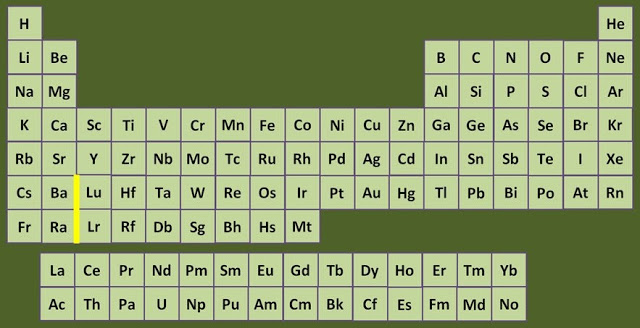
In this post, I would like to address the concepts of order and beauty within the Periodic Table. Below I have constructed the Periodic Table as it appears in most textbooks.

originaltable

This illustration is a nice snapshot of the order that its creator, Dmitri Mendeleev, had found within the elements. Indeed, all textbooks generally say the same thing: that these elements are arranged from left-to-right and then top-to-bottom in order of the amount of protons (the atomic number) in the nucleus. Arranging these atoms into the table produces a startling result: electrons within the same column behave in strikingly similar ways. The well-known elements of copper, silver and gold (located in the eighth column from the right, symbolized by Cu, Ag and Au respectively) illustrate this principle well: they are all strikingly less chemically reactive than nearby metals.

So goes the conventional wisdom. However, this brief synopsis of Mendeleev’s discovery is not comprehensive. As we look closer, in fact, we find irregularities that demand an explanation:

  1. Chemists have not discovered a last element; new elements continue to be created.
  2. Hydrogen and helium do not conform to their column’s traits as convincingly as other elements.
  3. The Lanthanide and Actinide series are housed apart from the table (the two detached rows fit “inside” the yellow strip on the above table).

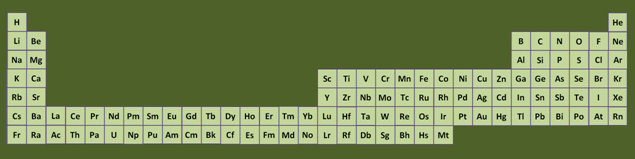
This last item means that the Periodic Table is, to a certain extent, oversimplified. The actual table looks like this:

actualtable

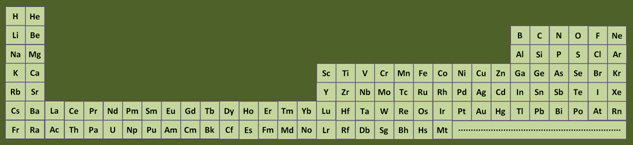
A lot less attractive, right? Well, before you leave dismayed by the chaos of nature, consider that the quantum mechanical approximation of orbitals can afford our table with an interpretation that can be considered beautiful. Let us assume that we are only interested in elements that are not ionized, then the order of an electron-based Periodic Table remains unchanged. Allow me to further reposition helium – one of the exceptional elements mentioned above – alongside hydrogren. Finally, I have added an extended ellipsis at the lower right of the table. This symbolizes our other observation that chemists continue to discover higher-order elements.

electrontable

Remarkably, we discover that with our light manipulations, we are now able to group our Periodic Table into four separate rectangles. It turns out that these rectangles represent orbitals, which stem from the principles of quantum mechanics. Below we have delineated the four known groups into orbitals s, p, d, and f. These symbols originate from spectroscopy, and are regrettably more historical than meaningful. They stand for sharp, principal, diffuse and fundamental.

orbitaltable

We have completely rearranged the Periodic Table into four separate rectangles, each of which represent different orbital types. In effect, we allowed a certain amount of ambiguity with respect to the macroscopic in order to obtain greater clarity in the smaller scale. In fact, we can continue our journey towards the foundations for the periodic table with another reorganization. The following idea (independently rediscovered by myself) was actually discovered in 1928 by Charles Janet.

janet_table

It is important to realize that this reorganization in no way changes the atomic number ordering of Mendeleev, it simply rearranges it. By moving the s-orbital block to the right, we have further compromised macroscopic interrelationships in order to furnish ourselves with meaningful patterns and predictive power.

Notice first the height of each orbital block.  A new block is introduced after every two rows.  Next, notice the width of each orbital block.  2, 6, 10, 14.  Divide by two: 1, 3, 5, 7.  If I were to tell you that the next orbital is named “g”, would you be able to predict its height and width within an extended Periodic Table?

My hope is that you are beginning to experience the periodic table as an dynamic snapshot of physical reality. In this article, I have zoomed in from the common behavior-oriented paradigm towards a more fundamental orbital approximation. For more information, please refer to the following series of video lectures provided by MIT.