Evans-Pritchard: Witchcraft, Oracles & Magic Among The Azande Quotes

Part Of: Witchcraft, Oracles & Magic Among The Azande sequence
See AlsoSummary of the Azande book

On Mysticism And Its Insulation From Falsification Through Attention:
Azande act very much as we would in like circumstances and they make the same kind of observations as we would make.  But Azande are dominated by an overwhelming faith which prevents them from making experiments, from generalizing contradictions between tests, between verdicts of different oracles, and between all the oracles and experience.  To understand why it is that Azande do not draw from their observations the conclusions we would draw from the same evidence, we must realize that their attention is fixed on the mystical properties of the poison oracle and that its natural properties are of so little interest to them that they simply do not bother to consider them.  If a Zande’s mind were not fixed on the mystical qualities of poison and entirely absorbed by them he would perceive the significance of the knowledge he already possesses.  But in real life these bits of knowledge do not form part of an indivisible concept.
(Witchcraft, Oracles, and Magic, Chapter 9, page 149).

It is evident that the oracle system would be pointless if the possibility of [poison being natural], as an educate European would regard it, were not excluded.  When I used at one time to question Zande faith in their poison oracle I was met sometimes by point-blank assertions, sometimes by one of the evasive secondary elaborations of belief that provide for any particular situation provoking skepticism, sometimes by polite pity, but always by an entanglement of linguistic obstacles, for one cannot well express in its language objections not formulated by a culture. 
(Witchcraft, Oracles, and Magic, Chapter 9, page 150)

[Azande] are not surprised at contradictions [of the poison oracle]; they expect them.  Paradox though it be, the errors as well as valid judgments of the oracle prove to them its infallibility.  The fact that the oracle is wrong when it is interfered with by some mystical power shows how accurate are its judgments when these powers are excluded.  The secondary elaborations of belief that explain the failure of the oracle attribute its failure to (1) the wrong variety of poison having been gathered, (2) breach of a taboo, (3) witchcraft, (4) anger of the owners of the forest where the creeper grows, (5) age of the poison, (6) anger of the ghosts, (7) sorcery, (8) use.  
(Witchcraft, Oracles, and Magic, Chapter 9, page 155).

Zande behavior, though mystical, is consistent, and the reasons they give for their behavior, though mystical, are intellectually coherent.  If their mystical notions allowed them to generalize their observations they would perceive, as we do, that their faith is without foundations.  They themselves provide all the proof necessary.  They say that they sometimes test new poison or old poison which they fear has been corrupted by asking it silly questions.  At full moon they administer the poison to a fowl and address it thus: ‘Poison oracle, tell the chicken about those two spears over there.  As I am about to go up to the sky, if I will spear the moon today with my spears, kill the fowl.  If I will not spear the moon today, poison oracle spare the fowl.’  If the oracle kills the fowl they know it is corrupt.  And yet Azande do not see that their oracles tell them nothing! Their blindness is not due to stupidity: they reason excellently in the idiom of their beliefs, but they cannot reason outside, or against, their beliefs because they have no other idiom in which to express their thoughts.  
(Witchcraft, Oracles, and Magic, Chapter 9, page 159)

The contradiction between experience and one mystical notion is explained by reference to other mystical notions… Indeed, as a rule Azande do not ask questions to which answers are easily tested by experience, and they ask only those questions which embrace contingencies.  The answers either cannot be tested, or if proved by subsequent events to be erroneous permit an explanation of the error.  In the last resort errors can always be explained by attributing them to mystical interference. 
(Witchcraft, Oracles, and Magic, Chapter 9, page 160-161).

On Mysticism And Explanation:
You ask [the Azande] how they know [the oracle] works and they reply, ‘It has a soul.’  If you were to ask them how they know it has a ‘soul’, they would reply that they know because it works.  They are explaining mystical action by naming it.
(Witchcraft, Oracles, and Magic, Chapter 9, page 151).

On Mysticism And Time-Models:
It would appear from [Azande] behavior that the present and future overlap in some way so that the present partakes of the future as it were.  Hence a man’s future health and happiness depend on future conditions that are already in existence and can be exposed by the oracles and altered.  The future depends on the disposition of mystical forces that can be tackled here and now.  Moreover, when the oracles announce that a man will fall sick… his ‘condition’ is therefore already bad, his future is already part of him.
(Witchcraft, Oracles, and Magic, Chapter 9, page 162)

See AlsoSummary of the Azande book

Evans-Pritchard: Witchcraft, Oracles & Magic Among The Azande Summary

Part Of: Witchcraft, Oracles & Magic Among The Azande sequence
Content Summary: 1600 words, 16 min read

Chapter 1: Witchcraft is an organic and hereditary phenomenon

Witchcraft is discovered by means of oracles.  Both oracles and stories of witches obey certain hierarchical expectations.  Witchcraft is not strange, but an expected part of everyday life.  Azande believe it to physically manifest through the the small intestine.  In accord with their sexual beliefs, being-a-witch promulgates along relatives of the same sex.  Witchcraft powers grow with the small intestine, and so children are generally considered harmless.  As a strategy, accusing social superiors of witchcraft often backfires. Distance is seen as proportional to susceptibility to witchcraft. By these mechanisms, witchcraft accusations are local affairs that do not often cross social boundaries of class, sex, and age.

Chapter 2: The notion of witchcraft explains unfortunate events

Witchcraft is primarily invoked for social phenomena that are deemed significant and/or slow-moving.  Witchcraft complements, rather than dominates, the causal beliefs of the Azande.  If a man is killed by spear throw in battle, the explanatory criteria (social, involves death) point towards witchcraft.  But the Azande do not deny that the spear killed the man; rather, they say that the witchcraft and the spear in tandem caused the tragedy.  They draw parallels to their hunting experience where a man first spears an animal, and his compatriot delivers the fatal second blow – witchcraft is often denoted as “the second spear”.  In this way, the Azande infuse a narrative into socially significant events.

Chapter 3: Sufferers from misfortune seek for witches among their enemies

Witchcraft is most often invoked for slow-developing illness.   The victim’s kinsmen will appeal to an oracle, bringing forward names of social equals typically suspected of the jealousy motive. If the oracle indicates the witchcraft-inspired responsibility of one or more of these, a messenger will be sent to politely request cessation of psychic violence.  The accused will deny the charges while maintaining goodwill towards the victim.  Should the victim recover, life proceeds; else the cycle continues.  If the victim should die, the kinsmen can resort to compensation demands or vengeance magic.  Since this process is considered private, little is known about individual cases other than by the kinsmen, oracle, and political authorities.  Witchcraft, not theism, is the fuel of Azande morality: witches are generally accused as a function of their adherence to social norms.

Chapter 4: Are witches conscious agents?

Azande asserts intentionality and scheming to participants of witchcraft.  However, for Europeans, witchcraft was an omnipresent, metaphysical reality; for the Azande, witchcraft only manifested for personal misfortunes.  As such, accused Azande could not deny the oracle’s decision, but typically denied intentionality of their purported actions.  Contrary to many accused European witches, Azande were willing to live with this inconsistency, modelling themselves as exceptional cases.

Chapter 5: Witch-doctors

Witch-doctors practice magic to provide leechcraft, revelatory information, and witchcraft protection.  Their modus operandi is the seance, which serves as a rare opportunity for the community to participate in an extra-familial social situation.  Seances are typically hosted by someone affected by misfortune desiring the services of the witch-doctor.  At least one practitioner performs for the commoners in attendance; to drums and song he wildly dances, so as to acquire answers to questions.

Chapter 6: Training of a novice in the art of a witch-doctor

Trade information obtained through sole informant, although it is typically well-protected.  Witch-doctors generally charge prospective students fees for ritual participation and medicinal information.  Trade knowledge of medicines and their correlated plants are shared by journeys into nature.

Chapter 7: The place of witch-doctors in Zande society

This particular profession is not considered politically important; only commoners adopt its methods.  The associated magic and revealed wisdom are not held to be as important as the poison oracle, or even the termite oracle; rather, it is held roughly as authoritative as the lowest of the oracles: the rubbing-board oracle.  Witch-doctors apart from the seance are treated as any other commoner.  Intelligent commoners may pursue the craft in order to explore more diverse social roles.  Skepticism on the efficacy of witch-doctors is prevalent, and possibly increasing on account of contemporaneous developments (influx of more practitioners more readily revealing a greed-motive).  However, observer suspicions of trickery are couched in context of the Azande metaphysic: witch-doctor spells do not work but they secretly coordinate efforts with witches.  Even witch-doctors themselves may believe in the authenticity of their colleagues; and their secret understanding of the efficacy of their medicines does not conflict with their beliefs.  Azande cannot readily explore pure skepticism as they know no other explanatory worldview than the witch-oracle-magic paradigm.

Chapter 8: The Poison Oracle in daily life

Oracle poison is socially valuable, and its potency must be preserved.  Poison is protected via observance of taboos, hiding it from malevolent witches and women, and from the sun.  Use of the poison oracle represents a function of social control: women are formally prohibited from its use, or even knowing its relevance, and the poor cannot often afford to spare fowls during the ceremony.  The seance is performed away from the village, and the constituents are the operator, the questioner, the witnesses, the poison, and the fowls.  First, the operator administers the poison to the fowl (proportionate to its size).  Then, the questioner formally addresses the poison inside the fowl, its lethality is thus hinged on the answer to a certain pressing question.  No mechanism of the operator to manipulate the resultant verdict is known.  Verdicts are not considered binding until their opposite verdict is confirmed (oracle must kill for confirmation of the affirmative, and then spare for dis-confirmation of the negative); however, questioners are known to delay secondary verdicts according to their interests.

Chapter 9: Problems arising from consultation of the poison oracle

All Azande oracles are addressed as people, even though they are not personified.  Rather, their efficacy is attributed to their spiritual dynamism, or soul.  Further, Azande exhibit contradictory behavior and beliefs when it comes to benge poison.  Azande are careful not to eat fowls killed through the poison-test of the seance.  However, no one can express the reasons behind this behavior – for an Azande, benge only functions as poison when in a magical context.  Further, given that the poison acts randomly, often the confirmatory answer will contradict the initial answer.  However, the Azande utilize no less than eight explanatory vehicles to justify these contradictions, the result of which paradoxically results in a stronger affirmation of poison oracle efficacy.  Contradictions are further dismissed via a combination of language barriers, disinterest, and the promotion of ambiguous expectations.  Doubt is not repressed but is always couched in the context of the mystical paradigm.

Chapter 10: Other Zande oracles

Azande use other, less expensive and reliable, oracles for preliminary or less significant matters.  The termites oracle is operated by sticking two different sticks into a termite mound and assigning different answers to the consumption of either stick.  The rubbing-board oracle is imbued with medicine and had the detachable rim circumvents the table, with smooth motions and getting stuck being associated with different outcomes.  The three sticks oracle is arranged as a tent on the hut floor, and its status overnight (collapsed or not) is indicative of its message.  Finally, dreams are sometimes imbued with oracle-like significance.

Chapter 11: Magic and medicines

Magic is the third component of the Azande belief-triangle.  Its use through various medicines can either be socially accepted (positive magic) or condemned (sorcery).  Use of magic is used towards a large set of social goals, through a diversity of plants.  Magic is generally private and rarely practiced.  Magic is moral.  Good magic is impersonal: it will affect unknown individuals whose guilt is assured.  Bad magic is personal: it is used against a particular person in malice.  Sorcery in its full sense probably is not practiced, and only exists in rumors.  Light afflictions are treated empirically, only significant ailments are cause for magical remedies.  Magic is not thought to positively affect everyday life, but only to ward off negative mystical effects.

Chapter 12: An association for the practice of magic

New communal, illegal magic gatherings have become eminent due to current (circa 1920s) political events.  They represent wide and deep social change.  These Mani exhibit crude evidences of associative groups: organization, leadership, grades, feeds, initiation rites, and esoteric vocabulary.  Water immersion contributes to initiation rites, as does other behavior reminiscent of freshman hazing.  Four officials lead the group: the leader, cook, stirrer, and sentry.  None have much authority.  Meetings are highly emotional, in stark contrast with more public ceremonies.  Mani allow for female members, youth, poor (fees are minimal), and royalty (although, significantly, their authority is moot).  Nobility dislikes these groups on grounds of sorcery suspicion, marital jealousy, and general conservatism.  The organizations are grassroots, and lack inter-group cohesion.

Chapter 13: Witchcraft, oracles, and magic, in the situation of death

Azande belief structures are ill-defined and are only partially expressed in any given situation.  Their beliefs reach an cohesion and the height of synthesis in situations of death.  During later stages of illness, witchcraft is identified and addressed and both magic and leechcraft are invoked.  Should these efforts be unsuccessful, vengeance magic is prepared.  Vengeance practitioners are generally young men who will not suffer sex and food taboos as forcefully as others, although all kinsmen are affected.  Vengeance magic requires significant patience, and after enough time has past, kinsmen will oracle-inquire whether a socially-relevant death is the result of their magic.  Reactionary outburst are thus channeled through magical recourse, and are thereby tempered through uncomfortable, extended taboo-observances and wait-times that scale to years.

See Also: Quotes from The Azande Book

Jaynes: The Origin Of Consciousness In The Breakdown Of The Bicameral Mind

On Frazer and Fertility Cults:
The most popular view goes back to the uncritical mania with which ethnology, following Frazier, wished to find fertility cults at the drop of a carved pebble.  But if such figurines indicate something about Frazerian fertility, we should not find them where fertility was no problem.  But we do.  (The Origin Of Consciousness In The Breakdown Of The Bicameral Mind, Part I, Chapter 1, page 166).

On Ballet and Church Cultural Roots In Oracles:
The golden oracle at Ephesus, famous for its enormous wealth, had traced eunuchs as the mouthpieces of the goddess Artemis. (The style of their vestments, incidentally, is still used today by the Greek Orthodox Church.) And the abnormal dancing on the tips of the toes of modern ballerinas is thought to derive from the dances before the altar of the goddess.
(The Origin Of Consciousness In The Breakdown Of The Bicameral Mind, Part III, Chapter 1, page 327).

On Jealous Gods:
Every god is a jealous god after the breakdown of the bicameral mind.
(The Origin Of Consciousness In The Breakdown Of The Bicameral Mind, Part III, Chapter 1, page 336).

On Glossolalia:
As we might expect, glossolalists by the Thematic Apperception Test reveal themselves as more submissive, suggestible, and dependent in the presence of authority figures than those who cannot exhibit the phenomenon.”
(The Origin Of Consciousness In The Breakdown Of The Bicameral Mind, Part III, Chapter 2, page 360).

On Hypnosis: 
But repeated attempts [at hypnotic induction] on such subjects [who cannot narrow his consciousness in this fashion] often succeed, showing that the “narrowing of consciousness in hypnotic induction is partly a learned ability; learned, I should add, on the basic of the aptic structure I have called the general bicameral paradigm [that encodes collective cognitive imperative, induction, trance, archaic authorization].  
(The Origin Of Consciousness In The Breakdown Of The Bicameral Mind, Part III, Chapter 4, page 387).

If calling hypnosis a vestige of the bicameral mind is valid, we might also expect that those most susceptible to being hypnotized would be the most susceptible to other instances of the general bicameral paradigm.  In regard to religious involvement, this appears to be true.  Persons who have attended church regularly since childhood are more susceptible to hypnosis, while those who have had less religious involvement tend to be less susceptible.  At least some investigators of hypnosis that I know seek their subjects in theological colleges because they have found such students to be more susceptible.  
(The Origin Of Consciousness In The Breakdown Of The Bicameral Mind, Part III, Chapter 4, page 396).

On The Dogma Of Science:
We sometimes think, and even like to think, that the two greatest exertions that have influenced mankind, religion and science, have always been historical enemies, intriguing us in opposite directions.  But this effort at special identity is largely false.  It is not religion but the church and science that were hostile to each other. And it was rivalry, not contravention.  Both were religious.  They were two giants fuming at each other over the same ground.  Both proclaimed to be the only way to divine revelation.  
(The Origin Of Consciousness In The Breakdown Of The Bicameral Mind, Part III, Chapter 6, page 434).

[See Also]
http://www.julianjaynes.org/pdf/dennett_jaynes-software-archeology.pdf

Freud: Interpretation Of Dreams Quotes

On The Id, The Ego, And The Superego:
According [with the analogy of political censorship], we would assume two psychical forces (currents, systems) to be the originators of dream-formation in the individual; one of these forms the wish uttered by the dream, while the other imposes a censorship on the dream-wish and by this censorship distorts its expression…. nothing from the first system can become conscious which has not previously been passed by the second agency, and the second agency lets nothing pass without exercising its rights and making whatever changes it thinks fit to the applicant for consciousness.  Saying this reveals a quite distinct conception of the ‘nature’ of consciousness: in our view, the entry of something into consciousness constitutes a specific psychical act, different from the process by which ideas are generated or imagined and independent of it; and we regard consciousness as a sensory organ perceiving a content given from elsewhere.  It can be shown that psychopathology simply cannot do without this basic assumption.
In this way my second agency [the superego], which rules over access to consciousness, bestows a distinction on my friend R. by an outpouring of excessive affection, because the wishful endeavors of the first system [the id], in their particular all-absorbing interest, would slander him as a numbskull.  Perhaps at this point we have a presentiment that the interpretation of dreams is capable of providing us with information about the structure of our psychical apparatus which till now we have sought in vain from philosophy…. Taking into account our assumptions about the two psychical agencies, we can now also add that distressing dreams in fact do contain something which is distressing to the second agency but at the same time fulfills a wish of the first agency.
(On The Interpretation Of Dreams, Dream-Distortion, page 113, 114).

It is the censorship between the Unconscious and the Preconscious that we must acknowledge and honor as the guardian of our mental health…. [even while we sleep] his slumber is not deep – he also closes the gateway to movement.
(On The Interpretation Of Dreams, The Psychology of the Dream-Processes, page 371).

[Questionable Inferences]:
According to this dream I was wrong: so it was her wish that I should be wrong, and the dream showed her that her wish was fulfilled.
(On The Interpretation Of Dreams, Dream-Distortion, page 119).
[Note: Convenient…]

‘The butcher’s shop was already shut strikes one as a description of the experience.  But wait: is that not a rather vulgar phrase which refers – or rather its opposite does – to an [unzipped fly] in a man’s dress?  The dreamer, by the way, did not use these words; perhaps she avoided them…
(On The Interpretation Of Dreams, The Material and Sources of Dreams, page 140-141).
[Note: This would be a stretch in most situations in my culture.]

It is in the nature of all censorship that in speaking of forbidden things one is permitted to say things that are not true sooner than the truth.
(On The Interpretation Of Dreams, The Material and Sources of Dreams, page 279).
[Note: Sure, but you failed to make the case that the former was necessary in order to prevent the latter from being expressed.]

Whatever disturbs the continuation of the work of analysis is a resistance……  That is why, when analyzing a dream, I insist that any scale indicating degrees of certainty should be abandoned entirely, and the slightest possibility that something of one sort or another might have occurred in the dream should be treated as absolutely definite.
(On The Interpretation Of Dreams, The Psychology of the Dream-Processes, page 336).
[Note: But if you reject Bayesian methods, what assurances do you have of forming true beliefs?]

The best-interpreted dreams often have a passage that has to be left in the dark…. This is the dream’s navel, and the place beneath which lies the Unknown….  Out of a denser patch in this tissue the dream-wish then arises like a mushroom from its mycelium.
(On The Interpretation Of Dreams, The Psychology of the Dream-Processes, page 341).
[Note: For Freud the root of the unconscious smells like mysticism, looks like mysticism…]

On How To Interpret Dreams:
Suppose I have a picture-puzzle, a rebus, before me: a house with a boat on its roof, then a single letter of the alphabet, then a running figure with his head conjured away, and the like.  Now I could fall into the trap of objecting that this combination and its constituent parts are nonsense.  A boat does not belong on the roof of a house and a person without a head cannot run…. Obviously the correct solution to the rebus can only be reached if I raise no such objections to the whole or to the details, but take the trouble to replace each picture by a syllable or a word which, through some association, can be represented by the picture.  The words connected in this way are no longer nonsense, but can yield the most beautiful and meaningful poetic saying.  The dream is a picture-puzzle of this kind, and our predecessors in the field of dream-interpretation made the mistake of judging the rebus as if it were a pictorial composition.  As such, it seemed to them to have no meaning or value.
(On The Interpretation Of Dreams, The Dream-Work, page 212).

On The Purpose Of Dreams:
Thus the wish to sleep must always be included among the motives for the formation of dreams, and every successful dream is a fulfillment of this wish.
(On The Interpretation Of Dreams,  The Material and Sources of Dreams , page 181).

On Dream-Contents And Dream-Thoughts (Latent vs. Manifest):
Applying our method of dream interpretation has enabled us to uncover the existence of a latent dream-content which is far more significant than the manifest dream-content.
(On The Interpretation Of Dreams,  The Material and Sources of Dreams , page 126).

On The Oedipus Complex:
A man mostly dreams of his father’s death, a woman of her mother’s.  [This rule is] required to be explained by a factor of general significance.  Put crudely, it as though a sexual preference were established very early, as though the boy saw a rival for love in his father, and the girl in her mother, and removing them could only be of benefit to the child.  
(On The Interpretation Of Dreams,  The Material and Sources of Dreams , page 197).

[In this example, the superego] creates the excessive concern for her mother as a hysterical counter-reaction and defensive phenomenon.  In this connection, it is not longer inexplicable why hysterical girls so often cling to their mothers with such extravagant tenderness… Being in love with one parent and hating the other belong to the indispensable stock of psychical impulses being formed at that time which are so important for the later neurosis.  But I do not believe that in this respect psychoneurotics are to be sharply distinguished from other children of Adam…. It is far more likely – and this is supported by occasional observations of normal children – that with these loving and hostile wishes towards their parents too, psychoneurotics are only revealing to us, by magnifying it, what goes on less clearly and less intensely in the inner life of most children.
(On The Interpretation Of Dreams,  The Material and Sources of Dreams , page 200,201).

Like Oedipus we live in ignorance of those wishes, offensive to morality and forced upon us by Nature, and once they have been revealed, there is little doubt we would all rather turn our gaze away from the scenes of our childhood.
(On The Interpretation Of Dreams,  The Material and Sources of Dreams , page 203).

On Ideas Derived From Psychoanalysis And Their Underlying Dream-Thoughts:
The new associations are, as it were, parallel connections, short-circuits made possible by the existence of other and deeper connecting paths.
(On The Interpretation Of Dreams,  The Material and Sources of Dreams , page 213).

On Clarity Of Dream-Content:
[Like the work of the artist Galton], the features [of the dream-objects painted on an over-determined item of dream-content]  have in common emerge more prominently, and those that do not match obliterate each other, and become blurred in the image.
(On The Interpretation Of Dreams,  The Material and Sources of Dreams , page 225).
[Note: Reminiscent of wave interference]

On Anxiety:
Anxiety is an impulse of the libido, proceeding from the unconscious and inhibited by the preconscious.
(On The Interpretation Of Dreams,  The Dream-Work, page 254).

On Autobiography:
My own dreams have in general fewer sensory elements than I have to reckon with in the dreams of others.
(On The Interpretation Of Dreams, The Psychology of the Dream-Processes, page 358).

On Reception To His Ideas:
I find it distressing to think that many of the premises at the basis of my psychological solution to the psychoneuroses will produce incredulity and laughter once I have published them.
(On The Interpretation Of Dreams,   The Dream-Work, page 291).

The reader will always be inclined to accuse the author of overloading every rift with ore; but anyone who has gained experience of interpretation himself will have learned better.
(On The Interpretation Of Dreams, The Psychology of the Dream-Processes, page 340).

That the dream [wish] always originates from the Unconscious, as we have admitted, can neither be proved to be universally applicable, though it cannot be disproved either.
(On The Interpretation Of Dreams, The Psychology of the Dream-Processes, page 394).

On Consciousness:
All thinking is only a roundabout way from the memory of a satisfaction, adopted as its purposive idea, to an identical charge of the same memory, which, it is intended, will be regained by way of motor experiences… Thinking, then, must move towards freeing itself more and more from the exclusive regulation of the unpleasure-principle…. 
(On The Interpretation Of Dreams, The Psychology of the Dream-Processes, page 397).

On Why We Forget Our Youth:
As a consequence of this belated entry of the secondary processes, a wide field of memory-material also remains inaccessible to preconscious charging.
(On The Interpretation Of Dreams, The Psychology of the Dream-Processes, page 398).

Feser: Aquinas

A disappointing text.

Perhaps my expectations were calibrated too highly. I was hoping for an introduction that would sketch both the theoretical manifold of Thomism, and its motivations. I was only satisfied with the former. The proffered justifications of Thomism seemed targeted towards New Atheists, failing to engage more sophisticated philosophical frameworks. Further, Feser motivates his account by way of spurious empirical examples that I will now proceed to debunk.

——————————————————————————-

Page 21 was particularly disappointing:

> Aquinas would also be baffled by the modern tendency to think of causation as essentially a relation between temporally ordered events.. For Aquinas, it is things that are causes, not events; and the immediate efficient cause of an effect is simultaneous with it, not temporally prior to it.. In the case of the broken window, the key point in the causal series would be something like the pushing of the brick into the glass and the glass’s giving way. These events are simultaneous; indeed, the bricking’s pushing into the glass and the glass’s giving way are really just the same event. Or (to take an example often used to illustrate the Aristotelian conception of efficient causation) we might think of a potter making a pot, where the potter’s positioning his hand in just such-and-such a way and the pot’s taking on such-and-such a shape are simultaneous, and, again, the same event described in two different ways.

Sheets of glass and shards of pottery are physical substances extended in space. Force-carriers do not travel from the point of contact to the rest of the surface instantaneously. Like all other particles, they are constrained by the speed of light. These analogies are empirically bankrupt.

——————————————————————————-

Causal Series.

Feser introduces the concept of causal series in chapter 2. The idea is embedded within the standard Aristotelian Four Causes that Aquinas adopts: material, formal, efficient, and final. A key distinction here is that, whereas modern philosophy tends to read causality in the language of events, medieval philosophy interprets in the language of things. The two types of causal chains considered are the accidens series and the essential series. Let us now examine what Feser means by this distinction.

——————————————————————————-

On page 13, Feser explains how substance and matter change:

> Sometimes change concerns some non-essential feature, as when a red ball is painted blue but remains a ball nonetheless. Sometimes it involves something essential, as when the ball is melted into a puddle of goo and thus no longer counts as a ball at all.. For a ball merely to change its color is for its matter to lose one accidental form and take on another, while retaining the substantial form of a ball and thus remaining the same substance, namely a ball. For a ball to be melted into goo is for its matter to lose one substantial form and take on another.

But this account does not treat the problem of ambiguity. Suppose I am microwaving my red ball:

* Eighty seconds into the process, 60% of Thomists would agree that the ball retains its Form.
* Eighty-one seconds into the process, 60% of Thomists would agree that the ball has traded its Form.

Let us suppose that, per Thomism, my red ball really did lose its form at the eighty-one second mark. What is it about the physical phenomena during that second that differed from the previous eighty seconds? If Forms substitution is really as clean and binary as Aquinas suggests, why don’t Thomists remain equally vulnerable to epistemic disagreement as the rest of us?

——————————————————————————-

On page 15, Feser underscores a Thomistic asymmetry:

> On the hylemorphic analysis, considered apart from the substances that have them, form and matter are mere abstractions; there is no form of the ball apart from the matter that has that form, and no matter of the ball apart from the form that makes it a ball specifically.. While (contra Plato) no form exists apart from some particular individual substance that instantiates it, not every form exists in a material substance. There can be forms without matter, and thus immaterial substances – namely, for Aquinas, angels and postmortem human souls.. This recapitulates an asymmetry noted earlier: just as act can exist without potency even though potency cannot exist without act, so too form can exist without matter even though matter cannot exist without form.

But Feser does not provide an explanation for this curiosity.

——————————————————————————-

This book could have been improved by a treatment of the following topics:

How can { Forms, final causality } be epistemically accessible?
How can the A-T framework mediate intra-group disagreement?
How does change in matter lead to change in substance, or change in Form?

——————————————————————————-

On page 48, Feser presents an argument for teleology:

> As philosopher David Oderberg has noted, it is particularly evident in natural cycles like the water cycle and the rock cycle. In the former case, condensation leads to precipitation, which leads to collection, which leads to evaporation, which leads to condensations, and the cycle begins again. In the latter case, igneous rock forms into sedimentary rock, which forms into metamorphic rock, which melts into magma, which hardens into igneous rock, and the cycle begins again. Scientists who study these processes identify each of their stages as playing a certain specific role relative to the others. For example, the role of condensation in the water is to bring about precipitation; the role of pressure in the rock cycle is, in conjunction with heat, to generate magma, and in the absence of heat to contribute to generating sedimentary rock; and so forth. Each stage has the production of some particular outcome or range of outcomes as an “end” or “goal” towards which it points. Nor will it do to suggest that either cycle could be adequately described by speaking of each stage as being the efficient cause of certain others, with no reference to its playing a “role” of generating some effect as an “end” or “goal.” For each stage has many other effects that are not part of the cycle. As Oderberg points out, sedimentation might (for example) happen to block the water flow to a certain region, the formation of magma might cause some local birds to migrate, or condensation in some area might for all we know cause someone to have arthritic pain in his big toe. But [these examples] are no part of the water cycle. Some causal chains are relevant to the cycles and some are not. Nor is it correct to say that the student of the rock or water cycles just happens to be interested in the way some rock generates other kinds and how water in one form brings about water in another form, and is not interested in [these examples]. For the patterns described by scientists studying these cycles are objective patterns in nature, not mere projections of human interests. But the only way to account for this is to recognize that each stage in the process, while it might have various sorts of effects, has only the generation of certain *specific* effects among them as its “end” or “goal” and that this is what determines its role in the cycle. In short, it is to recognize such cycles as teleological.

Interesting.

> As philosophers like G.F. Schueler and Scott Sehon have argued at length, no attempt to analyze human action in non-teleological terms has succeeded.

http://www.amazon.com/Reasons-Purposes-Rationality-Teleological-Explanation/dp/0199278458
http://www.amazon.com/Teleological-Realism-Agency-Explanation-Bradford/dp/0262195356

——————————————————————————-

On page 52, Feser addresses a counter-argument to the principle of proportionate causality (a cause cannot give to its effect what it does not have itself, whether formally, eminently, or virtually):

> It is nevertheless sometimes suggested that this principle is disproved by evolution, since if simpler life forms give rise to more complex ones then they must surely be producing in their effects something they did not have to give. But this does not follow.. Just as water in conjunction with something else might be sufficient to produce a red puddle even if the water by itself wouldn’t be, so too do the existing genetic material, the mutation, and environmental circumstances together generate a new biological variation even though none of these factors by itself would be sufficient to do so. Thus, evolution [does not] pose a challenge to the principle of proportionate causality. Indeed, as Paul Davies points out in *The Fifth Miracle*, to deny that the information contained in a new life form derives from some combination of preexisting factors – specifically, in part from the organism’s environment if not from its genetic inheritance alone – would contradict the second law of thermodynamics, which tells us that order (and thus information content) tends inevitably to decrease, not increase, within a closed system.

This appeal to the Second Law seems empirically dubious.  In no sense is the Earth’s biosphere a “closed system”.

——————————————————————————-

On page 57, Feser defends Aquinas against Anthony Kenny’s arguments are inadequate from a Fregean perspective.

> As Gyula Klima has said, “it is ludicrous to claim victory by yelling ‘Checkmate!’ in a game of poker. But this is precisely what Kenny seems to be doing whenever he is yelling ‘You are not a good enough Fregean!’ at Aquinas.’ Certainly other conceptions of existence are possible..

Tasteless, and misses the point. In order to sustain their school, Thomists must do more than simply regurgitate theories of a medieval Scholastic. They must engage with the current theoretical climate. If you want to deny Fregean essences wholesale, you must interact with their argumentative traditions.

Feser does later partially address Fregean thought, which to my mind partially redeems the above rhetorical device.

——————————————————————————-

On page 28, Feser explains how Aquinas defends angelic differentiation:

> With what Aquinas calls “separated substances” – immaterial realities like the soul, angels, and God – things are not so straightforward. The soul.. must on Aquinas’s view be conjoined to matter at some point in its existence.. God is necessarily unique, so that the question of individuation cannot arise. But what about angels, which are supposed to be both distinct from one another and yet completely immaterial? An angel, says Aquinas, is a form without matter, and thus its essence corresponds to its form alone. But precisely because there is no matter to distinguish one angel in a species from another, “among these substances there cannot be many individuals of the same species. Rather, there are as many species as there are individuals”.

After this concession, Feser promptly moves on to a separate topic. But consider what this means: besides Triangle and Redness forms, Aquinas affirms that there is also JoeTheAngel form and a RobertTheAngel form. This seems an astonishingly ugly band-aid, and its ontological awkwardness is not acknowledged nor ameliorated.

——————————————————————————-

On page 63, Feser sets the stage for the Quinquae Viae:

> The Summa, it must be remembered, was meant as a textbook for beginners in theology who were already Christian believers, not an advanced work in apologetics intended to convince skeptics. The Five Ways themselves are merely short statements of arguments that would already have been well known to the readers of Aquinas’s day, and presented at greater length and with greater precision elsewhere.

Historically accurate. But, if the Five Ways are not Aquinas’ best case for theism, I would rather attention be devoted to other, more incisive, arguments.

——————————————————————————-

On page 65, Feser insulates Aristotelian metaphysics from Aristotelian physics:

> It has also sometimes been claimed that Aquinas’s proofs rest on outdated Aristotelian scientific theory, and thus are irrelevant in the present day. But as noted in chapter 2, Aristotle’s metaphysics stands or falls independently of his physics and, as we shall see, there is never a point in any of the arguments where appeal need be made to now falsified theories in physics or any of the other sciences.

Perhaps such sharp bifurcations between physics and metaphysics are irredeemably anachronistic. Aristotelian metaphysics were originally motivated by his physics. To insulate the former from the latter is to remove its original motivators.

——————————————————————————-

On page 68, Feser addresses empirical counterexamples:

> As Rudy te Velde has suggested, some critics place too much significance on the physical details of the examples Aquinas gives in the course of the proof, failing to see that their point is merely to illustrate certain basic metaphysical principles rather than to support broad empirical or quasi-scientific generalizations.

If you can’t defend Thomas’ examples, fix them! Immersed in the context of the section, this passage seems to evidence a pathological reluctance to improve upon Aquinas at any point.

——————————————————————————-

I stopped here. Since medieval philosophy poses an interesting challenge to more modern approaches, I hope to locate a more rigorous replacement soon.
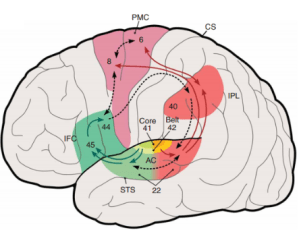
Ramachandran: The Tell-Tale Brain

This book contained more idiosyncrasies than I expected. Time was spent on the Victorian sentiments of R’s research paradigm, with his preference for simple experiments with everyday tools.

R was also uncomfortably rigid in his treatment of the ape-human divide. While postulating a continuous evolutionary link between different species within our clade, R claimed that the evolutionary progress between homo sapiens and our near-neighbors are about as significant abiogenesis itself.

I wouldn’t characterize the above as an extreme position, perhaps, but R does not hesitate to remind the reader every few pages, how this behavior is unique to humans. Some of these claims were well-founded, but many lacked evidence, and some were plainly false (“apes don’t have theory of mind”, “apes don’t appreciate humor”, etc).

For a researcher seeking to democratize scientific progress, Ramachandran displayed a disappointing poverty of integrative thinking. In particular, R’s tone towards psychology is sometimes measured, sometimes awkwardly uninformed (dismissing out of hand the psychometric concept of the general intelligence factor, g, as “absurd”), but never collaborative. A more promising way to progress in the sciences: higher-level fields structure lower-level fields, and fields closer to implementation details constrain those engaged with more general abstractions.

I was unhappy with the degree to which Ramachandran leaned on mirror neuron systems. Mirror neurons are neurons discovered in apes that fire for some arbitrary action, regardless of whether it is performed by the observer, or by some other agent. To me, it felt like Ramachandran abstracted this idea to be the neurological basis of two distinct things: theory of mind, and conceptual representation. And, because these two things are such important conceptual building blocks,
mirror neurons appear practically everywhere Ramachandran looks…

All of that said, this book does have a lot to offer to those uninitiated in neuroscience. Its introduction to the nervous system felt especially competent. The section on body map failures, e.g., people whose body map for an arm is corrupted and they seek amputation, was particularly interesting. Some connections were made from these neurological structures, to sexual orientation and transgender behavior, which I bookmarked for further research. Finally, I appreciated the book’s breadth, particularly enjoying its explorations in theories of humor (Benign Violation Theory), the tri-stream visual systems, autistic savants, and neuroaesthetics.

Siegel: The Neurobiology of “We”

I enjoyed the ambiance of this audiobook. Siegel’s pace was measured and calm, his tone disarmingly personal. It turns out that he literally founded the field of interpersonal neurobiology, which purports to synthesize vast swathes of scientific disciplines into a coherent whole. Large claims by an influential man.

The author was careful to precede his discussion by asserting that the mind and the brain are distinct, that he would like to move away from the aphorism that “the brain is the seat of the mind”. Instead, Siegel advocates a philosophical stance of emergentism, that the brain-mind connection is causally bidirectional. In my view, this point was rather underdeveloped & the book as a whole does not hinge on the point.

One interesting chapter relates to attachment theory. Children-caregiver relationships tend to group into four distinctive categories. These can be divined from the Strange Situation test, which places the child in a foreign environment, and then removes the caregiver for a few minutes. Attachment style is linked to child response: secure-attachment children reach out to the parent, and then resume play; avoidant-attachment children ignore the parent; anxious-attachment cling to the parent and are slow to be comforted; disorganized-attachment exhibit confused, contradictory responses.

What Siegel demonstrates is how later in life, a particular interview called the Adult Attachment Interview can predict, with 85% accuracy, the attachment style learned by the adult, earlier in life. When asked to explore feelings about early childhood relationships: the secure adult will be able to fluently conjure feelings; the anxious adult will be derailed by more present anxieties (“just last week, my mom did something nice for my brother, but not for me”; the avoidant adult will not be able to fully access emotional data (“my mom was organized, beautiful”); the disorganized adult will answer relatively normally until faced with questions of loss or abuse.

The demographic ratios between these styles in US society tends to be 55% secure, 20% anxious, 20% avoidant, 5% disorganized.

Another interesting point of the book relates to trauma, or PTSD. Siegel summarizes an impressive swath of research that suggests that PTSD is the result of memory-encoding inconsistency. Memory is not a monolithic system, but rather divides into myriad subsystems. Siegel argues that trauma occurs when the threatening event is encoded into implicit memory, but stress hormone prevents the hippocampus from encoding it into episodic memory. Without access to the conscious “metadata” for the event in episodic memory, flashbacks trigger confusion between the memory, and the event itself.

Finally, Siegel presented a way of thinking about the brain that I found more helpful than Latin names. If one curls up the thumb into the palm, and curls the fingers around the thumb, it is a half-decent model of the brain. The palm represents the brain stem, the wrist the spinal column, the thumb the limbic system, the fingers the cortex. Within the “fingers”, the back section between second and third knuckles represent perceptual systems, the tips, the prefrontal cortex.

I’ll now list two criticisms I have, one specific and one general. The first is a matter of definition; Siegel likes to define the mind as a “process that organizes matter and energy flowing through the brain”. This is largely fine, and reflects the consilience between thermodynamics and information theory. But, he tends to conflate the use of “energy” between thermodynamics and emotional/psychic energy, which is unfortunate. My second criticism is one that I have so far felt against the fields of positive psychology as a whole: I just didn’t learn very much from this book. The brain sciences don’t seem to be sophisticated enough yet to give Siegel the mileage he needs to establish his conclusions. With so little attention given to mechanism, books such as this one will always feel empirically inadequate.

That said, this book does represent a fairly compelling “beginner’s guide” to interpersonal neurobiology, and I look forward to learning more (especially how interpersonal neurobiology relates to mindfulness meditation).

Csikszentmihalyi: Flow

Themes:

Hedonism Is Inadequate.
Human beings do not need pleasure above all else. People report enjoying watching TV, but often feel listless afterwards. “The future will belong not only to the educated man, but to the man who is educated to use his leisure wisely.” (pg 163, citing C.K. Brightbill).

Psychic Entropy Threatens Our Health.
Attention can be thought of as psychic energy reserves, and is a finite resource. Data bombards our senses continuously, the mind must try to organize and derive meaning from this flood of information. Failure to impose adequate structure leads to feelings of listlessness, boredom, and apathy.

Flow Introduces Structure To The Mind.
Another expression for flow is being “in the zone”.

On page 49, C enumerates distinctive phenomenological characteristics of enjoyment (flow):
1. Challenge: An achievable activity that engages skill sets.
2. Immersive: Awareness becomes fused to the activity (“in the moment”).
3. Clear Goals: Success is well-defined.
4. Clear Feedback: Participant can evaluate their performance reliably.
5. Focused attention: Everyday concerns are removed from attention.
6. Control: A sense of autonomous responsibility for action.
6. Muted self-awareness: Ego is suspended only to return, energized.
7. Time Distortions: Time moves quickly, or slowly, or seems irrelevant.

Flow only occurs when skills are well-matched with challenge intensity. If the flow activity continues to be experienced without change, personal skill can outpace challenge, leading to boredom. If the activity requires skills which outpace personal skill, this only introduces stress. The trick is to keep skills & challenges matched in an ascending cycle as the participant learns. As this two elements grow, so does the ability of the ego to bring order to psychic chaos.

Autotelic Personalities Find Internal Motivations Via Flow.

A distinction is made between exotelic and autotelic motives. Exotelic refers to commitments induced by external forces, autotelic desires directly emerge from the self. C uses this distinction to get at what he believes to be wrong about modern education.

On page 97, C describes a “formula” for how autotelic personalities typically transform simple physical actions into flow-producers:
1. Set an overall goal, and as many sub goals as are realistically feasible.
2. Find ways to measure progress in terms of the goals chosen.
3. Maintain concentration of task at hand, and make finer and finer distinctions in the challenges involved in the activity.
4. Develop the skills necessary to better engage with available opportunities.
5. Keep raising the stakes when the activity becomes boring.

Flow Informs The Human Condition.

The remainder of the book goes on to apply this framework. Conditions that induce flow are explored, physical and mental flow activities are compared, social and philosophical implications are explored.

Evaluation:

C gave me the impression that he was politically conservative at times, which is unusual for this kind of book. I found myself sympathetic to C’s argument against certain strains of multiculturalism: perhaps cultures can, in principle, be comparatively evaluated based on how well they fit to universally-human psychological structures.

I generally liked what C had to say. I largely agreed with his critiques of utilitarianism (that pleasure is the universal unit of value).

But the above points of agreements are little more than bookmarks. The book suffers from a fairly ubiquitous lack of empiricism. General principles are woven together, but precision and rigorous empirical research are undervalued. An example: C claims that the ability of flow to escalate skills & challenges improves the “complexity of the soul”, but nowhere is this loose concept truly nailed down.

Thus, I do not feel like I have emerged with a deeper knowledge of the human mind. For me, this book only served to refine my intuitions about which aspects of cognitive psychology deserve empirical attention.

Quotes: 

“Dr Hamilton found that the students who reported less intrinsic motivation in daily life needed on the average to fix their eyes on more points before they could reverse the ambiguous figure, whereas students who on the whole found their lives more intrinsically rewarding required fewer points.” (pg 87)

“Bertrand Russell described bow he achieved personal happiness: ‘Gradually I learned to be indifferent to myself and my deficiencies; I came to center my attention increasingly upon external objects: the state of the world, various branches of knowledge, individuals for whom I felt affection.’ There could be no better short description of how to build for oneself an autotelic personality.” (pg 93)

“Whosoever is delighted in solitude is either a wild beast or a god.” (Francis Bacon, cited pg 173)

Metzinger: The Ego Tunnel

With this book, Metzinger furthers an encouraging trend in academia: superstar theoreticians are writing accounts of their work for the layman.

His book is carved into three parts. The first summarizes his theory of consciousness, as rigorously developed in Being No One. The second introduces his theory of self-hood in the context of clinical neuroscience. The third discusses the imminent social conflict that will erupt as the public acquaints itself with the increasingly-surprising results of cognitive science.

Criticisms:

M fails to adequately consider evolutionary mechanisms other than natural selection. Some textual evidence from pg 43: “in principle, consciousness could be a by-product of other traits that paid for themselves, but [its stability] over time suggests that it was adaptive.”

While M excels at presenting cutting-edge research, he often neglects to leave his readers with tools for further research. I kept hoping that he would cite the concepts of “umwelt” and “semiosphere” but he never did. Also, pages 111-113 were stunningly eloquent, but if I had not read the physiological journals beforehand, I would have completely missed the fact that M was describing the theory of pain known as the neuromatrix.

The text is laced with insinuations of consensus. While this is often applicable in surprising ways (scholars agree that thoughts can be inferred from lab equipment), M can cast this authoritative weight inappropriately (his self-less Ego theory is itself immersed in controversy).

Praise:

M’s exceptionally lucid writing style, combined with a compelling bird’s eye view of genuinely pivotal cogsci research, makes this a compelling read. The wealth of illuminating graphics didn’t hurt either.

Three sections stood out as independently valuable. Chapter 2 explores six themes: the One-World Problem, the Now Problem, the Reality Problem, the Ineffability Problem, and the Who Problem. I found this journey to be compelling, and it left me itching to buy M’s magnum opus (Being No One). In addition to this, Chapter 3’s discussion of Out-Of-Body experiences stitched together a fascinating collection of research. Finally, chapter 7 included a well-overdue discussion of the effects of, and viable policy strategies towards, nootropics.

Conclusion:

I warmly recommend this book. A tasty quote to conclude (pg 20):

“The evening sky is colorless. The world is not inhabited by colored objects at all. It is just as your physics teacher in high school told you: Out there, in front of your eyes, there is just an ocean of electromagnetic radiation, a wild and raging mixture of different wavelengths. Most of them are invisible to you and can never become part of your conscious model of reality. What is really happening is that your brain is drilling a tunnel through this inconceivably rich physical environment and in the process painting the tunnel walls in various shades of color. Phenomenal color. Appearance.”

Kahneman: Thinking, Fast and Slow

The best popular science book I have encountered to date.

Extremely well-organized with short, self-contained chapters. Kahneman is an intellectual giant, and it shows in his writing. The book surveys an impressive amount of material. His seminal paper on prospect theory – the most widely cited article in the social sciences – is explained in detail. Every chapter ends with “water cooler quotes”, which I found to be a surprisingly-useful way to recap new material.

Kahneman’s book is organized into three distinctions:

1. Cognitive Systems. “System1” is the first system discussed, and is summarized as “fast thinking”. It is associative, subconscious, heuristic-oriented. “System2” is a more recent biological phenomenon; it is more analytical, abstract, purposive, effortful, and also more lazy. This distinction is not merely a theoretical construct of a researcher, it is the basis of dual-process theories of psychology, which is one of the most active areas of psychological research today.

2. Behavioral Agents. “Econs” are the decision making agents found in classical economic textbooks. Their preferences are constant, consistent, and geared towards maximizing utility. “Humans” are the decision making agents in the real world, cognitively driven by System1 and System2. Their preferences change, are manipulable, and are deeply inconsistent. This distinction is rooted in the modern field of behavioral economics (which Kahneman helped found).

3. Phenomenological Selves. The “experiencing self” is the self that experiences the moment, the self that perceives the world as it flies by. The “remembering self” is the self that constructs a narrative of personhood; it derives on memory to reconstruct the experiencing self, but its restorative work is – as with everything else in the book – subject to error. Here is a TED talk Kahneman gave on the subject: http://www.ted.com/talks/daniel_kahne…

I highly recommended this book.