Neuroendocrine Integration

Part Of: [Neuroanatomy] sequence

Table Of Contents

  • Circulatory System and BBB
  • Ventricular System and BCSFB
  • Endocrine System and CVOs
  • Visceral vs Cognitive Processing
  • The Folly Of Spock

Circulatory System and BBB

Cells need blood to survive. Neurons are cells like any other. Thus, we expect the circulatory system to extend into the brain.

Blood flow in the brain is organized around a structure poetically named the Circle Of Willis.
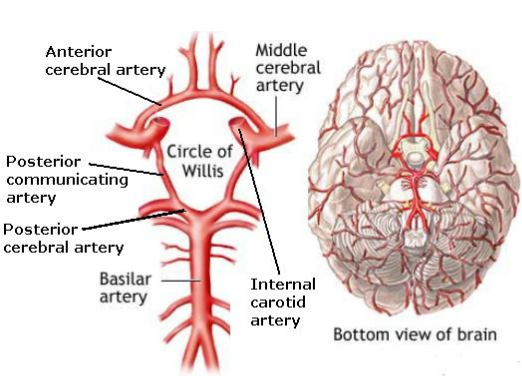
Neuroendocrine- Circle Of Willis

Unfortunately, capillaries sometimes leak, releasing noxious bacteria. Such infections are usually addressed by your immune system. However, certain areas of the body cannot tolerate such risks. If you had to choose, which areas of the body which you want special protection from infection?

Natural selection has produced specialized protection for three areas of the body: the brain, the eyes, the gonads.  Damage to these structures are particularly destructive to an organism’s fitness. Capillaries in these “protected zones” are given essentially several extra layers of “armor”, which prevent bacteria from escaping.

Neuroendocrine- BBB

This protective mechanism is known as the blood-brain barrier (BBB). This armor is metabolically expensive, which explains the absence of “blood-foot barriers”.

Ventricular System and BCSFB

Your brain does not rest against the base of your skull. That would destroy brain tissue. Instead, it is immersed in a fluid bath, which protects and supports the brain.  Formally, the fluid is known as cerebrospinal fluid (CSF), and it is found as a support for the brain (ventricular system) and surrounding/cushioning the brain (in the subarachnoid space).

Neuroendocrine- Ventricles and CSF

Cerebrospinal fluid (CSF) takes no direct connection to the circulatory system. In fact, since the CSF directly contacts nervous tissue, it also requires extra protection from infection. The blood-cerebrospinal fluid barrier (BCSFB) exists for precisely this reason.

Taken together, the BBB and the BCSFB insulate the brain from the circulatory system, while still allowing nutrients to reach neurons:

Neuroendocrine- BBB and BCSFB

Endocrine System and CVOs

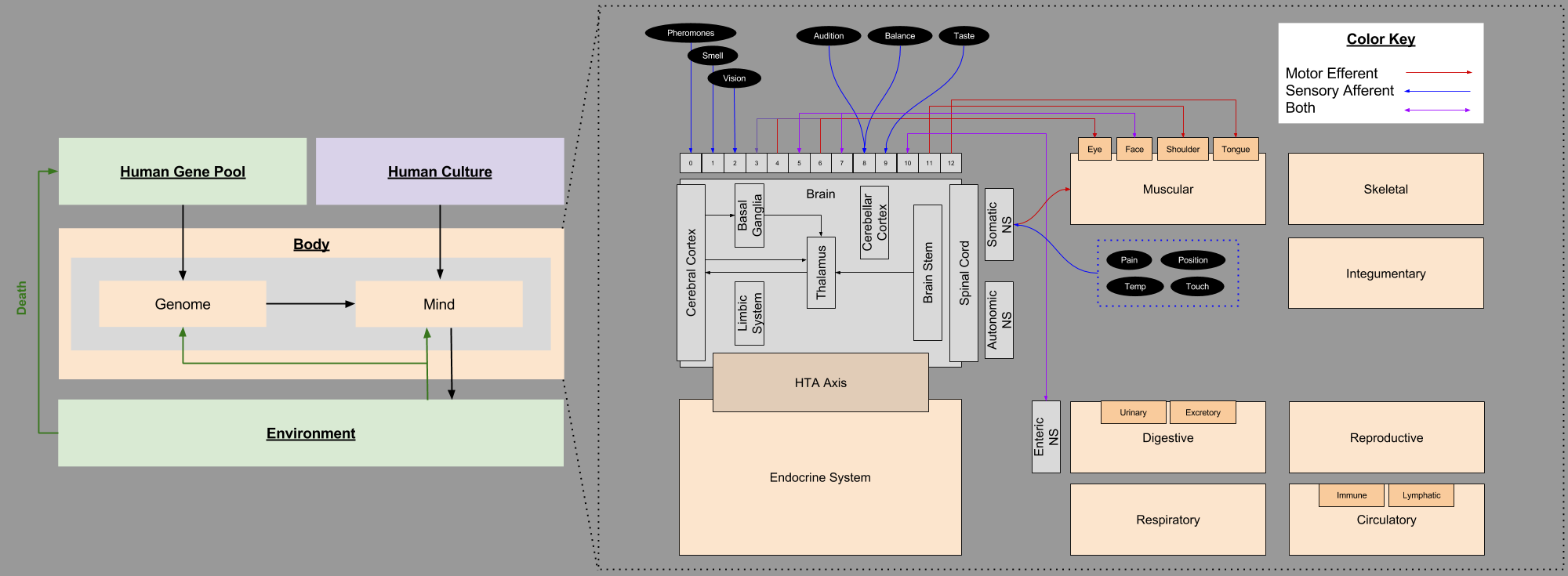
In Towards Body Architecture we explored how the nervous system interacts with other bodily systems (respiratory, digestive, etc).  In fact, the nervous system acts as a control system, influencing how other systems perform. No other anatomical system can claim that…

…except one. Your endocrine system also acts as a control system! Hormones play a role in digestion, cell growth, reproduction, etc – a whole host of bodily processes. Speaking generally, nervous signals act quickly (nerve signals do their work within seconds), whereas endocrine control (hormone signals enact change more slowly, usually in minutes or hours).

Two independent control systems is a poor way to design a body. We have every reason to benefit from them synchronizing their efforts, exchanging information. Let’s examine stress as an example, which requires the involvement of both systems.

  • The nervous system is responsible for detecting stressful stimuli. It then transmits a signal, via nerves of the sympathetic nervous system to the adrenal gland, which immediately begins manufacturing cortisol (a hormone which mediates stress). This is fight-or-flight, a fast response.
  • The endocrine system concurrently releases adrenocorticotropic hormone (ACTH) which also prompts the adrenal gland to manufacture cortisol. However, ACTH takes longer to take effect, and stays in your system longer. Thus, the endocrine system supports non-transient forms of stress.

These two phenomena are obviously correlated. But how? Your endocrine system is confined to your circulatory system – hormones travel via the bloodstream. But we just learned that the brain is insulated from the bloodstream…

The nervous system and the endocrine system coordinate with one another via circumventricular organs (CVOs). CVOs puncture the blood-brain barrier in a controlled way. They come in two flavors:

  • Sensory CVOs translate hormone messengers into neural signals.
  • Secretory CVOs translate neural signals into hormone messengers.

As you might expect by now, these two categories of CVOs provide neuroendocrine integration.

Neuroendocrine- Visceral Loop

Visceral vs Cognitive Processing

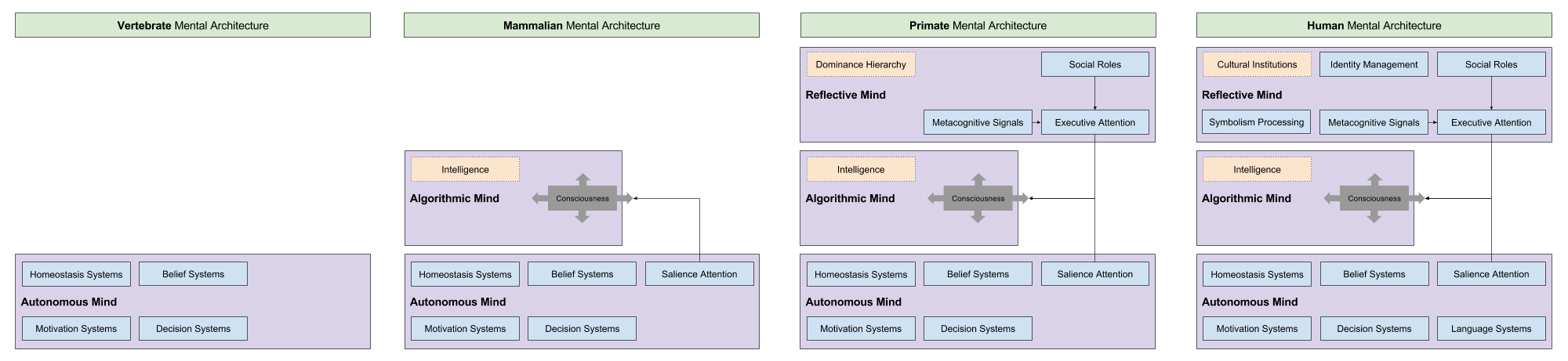
In my last post, I presented the cognitive perception-action cycle. Let us consider these cybernetic systems side by side.

Neuroendocrine- Abstraction Hierarchy

This image situates visceral and cognitive processes together. This reflects the medial viscera principle:

Visceral processes tend to reside in the center of the brain (medial regions).

The neuroendocrine system does not operate alone. Rather, it works alongside the autonomic nervous system, which regulates the body via two complementary systems:

  1. Sympathetic Nervous System, which promotes “fight for flight” readiness.
  2. Parasympathetic Nervous System, with a restorative “rest or digest” function.

In this way, the visceral perception-action cycle has two arms:

  1. The autonomic nervous system, which quickly perceives and regulates the body.
  2. The neuroendocrine system, which operates at a slower, more deliberate pace.

We can call the visceral perception-action cycle the “hot loop”, in contrast with the cognitive cycle, or “cold loop”. These loops represent a central organizing principle of the nervous system.

neuroendocrine-information-channels-2


The spinal cord bears nerve fibers in service of both loops, both autonomic nerves bearing sympathetic & parasympathetic signals, and somatic nerves which regulate the skin and musculature. The cranial nerves include exteroceptive nerves as well (vision, hearing, smell, etc) which together encode information about the external world. 

The Folly Of Spock

As we will see later, the visceral perception-action cycle participates in the neural basis of emotion.

Next time you watch Star Trek, you may safely infer the Spock’s species has not achieved neuroendocrine integration.

Emotional processes reside at the center of the brain. Emotion is thus ideally situated to modify, modulate, and alter your decision-making capabilities.

This tension between visceral and cognitive, between hot and cold, is one of the hallmarks of being human.
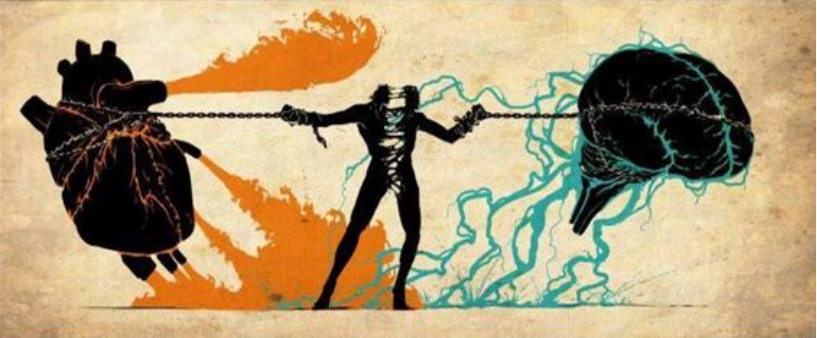
Neuroendocrine- Song Of Ice and Fire

Until next time.


Abstraction Hierarchy: Perception-Action Cycles

Part Of: [Neuroanatomy] sequence
Next Up: The Interlocking Loop Hypothesis

Posterior Perception, Anterior Action

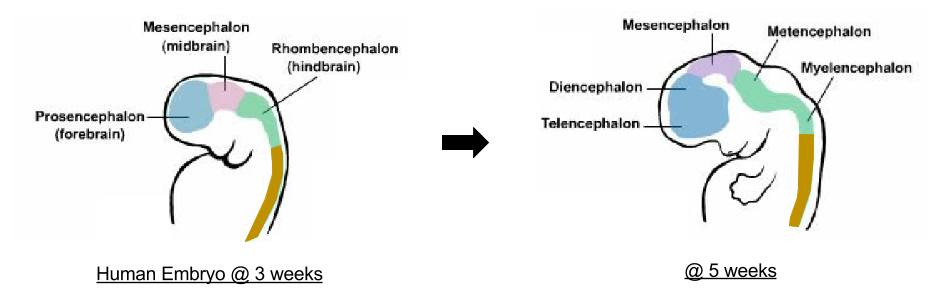
Consider again the neural tube. In Brain Ontogeny, we learned how brains emerge from five little bumps in the neural tube.

Brain Ontogeny- Vesicle Differentiation Chronology

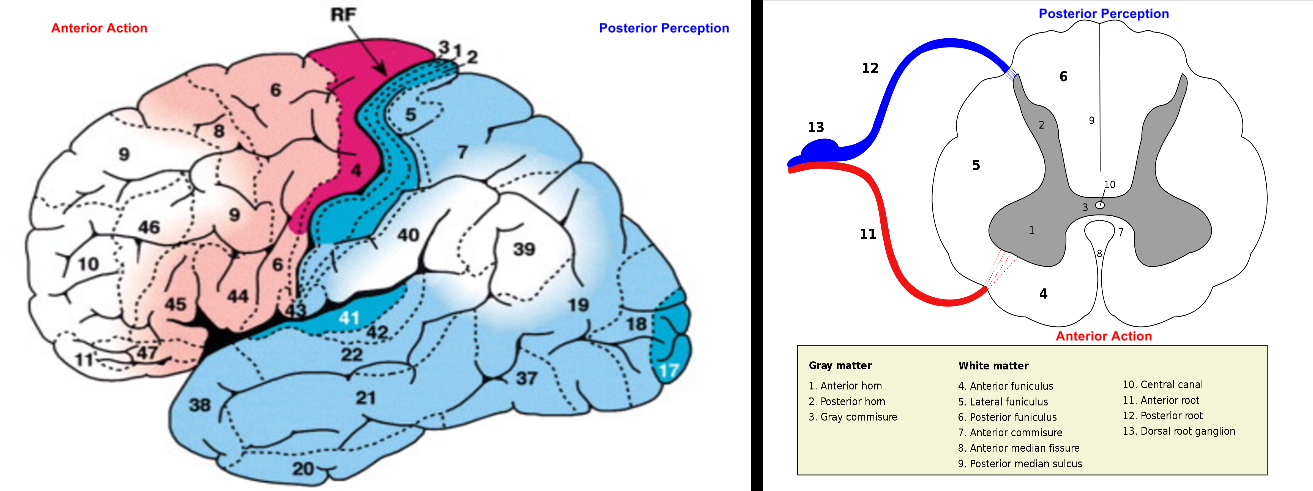
The neural tube develops under several organizing principles. One of the most important is the Bell-Magendie law: in the nervous system, motor nerves & computations happen in the front of an animal (anterior action), perceptual nerves & computations are at the back (posterior perception). This principle applies to the entire nervous system, from the spinal cord to the neocortex.

Cybernetics- Posterior Perception, Anterior Action

From an evolutionary vantage point, this principle is fairly obvious. Because gravity is a thing, the vertebrate body plan features anterior limbs (movement requires limbs between body & ground) and posterior vision (because of the sun’s position relative to the Earth). Notice how bipedalism and its deformation of the human neuraxis obscures this principle. Our quadruped ancestry thereby illuminates the functional organization of the human nervous system.

The Abstraction Hierarchy

The nervous system is a complex organ. Sometimes, choices do not require much analysis. Often, however, a decision becomes clear only after contemplation.

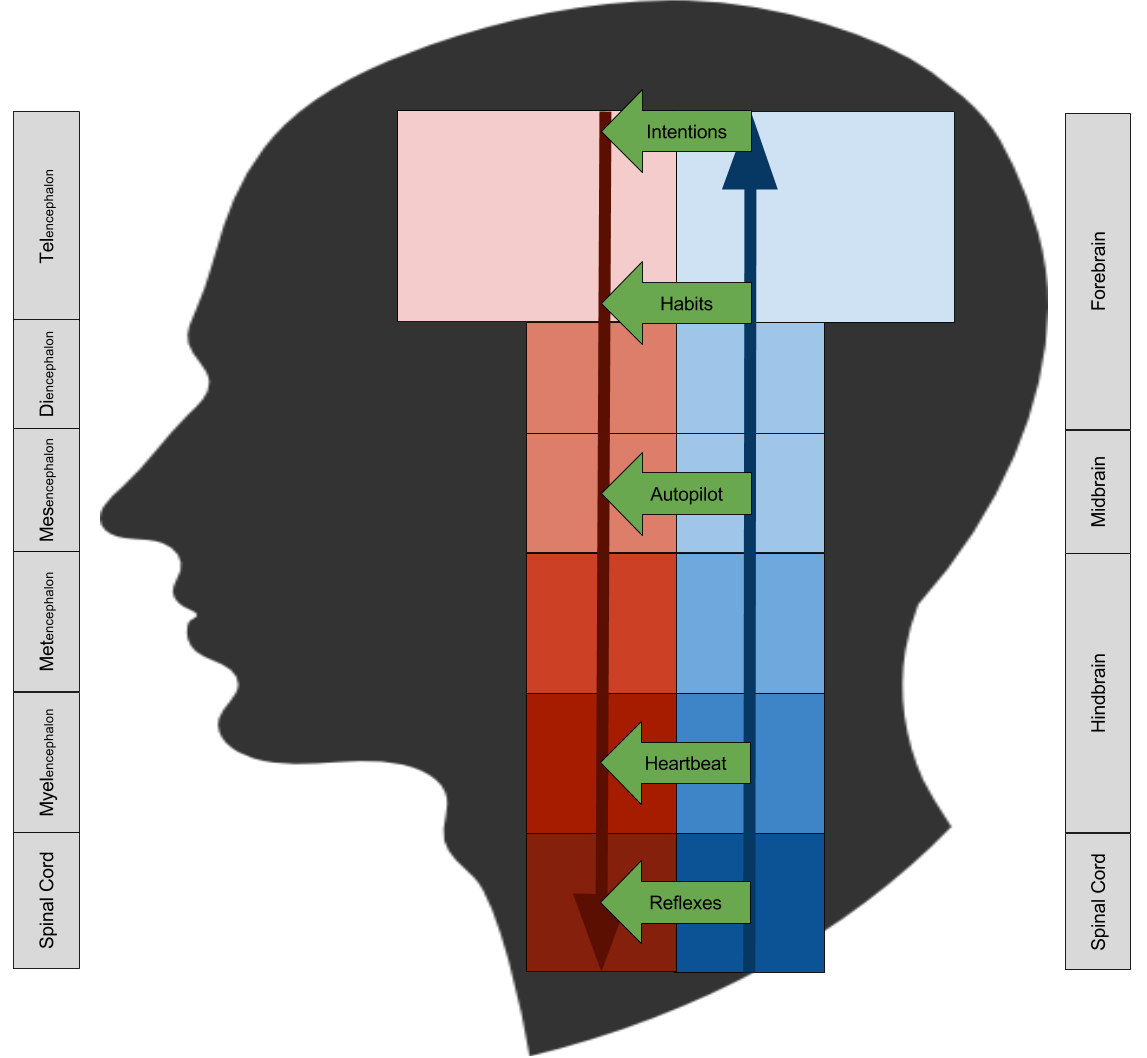
As information travels through the brain, it becomes more abstract, and resultant behavior more flexible. This is the brain’s abstraction hierarchy.

Cybernetics- Abstraction Hierarchy

Darker colors denote concrete representations, lighter colors denote abstraction.

In cognitive science, the following synonyms hold:

  • Information is a synonym for memory.
  • Sites of information processing is a synonym for modules.

The abstraction hierarchy can inform both levels of analyses. Let’s see an example.

Cognitive scientists like to distinguish between information encoding events (episodic memory) and information encoding concepts (semantic memory). The abstraction hierarchy explains the relation between the two: the concept of apple generalizes any number of events that contain apples. That is, semantic memory is situated at a higher level than episodic memory.

How do we know the brain is organized hierarchically? Brain damage provides one line of evidence.

  • Severe damage to the brain stem is fatal.
  • However, if a human loses everything but the brain stem, they cling to life (persistent vegetative state)
  • If the midbrain is spared, such that a person loses only their cerebrum, they can spontaneously move, but their behavior is disorganized.

Renowned neuroscientist Charles Sherrington once described the brain as an enchanted loom:

The brain is waking and with it the mind is returning. It is as if the Milky Way entered upon some cosmic dance. Swiftly the head mass becomes an enchanted loom where millions of flashing shuttles weave a dissolving pattern, always a meaningful pattern though never an abiding one; a shifting harmony of subpatterns.

The abstraction hierarchy teaches us: the higher you climb the enchanted loom, the more flexible your dance.

Biological Decision Making

We are now in a position to understand decision making.

Decisions are bridges between perception and action.

Given your brain’s abstraction hierarchy, people have invented many names for this singular concept:

Cybernetics- Decision Making

Until next time.

Cybernetics: Brains As Regulators

Part of: Neuroanatomy sequence
See Also: Introduction to Homeostasis
Content Summary: 400 words, 4 min read

Homeostasis

Consider the thermostat. It consumes sensory information, and transmits electrical signals to your furnace.  In fact, one of the most important things to know about a thermostat is its input-output maps. If you know how your thermostat will behave at any temperature, you can reasonably say that you understand the device.

Suppose you return from vacation, and set your thermostat to room temperature. The thermostat turns on the furnace. How does it know when to stop?

Most thermostats accomplish this by comparing the current temperature with the desired temperature, or goal. Imagine the current temp is 60 degrees, and desired  temp is 70 degrees. The difference between the two (70-60 = 10) is called the error signal, which the thermostat uses to adjust its current strategy. If the error signal is high, the furnace might be turned on full-volume; if it is 0.5 degrees, the furnace might be turned down, to avoid overshooting the target.  We call this process negative feedback (negative, because the error signal is constructed by subtracting from the target state).

Negative feedback is the mechanism by which a thermostat to exert its “will” on the environment.

  • A control system might be overdamped, and approach the goal too slowly.
  • Sometimes a control system will be underdamped, and overshoot the goal before “coming back around”.
  • Ideally tuned systems are critically damped, and suffer from neither of the above problems.

This ability to realize and maintain a goal state, is called homeostasis.

Cybernetics- Homeostasis (1)

Cybernetics: Interdisciplinary Implications

The formal study of control theory arguably began in 1868, by physicist James Maxwell. However, control theory is relevant to many other fields, including:

  • Machine Learning. Remember error signals, above? Scalar errors drive reinforcement learning, multidimensional errors drive supervised learning.
  • Biology. Life is a control process whereby an organism regulates itself. Body temperature maintenance is a classic example here.

The study of biological control systems is known as cybernetics.

There exists one particular theorem within cybernetics that is of singular interest. Consider the Good Regulator Theorem:

Every effective regulator of a system must include a model of that system.

The mathematics behind this statement are explored here. But allow me to inject a biological interpretation onto this result.

To be effective at survival, every animal must have a concept of itself.

Biologically, this theorem explains why we find a cortical homunculus (“little man”) etched onto our cerebrum.

Philosophically, this theorem hints at how complex animals like us came to acquire a sense of Selfhood. These implications are explored here.

Neural Coordinate Systems

Part Of: [Neuroanatomy] sequence

Sagittal, Transverse, and Frontal

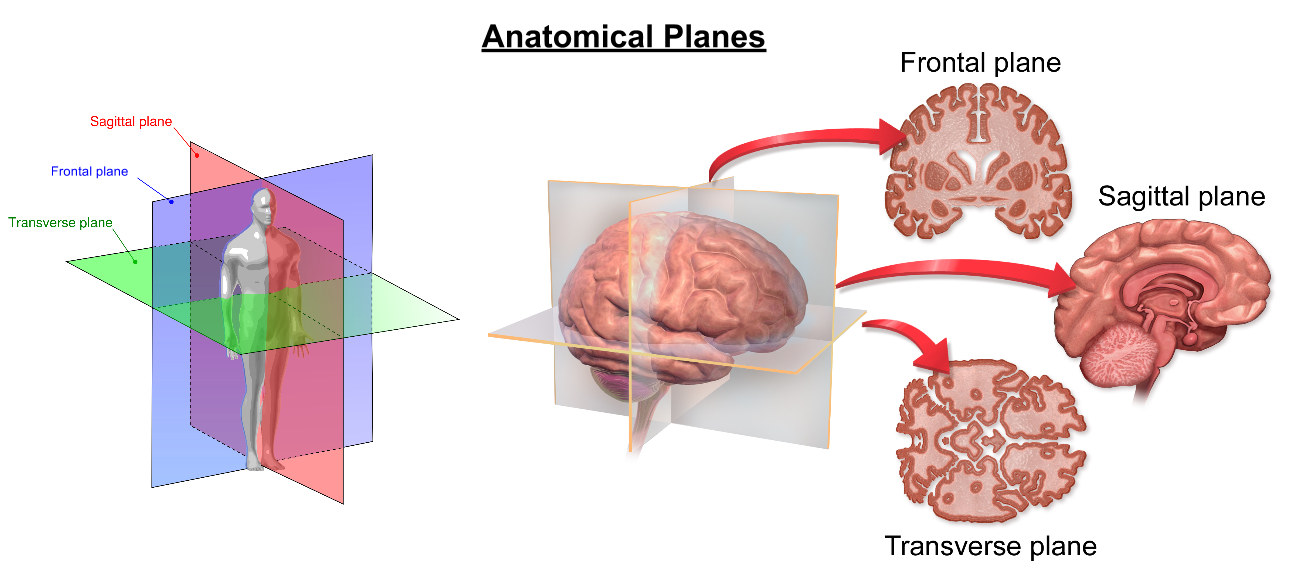
An efficient way to navigate three-dimensional spaces is to use three orthogonal axes.

  • Pilots use roll, pitch, and yaw.
  • Geometricians use x, y, z.
  • Anatomists use sagittal, transverse, and frontal.

Brain Geometry- Three Planes

We also need a language to navigate anatomical space.

  • Lateral/Medial means side/center (adjusting X, moving the sagittal plate left & right)
  • Superior/Inferior means top/bottom (adjusting Y, moving the transverse plate up & down)
  • Anterior/Posterior means belly/back (adjusting Z, moving the frontal plate forwards & backwards)

Notice how directions along the X axis (first bullet) are of a different style than other axes. While the other directions gesture at an infinite scale (-∞, +∞), the first gestures at [0, +∞).

This simplification is only possible because of symmetry: nearly all vertebrates exhibit bilateral symmetry along the sagittal axis.

Neuraxis Distortions

Anatomy maintains a lot of duplicate names (synonyms). Anatomy coordinate systems are no exception:

  • Ventral/Dorsal is synonymous with front/back (Anterior/Posterior)
  • Rostral/Caudal is synonymous with top/bottom (Superior/Inferior)

To be perfectly frank, anatomy naming conventions seem inefficient to me. I wonder if too much has been sacrified in pursuit of historical contiguity. But sometimes, “redundant” synonyms come in handy. Consider the following example:

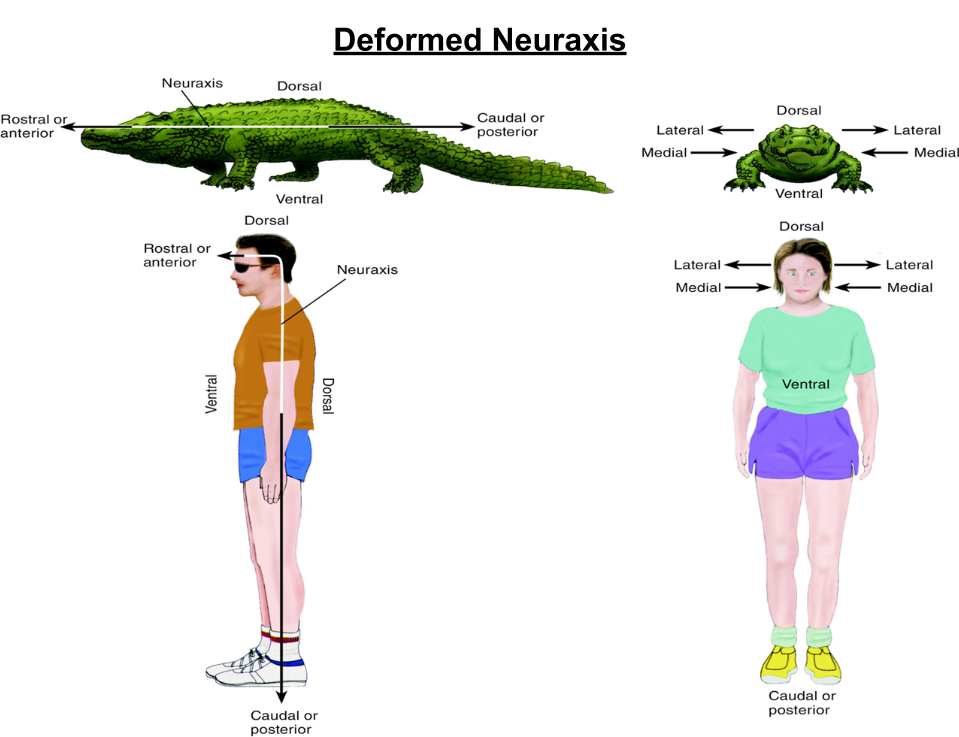
Humans are bipedal. It turns out that this evolutionary innovation deforms the neuraxis.

Brain Geometry- Deformed Neuraxis


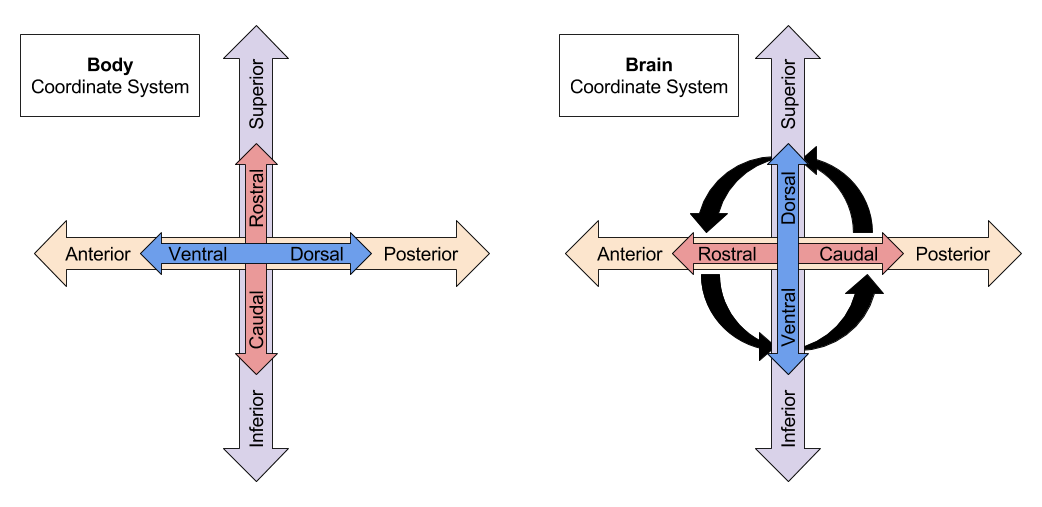
Because of the bend in the human neuraxis, “front & back” is in danger of being confused with “top & bottom”.

Fortunately, we can use the above synonyms to disambiguate direction in the brain.

  • In the brain alone, Ventral/Dorsal becomes synonymous with bottom/top (Inferior/Superior)
  • In the brain alone, Rostral/Caudal becomes synonymous with front/back (Anterior/Posterior)

Brain Geometry- Adjusted Synonyms


Perhaps humans should just give up this walking upright business altogether. It would make anatomy much easier!

[Sequence] Neuroanatomy

Introductory Posts

Particular Anatomical Structures

Organizational Principles

Related Sequences

Brain Ontogeny: From The Tube

In 1969, H. Chandler Elliott said

Every brain system grows logically from the tube.

He was right. Today, we’ll learn why.

Primary Neurulation

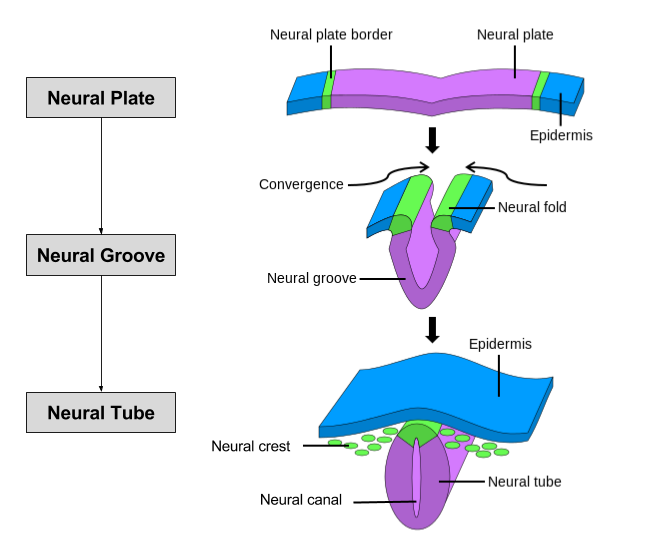
A blastocyst has no brain. To correct this unfortunate situation, every vertebrate genome contains instruction for constructing a neural tube. This structure emerges via folding:

Brain Ontogeny- Primary Neurulation
This process is called primary neurulation. The resultant embryonic structures become the following systems in adults:

  • Neural crest cells evolves into the peripheral nervous system (i.e., nerves gathering information from your muscles, skin, and organs).
  • Neural tube cells evolves into the central nervous system (i.e., your brain and spinal nerves).
  • The neural canal evolves into the ventricular system (i.e., the hollow cavities in your brain filled with cerebrospinal fluid).

In the human embryo, primary neurulation is completed in the fourth week. It turns out this developmental milestone is relatively more prone to error than others – 1 in 500 embryos suffer from neural tube defects.

Vesicle Differentiation

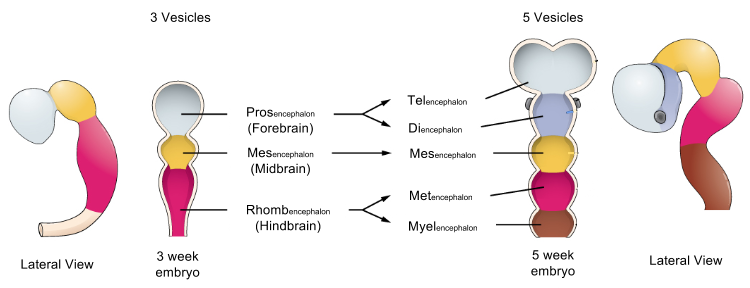
The neural tube does not stay uniformly shaped for long: soon, three bumps (vesicles) emerge.  These vesicles appear at three weeks – even before primary neurulation is complete! Informally, these bumps comprise forebrain, midbrain, and hindbrain. Two weeks later, the human neural tube has differentiated into five vesicles.

Brain Ontogeny- Vesicle Differentiation

“Encephalon” means brain.

Vesicle-Structure Maps

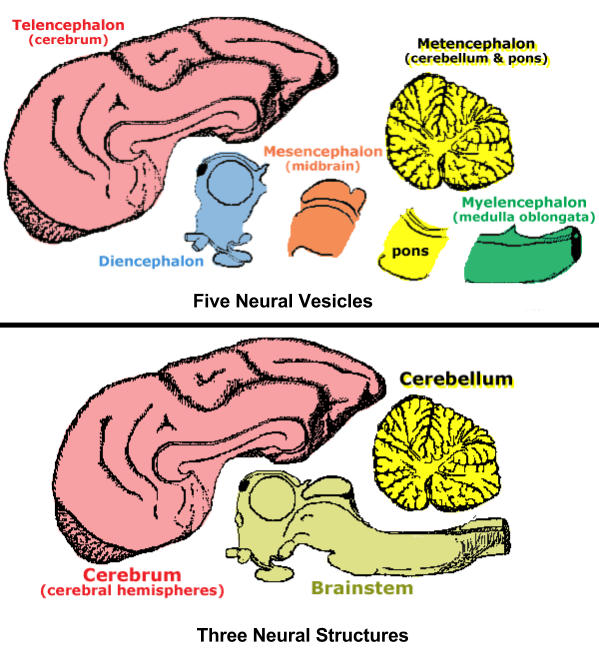
Developmentally, the neural tube can be divided into five regions: tel-, di-, mes-, met-, and myel- encephalon.

Structurally, the central nervous system can be divided into three structures: cerebrum, cerebellum, and spinal cord.

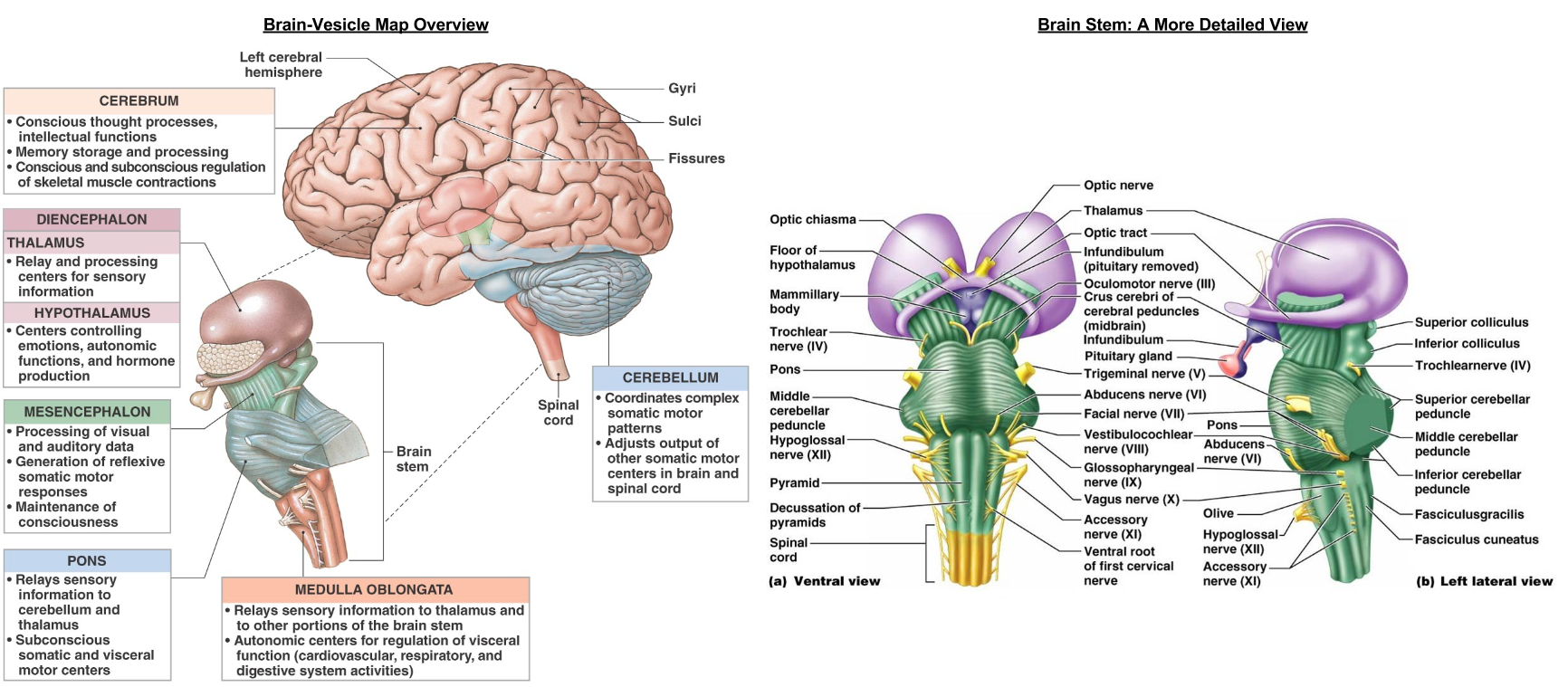
We can usefully combine these perspectives:

Brain Ontogeny- Vesicle-Structure Overview

The brainstem and cerebellum are highly conserved across species. Most biological innovation is driven through the cerebrum (telencephalon).

Here is an anatomical view of the same relationships:

Brain Ontogeny- Vesicle-Structure Anatomy

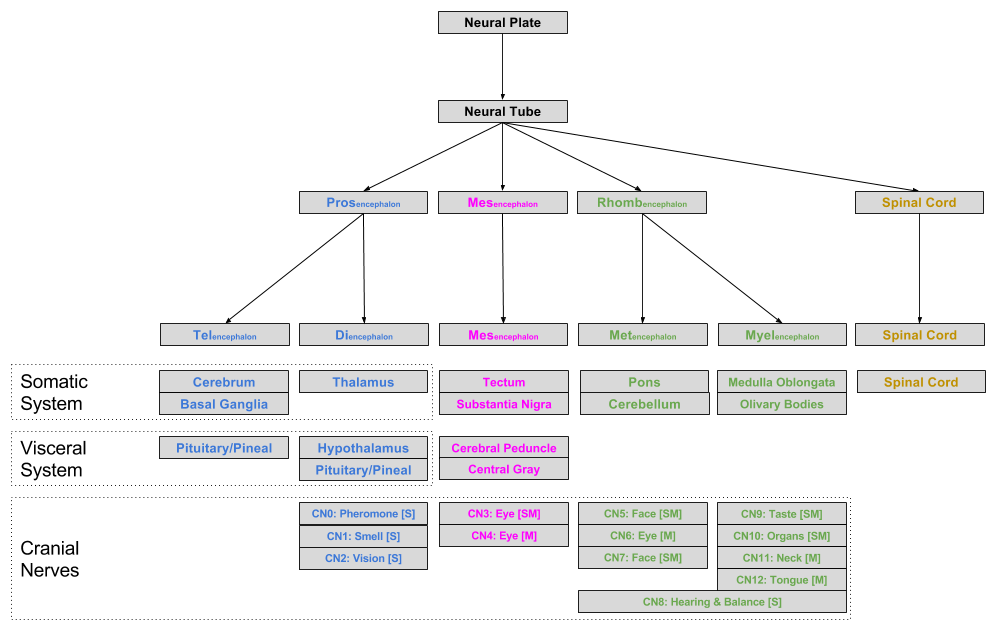
Finally, here is a topological view of these same vesicle-structure maps:

Brain Ontogeny- Vesicle-Structure Topology (1)


You may notice how this graphic coheres well with my post on cranial nerves.

From this level of abstraction, we are better equipped to create structure-function maps, also known as neural architectures. To be continued.

[Graphic] Cranial Nerves

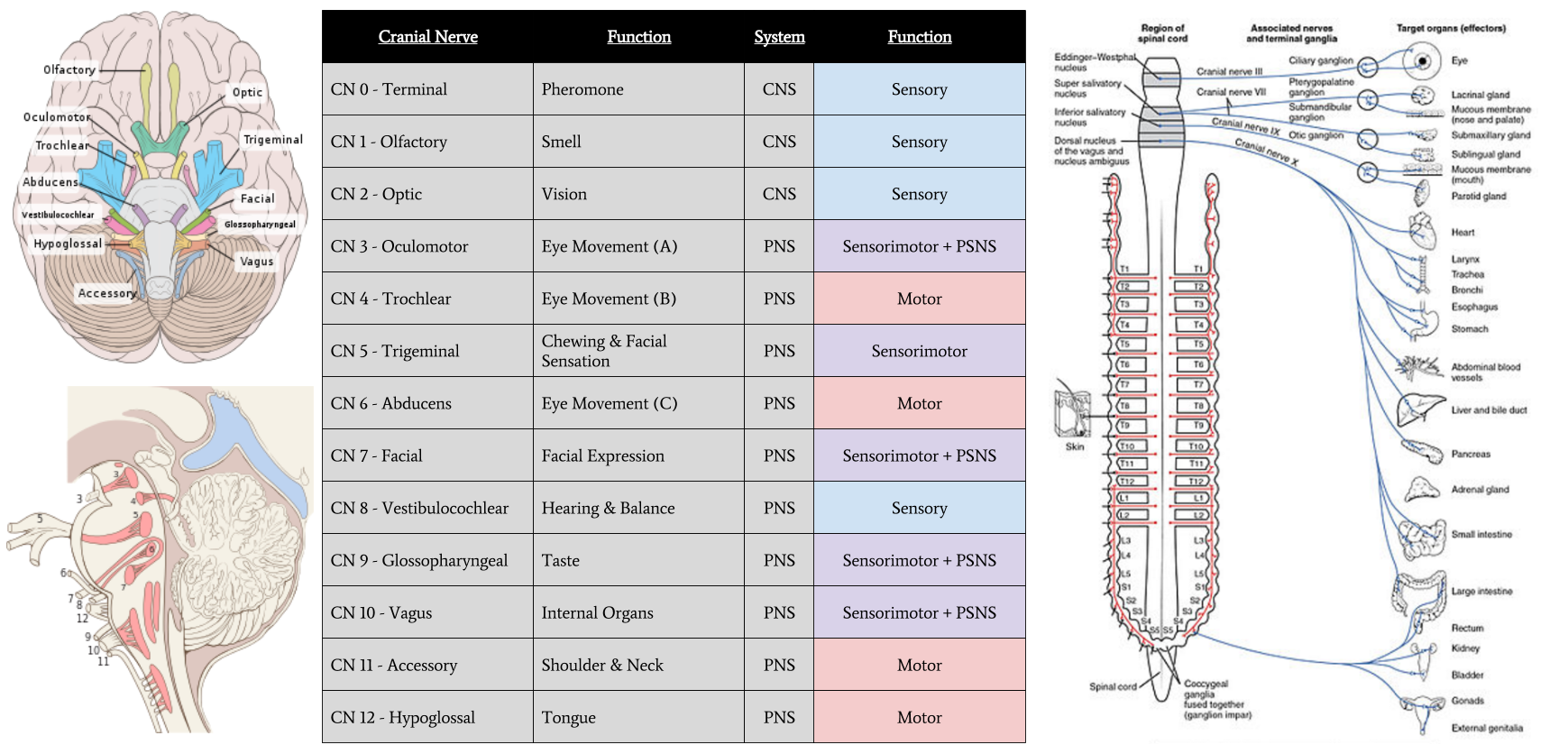
The brain receives information from three distinct sources:

  1. The endocrine axes.
  2. The spinal nerves
  3. The cranial nerves

This infographic explores the third source of information.

Loosely, cranial nerves exist because sensory information coming from the head doesn’t make much sense coming through the spinal cord.

Cranial Nerve Infographic (4)

Note that PSNS stands for Para-Sympathetic Nervous System (a branch of the autonomic nervous system).


Towards Body Architecture [Architecture v1.5]

Body Architecture v1.5

The autobiographical origin of this post is rather involved:

  • First, I wanted to understand the medial prefrontal cortex generated emotion.
  • Next, I wanted to understand how affective neuroscience interacted with the endocrine system.
  • Next, I wanted to understand the interactions between nervous & endocrine systems more generally.
  • Finally, I wanted to understand how nervous & endocrine systems together regulate the organism as a whole.

At the end of this adventure, the following concepts stand out to me as particularly significant:

  • Thirteen pairs of cranial nerves (CN) complement information derived from the spinal nerves.
  • The HP (hypothalamus-pituitary) axes represent neuroendocrine systems, such as the HPA axis (stress), HPT axis (metabolism) and HPG axis (sexuality). These are how the central nervous system drives the endocrine system, despite the blood-brain barrier.
  • The autonomic nervous system (i.e., the sympathetic & parasympathetic branches) intertwines with the endocrine system to maintain homeostasis.
  • The enteric nervous system (500 million neurons within the gut) is connected to the brain via the vagal nerve (CN 10), but can operate independently.

A few general musings to close:

  • Within anatomy, the various bodily systems feel much more studied than their interactions.
  • The endocrine and nervous systems seem to control the body at different time scales: nerve control is immediate, hormonal control is long-lasting.
  • The distinction between autonomic nervous system & autonomic endocrine system could be used to stiffen a conceptual divide between emotion and mood.
  • This process of consolidation of anatomical knowledge has really emphasized, for me, how the neocortex is not the only actor on the stage of my architectural research.

To be continued. This was fun!

Neural Roots Of Mind [Architecture v1.5]

Part Of: [Mental Architecture v1.5] sequence

Overview

This data collection effort will become larger over the coming months. Eventually, I hope to break this up into a more formal knowledge representation system. It would be nice to create (inter-referencing, version-controlled) tables & software models containing:

  • Behavior Explananda Database: Linking modules or modular circuits to different behaviors.
  • Lesion Explanada Database: Counting how many syndromes can be explained on the current architecture.
  • Confidence Distribution Model: Formalizing my Bayesian intuitions on the architecture, and linking to various streams of evidence & constraint.
  • Cortical Maps: Displaying localization information topographically, and noticing areas where localizations overlap (logically possible, but worthy of further research)

Implementation Notes

This document is not close to representative of my entire research project, but it is better to have at least something written down.

Finally, please note that Schema Memory, Semantic Memory, and Episodic Memory are not represented in what follows. These memory systems each comprise their own representational format, but following the principle that “modules tend to save their work near where they are computed”.

Without further ado, here is my December 2015 mapping between my mental architecture, and the brain.

Modular Localizations

The following are cognitive networks (or streams, or circuits) which have been fully or partially localized. Here lie 17 distinct networks.

  1. The Action Instigator stream is responsible for activating and deactivating motor activity. It corresponds with the task-positive network and task-negative network.
  2. The Face Computation network, which includes the Face Detector, Facial Identity Lookup, and Face Expression modules.
  3. The Body Detector network, which includes Body Part Detector and Whole Body Detector modules.
  4. The Attention (Top-Down) network, which includes the Preparatory Set circuit, and the Task Switching circuit.
    • Localization: The Preparatory Set circuit operates in cingulo opercular PFC.
    • Localization: The Task Switching circuit operates in fronto-parietal PFC. 
    • Theory Basis: I am leveraging A dual-networks architecture of top-down control (Dosenbach et al, 2008)
  5. The Attention (Bottom-Up) network comprises the Salience Computation circuit and the Salience Orientation circuit.
    • Localization: The Salience Computation circuit operates in the dorsal frontal lobe. This is the home of the salience map. 
    • Localization: The Salience Orientation circuit operates in ventral frontal lobe, including Frontal Eye Fields, and is strongly right-lateralized. 
    • Theory Basis: I am leveraging The Attention System of the Human Brain: 20 Years After (Petersen and Posner, 2012).
  6. The Attention (Arousal) network comprises the top-down attention network.
  7. The Audio (Spatial) stream, which includes a left-lateralized Language Production module. 
  8. The Audio (Perceptual) stream, which includes the Voice Recognition and left-lateralized Language Comprehension modules.
    1. Theory Basis: I am leveraging The Cortical Organization Of Speech Processing (Hickok and Peoppel, 2007)
  9. The Event Analysis complex, which comprises a Biological Motion and a Causal Inference module. 
    • Localization: The Biological Motion module operates in the Superior Temporal Sulcus.
    • Localization: The Causal Inference module, whose location is unknown…
  10. The Global Broadcasting network uses the Thalamus as a relay station to construct a global workspace.
  11. The Intimacy network, which comprises an Attachment and an Attraction module 
    • Localization: the Attachment module operates in the  location is the “senior executive of the emotional brain”; the Orbitofrontal Prefrontal Cortex.
    • Localization: The Attraction module, whose location is unknown…
  12. The Location Detector network, which comprises a Place Inference and a Landmark Inference module.
  13. The Memory Metacognition network, including the Recognition Heuristic and Confidence Heuristic modules. 
  14. The Smell stream begins with the Olfactory Bulb. It is the only sense organ that is not first routed into the Thalamus.
  15. The Taste stream begins with the Gustatory Cortex.
  16. The Vision (Action) stream (which travels dorsally towards the parietal lobe) also begins with the Primary Visual Cortex.
  17. The Vision (Perception) stream (which travels ventrally towards the temporal lobe) begins with the Primary Visual Cortex.

The following are cognitive networks which I have not yet localized. Here lie 4 distinct networks.

  1. The Folk Mechanics network, which computes expectancies based on, e.g., the continuity of motion and other physics principles
  2. The Folk Math network, which includes the Subitizing module.
  3. The Identity Maintenance network, which includes the Identity Constructor, Identity Evaluator, and Identity Stabilizer modules.
  4. The Reputation complex, including the Caregiving module (partially mediated by oxytocin) and the Appreciation module (its functional sibling).

The following are cognitive modules which have been fully or partially localized. Here lie 14 distinct modules.

  1. The Action Engine module operates in the Primary Motor Cortex.
  2. The Action Evaluator operates in the Premotor Cortex.
  3. The Action Planner module operates in the Supplementary Motor Area.
  4. The Agent Classifier module, which links to the Amygdala…
  5. The Embodied Self module operates in the Primary Somatosensory Cortex.
  6. The Memory Heuristic (Effort) module, which constructs the Feeling Of Effort, lives somewhere in the Prefrontal Cortex (PFC),
  7. The Homeostasis Regulator operates in the Hypothalamus.
  8. The Pavlovian Conditioning module operates in the Posterior Parietal Cortex.
  9. The Memory Constructor (Frame) module, which lives somewhere in the Prefrontal Cortex (PFC)
  10. The Memory Constructor (Episodic) module operates in the Hippocampus.
  11. The Memory Constructor (Semantic) , which may be near the Lateral Occipital (LO) Complex
  12. The Normative Centroid module, which lives somewhere in the Ventro-Medial Prefrontal Cortex, and activates the Amygdala.
  13. The Conflict Monitor module, which lives in the dorsal Anterior Cingulate Cortex (dACC).
  14. The Intuition Override module, which operates in the right Ventrolateral Prefrontal Cortex (rVPC).

The following are cognitive modules which I have not localized. Here lie 9 distinct modules.

  1. The Counterfactual Simulator module
    1. Theory Basis: this module is adapted from Alan Leslie’s work, and Mindreading (Nichols and Stich, 2003).
  2. The Lie Detection module
    1. Theory Basis: Default Credulity theory, as defined by Gilbert (1991) How Mental Systems Believe.
  3. The Metaphor Linker module
  4. The Mind Reading module
  5. The Moral Rigidity module
    1. Theory Basis: Sacred Value Protection Model. Thinking the unthinkable: sacred values and taboo cognitions (Tetlock, 2003)
  6. The Social Processing (Fairness) module.
  7. The Social Processing (Exclusion) module
  8. The Social Processing (Authority) module
  9. The Symbolic Marker module