[Sequence] C.S. Peirce & Pragmatism

Charles Sanders Peirce (1839-1914) has been called “the father of pragmatism”, “America’s greatest logician”, and “the most original thinker of his time”. He founded the field of semiotics (the study of signs, which I touch on here), invented abduction (inference to the best explanation), and anticipated the work of geniuses like Georg Cantor (mathematics of infinity), Claude Shannon (information theory), and Ernst Zermelo (set theory) by decades.

Peirce met with a fate not unusual for thinkers of caliber: much of his work only came to be fully appreciated posthumously. His writings were never consolidated in book form, and remained largely disorganized until collated into various anthologies.

An autobiographical snippet from a paper entitled Concerning The Author:

My book will have no instruction to impart to anybody. Like a mathematical treatise, it will suggest certain ideas and certain reasons for holding them true; but then, if you accept them, it must be because you like my reasons, and the responsibility lies with you. Man is essentially a social animal: but to be social is one thing, to be gregarious is another: I decline to serve as shepherd. My book is meant for people who want to find out; people who want philosophy ladled out to them can go elsewhere. There are philosophy soup shops at every corner, thank God!

The development of my ideas has been the industry of thirty years. I did not know as I ever should get to publish them, their ripening seemed so slow. But the harvest time has come, at last, and to me that harvest seems a wild one, but of course it is not I who have to pass judgment. It is not quite you, either, individual reader; it is experience and history.

For years in the course of this ripening process, I used to collect my ideas under the designation fallibilism; and indeed the first step toward finding out is to acknowledge you do not satisfactorily know already; so that no blight can so surely arrest all intellectual growth as the blight of cocksureness; and ninety-nine out of every hundred good heads are reduced to impotence by that malady – of whose inroads they are most strangely unaware!

Indeed, out of a contrite fallibilism, combined with a high faith in the reality of knowledge, and an intense desire to find things out, all my philosophy has always seemed to me to grow ….

In many ways, Peirce and I march to the beat of the same drum…

Reviewed essays:

Machery: Précis of Doing without Concepts

Content Summary: 2600 words, 26 minute read.

Introduction

There is no secret that the academic field of concepts is in disarray. In this article, Machery attempts to weave these disparate traditions into a compelling whole.  But first, a quote which serves to motivate what follows:

Why do cognitive scientists want a theory of concepts? Theories of concepts are meant to explain the properties of our cognitive competences. People categorize the way they do, they draw the inductions they do, and so on, because of the properties of the concepts they have. Thus, providing a good theory of concepts could go a long way towards explaining some important higher cognitive competences.

Summarization text is grayscale, my commentary is in orange.

Article Metadata

  • Article: Précis of Doing without Concepts
  • Author: Edouard Machery
  • Published: 11/2009
  • Citations: 178 (note: as of 04/2014)
  • Link: Here (note: not a permalink)

Section 1. Regimenting the use of concept in cognitive science

We start with definitions!

The world is not an undifferentiated sea of chaos. It has statistically noticeable patterns – “joints”. Let us call these delightful patterns in nature a category (or a natural kind). But categories are things in the world, and your mind must somehow learn these categories for itself. Plato once described the act of reasoning as: “That of dividing things again by classes, where the natural joints are, and not trying to break any part, after the manner of a bad carver.” (Phaedrus, 265e). This analogy – to carve nature at its joints – is what concept processes do. Concepts represent categories in your brain.

Let’s get specific about the properties of concepts. Machery defines concept as something that:

  1. Can be about a class, event, substance, or individual.
  2. Nonproprietary, not constrained by the underlying type of represented information.
  3. Constitutive elements can vary over time and across individuals.
  4. Some elements of information about X may not fit into the concept of X; let us call these data background knowledge.
  5. They are used by Default (I will define this in Section 3).

Section 2. Individuating concepts

Is it possible for an individual to possess different concepts of the same category?
Can Kevin possess two concepts of the category of chair?
Yes.
How do we individuate two related pieces of information, that would otherwise fall under the same concept?

I propose [that] when two elements of information about x, A and B, fulfill either of these [individuation] criteria, they belong to distinct concepts:

  • Connection Criterion: If retrieving A (e.g., water is typically transparent) from LTM and using it in a cognitive process (e.g., a categorization process) does not facilitate the retrieval of B (e.g., water is made of molecules of H20) from LTM and its use in some cognitive process, then A and B belong to two distinct concepts (WATER1 and WATER2).
  • Coordination Criterion: If A and B yield conflicting judgments (e.g., the judgment that some liquid is water and the judgment that this very liquid is not water) and if I do not view either judgment as defeasible in light of the other judgment (i.e., if I hold both judgments to be equally authoritative), then A and B belong to two distinct concepts (WATER1 and WATER2).

Section 3. Defending the proposed notion of concept

Time to explore our last property of concepts, “used by Default”. Default is a name for “the assumption that some bodies of knowledge are retrieved by default when one is categorizing, reasoning, drawing analogies, and making inductions”.  Say you are given a word problem involving counting apples and oranges. Default is the claim that a flood of concepts – including but not limited to arithmetic, the apple, the orange, trees, and fruit – will be drawn from long term memory (LTM) stores, and made available to your mental processes automatically.

At least two research traditions go against this claim:

  1. Concepts are not retrieved from LTM automatically, they are rather summoned via conscious attention.
  2. Concepts are drawn from LTM automatically, but they are constructed on-the-fly.  When you see an apple, you do not load a concept of apple that was hashed out long ago, your mind queries your LTM for apple-related background knowledge, constructing transient concepts especially tailored for the peculiarities of the task at hand.

Machery makes three counterpoints:

  1. Only a pronounced amount of recall variability (e.g., highly divergent results for tweaking minor parameters of a word problem) would falsify Default in favor of on-the-fly concept construction.
  2. Empirical investigations only reveal moderate levels of recall variability.
  3. A substantial amount of evidence supports Default.

Section 4. Developing a psychological theory of concepts

A psychological theory of concepts must treat the following concerns:

  • The nature of the information constitutive of concepts
  • The nature of the processes that use concepts
  • The nature of the vehicle of concepts
  • The brain areas that are involved in possessing concepts
  • The processes of concept acquisition

Section 5. Concept in cognitive science and in philosophy

The gist of the section:

Although both philosophers and cognitive scientists use the term concept, they are not talking about the same things. Cognitive scientists are talking about a certain kind of bodies of knowledge, they attempt to explain the properties of our categorization, inductions etc; whereas philosophers are talking about that which allows people to have propositional attitudes. Many controversies between philosophers and psychologists about the nature of concepts are thus vacuous.

An amusing aside that I desire to explicitly ground the definition of vacuous into some theory of concepts, when I come to treat pragmatism.

Anyways, my tentative attempt to restate the above: Philosophers concern themselves with category-concept fidelity, whereas cognitive scientists concern themselves with the lifecycle of the concept within the mental ecosystem.

Section 6. The heterogeneity hypothesis versus the received view

Machery defines the received view as the assumption that, beyond differences within concept subject-matter, concepts share many properties that are scientifically interesting. Machery suggests that this a mistake, and that the evidence suggests the existence of several distinct types of concept. Concept, in other words, is itself not a category (natural kind). A nuanced sentence if you’ve ever heard one. 🙂

The Heterogeneity Hypothesis, in contrast, claims that processes that produce concepts are distinct, that they share little in common.

Section 7. What kind of evidence could support the heterogeneity hypothesis?

Three kinds of evidence are predicted:

  1. When the conceptualization processes fire individually, we expect each to receive strong confirmation in just those experiments.
  2. When the conceptualization processes fire together, outputs may be incongruent, requiring mediation; we thus expect processing delays.
  3. Although the epistemology of dissociations is intricate, we should expect confirmation from neuropsychological data analysis.

Section 8. The fundamental kinds of concepts

Three different kinds of concepts exist in your cognitive architecture:

  1. Prototypes are bodies of statistical knowledge about a category, a substance, a type of event, and so on. For example, a prototype of dogs could store some statistical knowledge about the properties that are typical of dogs and/or the properties that are diagnostic of the class of dogs… Prototype are typically assumed to be used in cognitive processes that compute similarity linearly.
  2. Exemplars are bodies of knowledge about individual members of a category (e.g., Fido, Rover), particular samples of a substance, and particular instances of a kind of event (e.g., my last visit to the dentist). Exemplars are typically assumed to be used in cognitive processes that compute the similarity nonlinearly.
  3. Theories are bodies of causal, functional, generic, and nomological knowledge about categories, substances, types of events, etc. A theory of dogs would consist of some such knowledge about dogs. Theories are typically assumed to be used in cognitive processes that engage in causal reasoning.

Some phenomena are well explained if the concepts elicited by some experimental tasks are prototypes; some phenomena are well explained if the concepts elicited by other experimental tasks are exemplar; and yet other phenomena are well explained if the concepts elicited by yet other experimental tasks are theories. As already noted, if one assumes that experimental conditions prime the reliance on one type of concept (e.g., prototypes) instead of other types (e.g., exemplars and theories), this provides evidence for the heterogeneity hypothesis.

Let’s illustrate this situation with the work on categorical induction – the capacity to conclude that the members of a category possess a property from the fact that the members of another category possess it and to evaluate the probability of this generalization… the fact that different properties of our inductive competence are best explained by theories positing different theoretical entities constitutes evidence for the existence of distinct kinds of concepts used in distinct processes. Strikingly, this conclusion is consistent with the emerging consensus among psychologists that people rely on several distinct induction processes.

These arguments seems quite powerful at first glance. Even after reviewing peer-reviewed criticisms, its strength does not feel much diminished. Pending my own research into the forest of citations embedded within this section, I will proceed with my theorizing as though the Heterogeneity Hypothesis is true.

Section 9. Neo-empiricism

In contrast, neo-empiricism can be summarized with the following two theses:

  1. The knowledge that is stored in a concept is encoded in several perceptual and motor representational formats.
  2. Conceptual processing involves essentially re-enacting some perceptual and motor states and manipulating those states.

Amidst broader empirical concerns, Machery outlines three problems for the neo-empiricist school:

  1. Anderson’s problem: many competing versions of amodal concept theories exist, and neo-empiricists tend to assert victory over weaker versions of amodal theorizing.
  2. Imagery problem: it is hard to affirm that imagery is the only type of processes people have; people seem to have amodal concepts that are used in non-perceptual processes.
  3. Generality problem: some concepts (magnitude of classes, tonal sequences) have been empirically shown to be amodal, but neo-empiricists are bound to assume that all concepts are perceptual.

However, despite these concerns, Machery is happy to concede that there may “be something to” neo-empiricist arguments. In which case a fourth, a perceptual process would be added to the hypothesis. But the author suggests that, at this time, there is simply not enough evidence to justify this fourth concept-engine.

Machery seems not to appreciate an obvious implication here. Recall that all concepts are “conceived” and “reared” under perceptual supervision. What is there to prevent a daisy-chaining effect, whereby concepts are recalled which drag with them perceptual reconstructions, which permit new conceptual manipulations, etc. This information pathway could explain phenomena such as Serial Associative Cognition, a Stanovitchian term.  One weakness of Machery is that he does not draw enough constraints from the broader decision-making literature; Serial Associative Cognition must be explained in the language of concepts just as much as Similarity Judgments.

Speaking generally, the manner in which percepts influence concept modification is severely under-explored. The exact same percept of a dog could be the first draft of an exemplar-concept (e.g., an infant), could subliminally modify a prototype-concept (e.g., an adult), or could explicitly falsify a theory-concept (e.g., a veterinarian).  In the final analysis, it strikes me as unlikely that a perceptual concept-constructor module would simply be a cousin to the other three. I would expect neo-empiricist arguments to  ultimately be housed in some larger framework, with a more complete description of perceptual processing.

Section 10. Hybrid theories of concepts.

Hybrid theories of concepts grant the existence of several types of bodies of knowledge, but deny that these form distinct concepts; rather, these bodies of knowledge are the parts of concepts. Some hybrid theories have proposed that one part of a concept of x might store some statistical information about the x’s, while another part stores some information about specific members of the class of x’s, and a third part some causal, nomological, or functional information about the x’s…. [but] evidence tentatively suggests that prototypes, set of exemplars, and theories are not coordinated [in this way].

Section 11. Multi-process theories

While Machery is quick to cede that the evidence for many cognitive processes is incontrovertible, he retorts that dual-process theories traditionally fail to answer the following two issues:

  1. In what conditions are the cognitive processes underlying a given [module] triggered?
  2. If the cognitive processes are [simultaneously] triggered, how does the mind [coordinate] their outputs?

A legitimate criticism of dual-process theories.

What is known [regarding concepts and dual-process theories] can be presented briefly. It appears that the categorization processes can be triggered simultaneously, but that some circumstances prime reliance on one of the categorization processes. Reasoning out loud seems to prime people to rely on a theory-based process of categorization. Categorizing objects into a class with which one has little acquaintance seems to prime people to rely on exemplars. The same is true of these classes whose members appear to share few properties in common. Very little is known about the induction processes except for the fact that expertise seems to prime people to rely on theoretical knowledge about the classes involved.

This is irrelevant to dual-process theory… dual-process theory is concerned with how some mental processes become conscious, decontextualized, slow, and effortful, etc. The above quote is instead an unrelated (albeit interesting) glimpse at how the different conceptualization modules may interact.

Section 12. Open questions

Machery identifies three directions for future inquiry:

  1. There are several prototype theories, several exemplar theories, and several theory theories. It remains unclear which theory [of each type] is correct. Too little attention has been given to investigating the nature of prototypes, exemplars, and theories.
  2. The factors that determine whether an element of knowledge about x is part of the concept of x rather than being part of the background knowledge about x.
  3. How conceptualization may cohere with dual-process theories.

Dual-process theory is actually more expansive than Machery allows. The concept of Default, defined in section 3, is a System1 behavior. Thus, the questions of Default vs. Manual Override, Concept vs. Background Knowledge… these swiftly become absorbed into the need for dual-process theorizing…

Section 13. Concept eliminativism

Machery finally advances tentative philosophical and sociological reasons one might banish concept from our professional vocabulary.

Theoretical terms are often rejected when it is found that they fail to pick out natural kinds. To illustrate, some philosophers have proposed to eliminate the term emotion from the theoretical vocabulary of psychology on these grounds. The proposal here is that concept should be eliminated from the vocabulary of cognitive science for the same reason.

The continued use of concept in cognitive science might invite cognitive scientists to look for commonalities… if the heterogeneity hypothesis is correct, these efforts would be wasted. By contrast, replacing concept with prototype, exemplar, and theory would bring to the fore urgent open questions.

Interesting suggestions. However, I think it is clear more theoretical weight lies in Machery’s heterogeneity hypothesis.

Concluding Thoughts

Three different kinds of concepts must imply three different kinds of conceptualization modules.

Novel prediction: damage to any one of these modules must inhibit only one of kind of conceptualization.

Much, much more work is needed…

One counterargument made in the responses to this Précis caught my eye. David Danks of CMU argues that all three conceptualization modules can be modeled as special cases of a singular graphical model representation.  His paper, Theory Unification and Graphical Models in Human Categorization (2007), serves to this effect. Machery’s reply to this counterpoint is brief, pointing to its disconnect to biological evidence, although Machery elsewhere allows that causal models might underlie concept-theory construction (c.f., A Theory of Causal Learning in Children: Causal Maps and Bayes Nets (2004)).

I will close with a quote made by Couchman et. al, in a response to this Précis:

Our task is to carve nature at its joints using the psychological knife called concepts. It is true, it is profoundly important to know, and it is all right for the progress of science that the knife is Swiss-Army issue with multiple blades.

[Sequence] Evans-Pritchard: Witchcraft, Oracles & Magic Among The Azande

azande

I read this classic text several years ago, and it left a lasting effect on me.

The Zande people are primarily a small-scale farming population located in central Africa. Their demographics are split between Democratic Republic of the Congo, in South Sudan, and the Central African Republic:

Zandeland_location

Evans-Pritchard briefly sketches Azande life in general, before zooming in on their complex religious system. At time of writing, 1937, these traditions had already begun to erode in the wake of European cultural imperialism. Racing against the clock, as it were, Evans-Pritchard managed to document the essence of these practices before they faded in the memories of the community.

Evans-Pritchard is a consummate professional, and this shows in his ethnographies. Azande culture and mysticism is explored in detail, and their customs – foreign to our ears – are treated largely without distracting judgment. Azande seeks spiritual answers from three kinds of oracles, each with increasing power: rubbing board, termite, and poison oracles. This practice was enmeshed in their legal system, their social structure, and their metaphysical beliefs. Azande culture further complemented these oracles by means of complex, interlocking theories of magic, and the social and medicinal contributions of a witch-doctor population:

Link: Summary

For me, the most interesting part of the book had to do with the relationship between mysticism and attention. Most of the following quotes relate to this.

Link: Quotes

To understand why it is that Azande do not draw from their observations the conclusions we would draw from the same evidence, we must realize that their attention is fixed on the mystical properties of the poison oracle and that its natural properties are of so little interest to them that they simply do not bother to consider them.

Observations such as the above suggest that disinterest in certain question-categories is not some random phenomenon that can be taken at face value. Azande individuals systematically experience disinterest in doubt-provoking challenges to their mystical ideology, and this “attention funnel” is anything but pre-meditated. Thus, attentional habits are not solely artifacts of personality: they also can be subpersonal, they are also influenced by culture: they do not necessarily serve the interests of their owners.

Finally, it would seem myopic to suppose that this quirk of human psychology is contained to this one culture. Perhaps this is enough to drive home my takeaway: treat disinterest with suspicion.

The Software That Is You

Part Of: Cognitive Architecture sequence
Content Summary: 500 words, 5 min read

When I first started teaching myself psychology, a metaphor that resonated with me was that of “cognitive furniture”. At the time, it captured much of my unhappiness with the tabula rasa described by Hobbes, the introspective privileges provided by Descartes, and the folk psychology embedded within my culture. To state the insight of this metaphor in my language: the mind has a shape.

Explanatory Scope

The scope of cognitive science is, simply, the entirety of the human experience. Consider the breadth of our task. Our theory must generate – from scratch – the list of human universals generated by anthropologists. The entire breadth of differences between generations, cultures, individuals must be afforded by micro-modifications to this one architecture. Whence our evidence? From every conversation, every relationship, every page of every book, and practically everything else.

This is not to say that other disciplines will be left with nothing to contribute. For example, sociology conceives of human experience at a different level of analysis. While human social networks will ultimately reduce to human social modules, sociology will remain fertile (just as chemistry persists after its reduction to physics via quantum chemistry).

Target Perspectives

I will wear many hats during our survey. These hats include:

  • Ecological pressures on the genesis of the homo sapiens central nervous system (evolutionary psychology, ecology, etc)
  • Methods by which mental modules interact within their ecosystem (cognitive psychology, social psychology, etc)
  • Computational principles and neurobiological substrates of mental modules (cognitive neuroscience, anatomy, etc)

I plan to index this research with two lists:

  1. The Module Master List will collect furniture of the human mind. A common style of theorizing here will be upward theorizing, moving from module-talk to behavior-talk. For example, I intend to treat your attachment module with this strategy.
  2. The Explananda Master List will collect behaviors of the human species. A common style of theorizing here will be downward theorizing, moving from behavior-talk to module-talk. For example, I intend to treat romantic love with this strategy.

Motivations

This series of posts is not the regurgitation of a solitary researcher. I am motivated by a particular vision of integrative research: I will jump from discipline to discipline compressing results, evaluating controversies, and conducting metasurveys. I intend to explicitly link my work to the existing literatures as much as I can; I view original research as an activity best positioned “on the shoulders of giants”. In my estimation, integrative research purchases its ability to organize and cross-fertilize at the price of ambiguity, and I am not immune to this tradeoff.

To conclude on an organizational note, everything about this project will become more sophisticated as my research perspective evolves (put another way, much of my writing will embarrass me within six months). Given my driving purpose – to deliver clear and correct results – outdated content may be summarily removed or overwritten. Refactors to the above organization (e.g., moving from two Master Lists to three) is more difficult to anticipate but should flow along a similar vein. Outdated content will only be saved & versioned if deemed to serve some secondary purpose.

Time to discover how an algorithm feels from the inside.

Baars: The Conscious Access Hypothesis, Origins and Recent Evidence

Article Details

Article: The conscious access hypothesis: origins and recent evidence
Author: Bernard J Baars
Published: 01/2014
Citations: 581 (note: as of 03/2014)
Link: Here (note: not a permalink).

Context

In 1988, Bernard Baars authored A Cognitive Theory of Consciousness, which presented his Global Workspace Theory (GWT) of consciousness. In short, he argues that consciousness is caused by global inter-brain sharing of information. This theory does not concern itself much with the construction of phenomenology, and thus does not qualify as a solution to the Hard Problem of Consciousness (which is well explained here).

Methodology

Scientific efforts to understand consciousness evoked vigorous philosophical objections. These were essentially the classic mind-body problems: how does private experience relate to the physical world? … Difficult conceptual questions are routine when the sciences turn to new topics. The traditional scientific response is simply to gather relevant evidence and develop careful theory. Ultimately, philosophical controversies either fade, or they compel changes in science if they have empirical consequences.

I like this quote. While it doesn’t encapsulate my sentiments on the role of philosophy, its call for empirical analysis was long overdue.

You may find yourself asking: how can neuroscience examine consciousness, if consciousness is private to the individual? Baars advocates using an operational definition of conscious awareness: consciousness is the ability to produce a reliable report. An example: suppose I flash a number (0-9) on your monitor, and then ask its value. Say I present the number three for 200 milliseconds. If I ask you what you saw, you would be able to report your conscious experience. But, say I present the same number for 2 milliseconds. If I then ask you what you saw, you would not be able to report the correct value better than a ten-sided die. By this means, I have acquired a variable that represents whether a task is associated with consciousness.

How can we causally distinguish between the effect of consciousness and, say, the effect of low IQ on a given task? Well, most neuroscientific inquiries into consciousness employ a technique Baars refers to as contrastive analysis. This technique involves comparing processes that induce conscious awareness only occasionally. Let’s suppose that, in the above example, 200ms corresponded to 98% correct reports, whereas 2ms corresponded to 3% of subjects being aware of the change consciously. I would then be tempted to “turn the display-time knob” so any one person has a 50% chance of perceiving the number, and then analyzing the differences between the two groups. To see an example of contrastive analysis beyond the above toy model, Baars cites Dehaene et al [1] as an exemplar.

A Philosophical Aside

It is, first, important to distinguish between operational definitions such as the above, and operationalism, which is a more extreme call to operationalize all scientific concepts. While the latter movement is today widely regarded as unhelpful, that doesn’t seem to problematize the desire to operationalize some definitions, such as consciousness or volition.

Let me sketch a problem that will be familiar to any philosophers. The question of philosophical zombie was memorably treated by Descartes: is it possible for a human being behave exactly as one who is conscious, reporting conscious experiences to anyone who may ask, but entirely devoid of an inner life? This metaphysical question has not been satisfactorily resolved. However, let us reframe this question in nomological terms: is consciousness causally linked to the human nervous system? If we provisionally accept the operational definition of consciousness above, we are in position to answer this question with data.

Evidences

The data seems to say yes. Consciousness hugely contributes to the functioning of our nervous system. In this paper, Baars sketches seven lines of evidence that have accumulated since his theory’s inception (1988).

  1. Conscious perception involves more than sensory analysis; it enables access to widespread brain sources, whereas unconscious input processing is limited to sensory regions.
  2. Consciousness enables comprehension of novel information, such as new combinations of words.
  3. Working memory depends on conscious elements, including conscious perception, inner speech, and visual imagery, each mobilizing widespread functions.
  4. Conscious information enables many types of learning, using a variety of different brain mechanisms.
  5. Voluntary control is enabled by conscious goals and perception of results.
  6. Selective attention enables access to conscious contents, and vice versa.
  7. Consciousness enables access to ‘self’: executive interpretation in the brain.

A wealth of data bolsters the above theses; I would point the interested reader to the article.

Baars goes on to claim that his GWT explains the above seven evidences. If GWT is to be overturned, its replacement must do even better.

Mechanisms of Brain Access

So, we see evidence of conscious activity being correlated with full-brain activation. But what mechanisms might produce full-brain activation? Baars identifies several research traditions exploring different (potentially complementary) answers to the question:

  • Dehaene and Changeux have focused on frontal cortex [1]
  • Edelman and Tononi on complexity in re-entrant thalamocortical dynamics [2]
  • Singer and colleagues on gamma synchrony [3]
  • Flohr on NMDA synapses [4]
  • Llinas on a thalamic hub [5]
  • Newman and Baars on thalamocortical distribution from sensory cortex [6]

Thoughts

Baars notes in his article that efforts to integrate research on attention and consciousness are long overdue. I would go a step further. His theory of consciousness also ought to be integrated with:

  • dual-process theory (theoreticians have already correlated System 2 with conscious awareness)
  • working memory (Alan Baddeley is already struggling to integrate his Central Executive with conscious awareness)

References

1. Dehaene, S. et al (2001) Cerebral mechanisms of word masking and unconscious repetition priming.
2. Tononi, G. and Edelmen, G.M. (1998) Consciousness and complexity.
3. Engel, A.K and Singer, W (2001) Temporal binding and the neural correlates of sensory awareness.
4. Flohr, H et al (1998) The role of the NMDA synapse in general anesthesia.
5. Llinas, R et al (1998) The neuronal basis for consciousness.
6. Newman, J and Baars, B.F. (1993) A neural attentional model for access to consciousness: a global workspace perspective.

Exploring Biofeedback

Motivation

The integrative theorist approaches everyday life differently: familiarity is replaced with explanation. Some aspects of our existence are more explained than others. Observing a rainbow is a less mystifying experience than watching people laugh at a soap opera.

I enjoy watching yoga instructors summarize how various postures affect their bodies. Some of their explanations feel vacuous; perhaps “toxin cleansing” talk must be more satisfying emotionally, than intellectually. However, many of their observations are both manifestly true and surprising. Grist to the mill.

With more training in anatomy, many of these phenomena would cease to surprise. However, not all of these surface-level observations already have pre-packaged explanations. Let’s go exploring!

Requisite Concepts

Your brain likes to process information via topological maps. Your vision system processes information in this way, different locations in Area V1 strongly correspond with locations in your visual field. Our brain maintains other maps as well, including a map of your own body. This map cannot be consciously altered, and it may contain erroneous information (c.f., phantom limbs and the neuromatrix theory of pain).

Another requisite concept I will call sensory consilience. Humans possess equilibrioception. As Wikipedia explains, “the organ of equilibrioception is the vestibular labyrinthine system found in both of the inner ears.” How, then, are we to explain this observation known to those who practice yoga: closing one’s eyes makes one more susceptible to falling? Visual information is combined with balance information in perceptual centers of the brain, to create a strengthened notion of balance.

Lastly, I want to distinguish between the sympathetic and parasympathetic system. Speaking impressionistically: the sympathetic system prepares the body for “fight or flight” by raising heart rate, blood pressure, muscular readiness, etc; whereas the parasympathetic system returns the body to a more calm, restorative, sustainable physiological condition.

The Promise Of Biofeedback Therapy

Biofeedback therapy is an emerging technology that shows a good deal of promise. People who can watch their heartbeat on a monitor tend, on average, to be more quickly able to lower their pulse. Neurofeedback is a particularly interesting version of this therapy; for example, depressed patients may achieve symptom relief by introspecting while they have access to an fMRI image of their brains.

From a sensory perspective, what is going on? Without biofeedback, patients aren’t completely ignorant of their bodily state. We can be made aware of our elevated heartbeat by auditory means (throbbing), chemical means (headrush), etc. Biofeedback augments this pre-existent information with new, visual information from the monitor.  In other words, biofeedback encourages sensory concilience.  While the details of how these disparate data sources are combined remain elusive, we can safely conclude that the result of this computation updates the body map.

Sensory consilience is clearly a System 1 activity: no one consciously orchestrates how vision corroborates equilibrioception. Yet biofeedback opens new channels of sensory consilience, and these new channels require time to be installed. Just as with any other habit, it takes time for the new source of information to “bootstrap into your subconscious processes”.

Making Sense Of Dance

I’ve recently decided that rocking out in the car is fun. 🙂 But, dancing too energetically causes an interesting reaction: some muscles complain, but subsequently the entire body feels fatigued. Dancing in moderation seems to have the opposite effect: certain muscles report strength, and subsequently the entire body feels energized.

This type of observation surely informs the fact that many people engage in mild “hand motions” while enthusiastically talking, etc.

How do we make sense of this?

Emotion evolved to facilitate behavior.
Why is fatigue? Fatigue is the message that the body is ready to slow down (parasympathetic system)
Why is energy? Energy is the message that the body is ready to speed up (sympathetic system)

But evolution is a kluge. These emotions would subserve behavior more precisely if they addressed particular muscle groups. But they do not. Pumping a fist to the beat causes the legs to feel tired. Communication gestures that energize the whole body is a physical lie (you do not, on the basis of those signals, know that you are in better condition to run a marathon) that is employed for psychological reasons (resources that would have been paid to, say, digestion, are now redirected towards cognition).

Making Sense Of Remedial Smiling

Bikram Yoga is aerobic activity conducted in a room set to 100 degrees, 30% humidity. It is not uncommon to become overwhelmed, to not move until your body regains control of itself. The last time I went, after a particularly grueling set of poses, we laid on our backs and breathing hard through the nostrils, recovering. The instructor advised us to smile while exhaling. After trying out this suggestion, the advice seemed to bear fruit, but only if the magnitude of the gesture is controlled. In moments with extreme sympathetic activity, facial expressions made things worse; in moments where the parasympathetic system was just beginning to take over, a smirk was the optimum gesture.

This type of observation surely informs the fact that people suffering from melancholy are encouraged to force themselves to smile.

How do we make sense of this?

First, we need to admit some form of mental bidirectionality. Introspection is not the only way to edit your mental state: what you do can modify what you feel. But, we can become more specific than this. How could the act of smiling ever cause happiness?

Perhaps we could appeal to some mechanism that takes our current emotional state, and our current behavioral, as inputs.  It would then compare the two, and attempt to smooth out their differences. If we perceive ourselves smiling while slightly melancholic, perhaps these two signals will be reconciled within the body map. But if we perceive ourselves smiling while intensely melancholic, perhaps the reconciliation will fail and our self-image is instead linked to feelings of insincerity.

Conclusion

The above is too vague for my liking… I hope to improve on it later.

Let me close by bookmarking yoga-inspired observations that beg for explanation:

  • Why am I encouraged to close my eyes at the end of class, but not during it?
  • Why am I encouraged to almost always breath through my nose, rather than my mouth?

The Cognitive Redemption Of Social Science: Semiotics

Part Of: Psychology Musings sequence
Content Summary: 1100 words, 11 min read

The following discussion was motivated by this excellent book by Daniel Chandler.

The Reduction Of Sign

Semiotics is the study of signification. Whereas semantics addresses what things mean, semiotics addresses how things mean. I initially became curious about semiotics because of my interests in semantics, in memetics, and in philosophy of language. As it turns out, the field is closer to postmodern intellectual traditions than I am accustomed. I am used to approaching people like Derrida with suspicion; it is high time that I took such theorizing seriously enough to reproduce it.

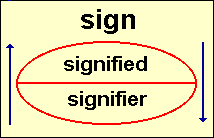
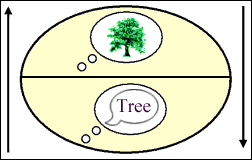
To get a feel for the semiotician’s theory of sign, let us first examine Saussure’s model: that of the signifier and the signified.

As Chandler explains:

A linguistic sign is not a link between a thing and a name, but between a concept and a sound pattern. The sound pattern is not actually a sound; for a sound is something physical. A sound pattern is the hearer’s psychological impression of a sound, as given to him by the evidence of his senses. This sound pattern may be called a ‘material’ element only in that it is the representation of our sensory impressions. The sound pattern may thus be distinguished from the other element associated with it in a linguistic sign. This other element is generally of a more abstract kind: the concept. (Saussure 1983, 66; Saussure 1974, 66) … Saussure’s original model of the sign ‘brackets the referent’: excluding reference to objects existing in the world. His signified is not to be identified directly with a referent but is a concept in the mind – not a thing but the notion of a thing.

It is almost embarrassingly easy to cast this directly to cognitive science. The signifier is the contents of perception bubbling up from transduced external signals. The signified is the concept bubbling up from long-term memory. Concepts may be fetched through a multitude of signals, and come in exemplar, prototype, and theory packages.

Can we explain why semioticians find it helpful to link signifier and signified? Yes! Within the human nervous system, there exist strong associative bonds between percept and concept: “sign” captures this natural kind.

To my knowledge, the cognitive science of semiotics has yet to find its wings: a vast, unexplored frontier. However, with this psychological reduction of “sign” in hand, we immediately find ourselves in a position to translate even the most arcane theorizing into an empirical framework. Two examples of such translations follow:

Quantifying the Peircean interpretant

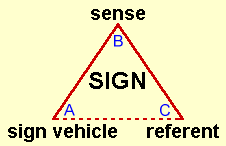
Let us first examine a conception of sign that rivals that of Saussure, one authored by American logician C.S. Peirce:

There exist two (approximate) parallelisms between the models of Peirce and Saussure:

  1. “sign vehicle” is loosely equivalent to “signifier”
  2. “sense” is loosely equivalent to “signified”

Only one leg of the triangle that is wholly novel. “Referent” refers to the category – the substance that concepts point towards.

Let me zoom in on a subtlety of this model: Peirce held that sense (in his language, the interpretant) is itself a sign:

However, the interpretant has a quality unlike that of the signified: it is itself a sign in the mind of the interpreter…. Umberto Eco uses the phrase ‘unlimited semiosis’ to refer to the way in which this could lead (as Peirce was well aware) to a series of successive interpretants (potentially) ad infinitum (ibid., 1.339, 2.303).

So, more triangles may nest within the top of the above triangle! What are we to make of this?

Well, Peirce’s claim is not without intuitive support: it explains conceptual recursion well. For example, I could teach myself that “t” signifies the word “tree”, which signifies the concept of tree (whose referent is a thing that lives in dirt).

While this assertion produces interesting implications, it is not yet particularly falsifiable.
Can we use our cognitive reduction to cast this idea into a prediction? Yes.
If “sense” is a sign, there must exist some mechanism within concept retrieval that would activate subsidiary perceptions.
This is the beginning of a question that a brain scanner could answer.

Quantifying Freudian condensation

I was surprised to learn that Freud has influenced the development of semiotics, with his notion of condensation:

Psychoanalytic theory also contributed to the revaluation of the signifier – in Freudian dream theory the sound of the signifier could be regarded as a better guide to its possible signified than any conventional ‘decoding’ might have suggested (Freud 1938, 319). For instance, Freud reported that the dream of a young woman engaged to be married featured flowers – including lilies-of-the-valley and violets. Popular symbolism suggested that the lilies were a symbol of chastity and the woman agreed that she associated them with purity. However, Freud was surprised to discover that she associated the word ‘violet’ phonetically with the English word ‘violate’, suggesting her fear of the violence of ‘defloration’ (another word alluding to flowers) (Freud 1938, 382-3). If this sounds familiar, this particular dream motif featured in the film Final Analysis (1992). As the psychoanalytical theorist Jacques Lacan emphasized (originally in 1957), the Freudian concepts of condensation and displacement illustrate the determination of the signified by the signifier in dreams (Lacan 1977, 159ff). In condensation, several thoughts are condensed into one symbol, whilst in displacement unconscious desire is displaced into an apparently trivial symbol (to avoid dream censorship).

Now, it is important to avoid writing off condensation merely because the story of the young woman does not impress. In his Interpretation of Dreams, Freud produces numerous examples of condensation. Perhaps you, the reader, can bring to mind one of your own dreams to motivate the theory. Have you ever had a dream where you recognized the body of someone, but their face was of somebody else? Have you ever had a dream where an object “felt normal”, but was in important sense blurred? These are the sorts of evidences Freud would point to, as products of condensation.

While this assertion produces interesting implications, it is not yet particularly falsifiable.
Can we use our cognitive reduction to cast this idea into a prediction? Yes.
Condensation theory would predict that the percept-concept binding apparatus can be rearranged during the dream state.
This is the beginning of a question that a brain scanner could answer.

Conclusion

If you were charged with crafting a research programme to understand dreams, how would you proceed? The task is enormous: our ignorance dwarfs our knowledge, our data outpaces our models.

On the other hand, as the sciences move from armchair theorizing towards quantitative models, we see entire traditions abandoned in their wake. Few scientists pay much attention to psychoanalysis, or semiotics, or postmodern theorizing. And this is a shame – how much creativity and insight are locked behind the door of qualitative musings!

While the title of this post is amusingly grandiose, I find something genuinely exciting about the above kind of theorizing. It seems to address both of these pain points.

Design Principles of Moral Systems

Part Of: Demystifying Ethics sequence
Content Summary: 1000 words, 10 min read

Introduction

This post was initially inspired by musing on the judicial system, how “behind the curve” it is, and how its modus operandi is finally starting to change. What follows is intended to describe something more general than a singular process, however.

I want to emphasize that the below is not a distillation of some intellectual authority. These instead represent my own musings before I engage the relevant literature. Let’s begin with a common vocabulary:

  • Let normative structures refer to an arbitrary collation of moral judgments (e.g., some moral matrix presented by a talking head).
  • Let metanormatives refer to how normative structures should be constructed.

Why Present-Day Normative Structures Fail

In this section, I advance an argumentative frame, on top of which more detailed arguments may find a home.

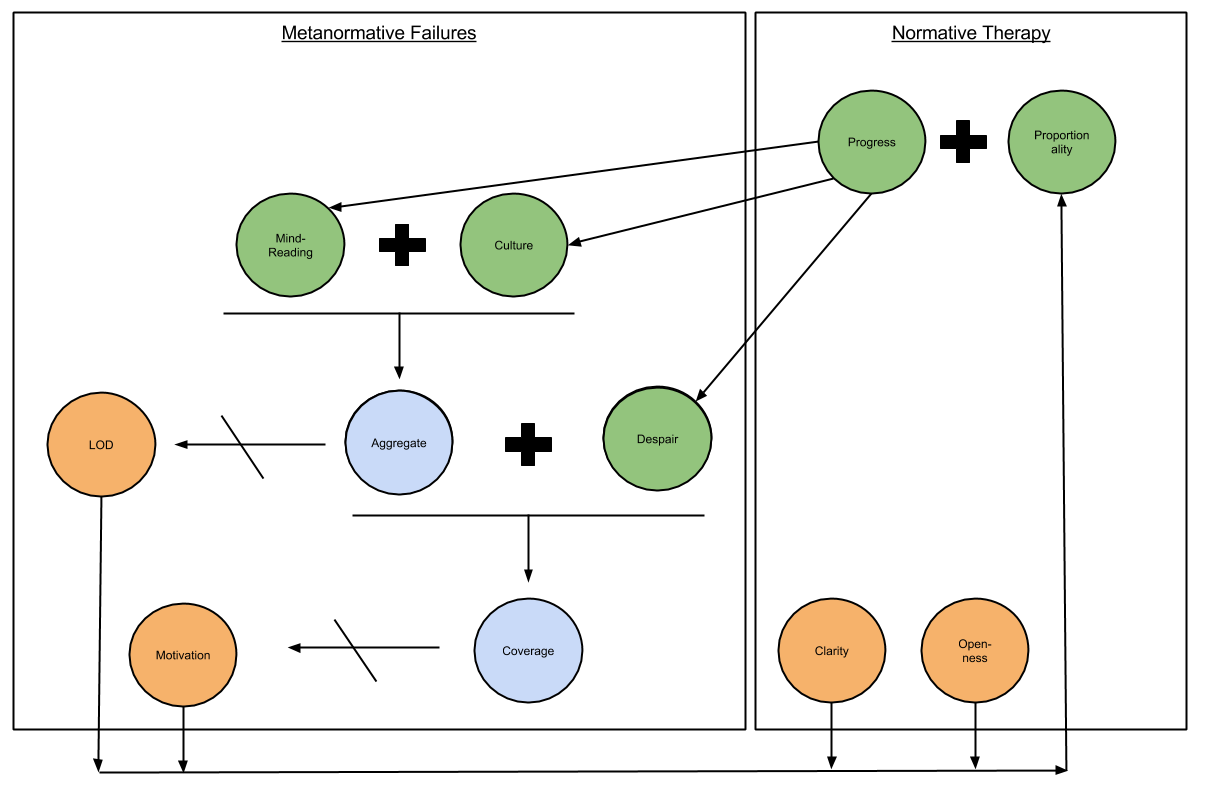
Metanormative Desiderata:

  • Level-Of-Detail (LOD): normative structures should ultimately be optimized at the person level.
  • Motivation: normative structures should point towards their ends in motivationally-optimal ways.

Empirical Premises:

  • Mindreading: It is difficult to model, or predict, the psychological capacities of oneself or others.
  • Culture: It is difficult to reliably facilitate the high-volume and/or high-complexity cultural transmission of normative signals.
  • Despair: It is not motivationally-optimal to be held to a normative structure beyond one’s capacities.

Causal Results:

  • Aggregation: Mindreading and Culture have caused normative structures to be expressed at the aggregate level.
  • Coverage: Aggregation and Despair have caused limited access to motivational-optimality for some population subsets.

Conclusion:

  • Aggregation violates LOD.
  • Coverage violates Motivation.

Thus, both of our metanormative desiderata do not obtain:

Metanormative Dissatisfaction

In the name of being understood, let me spend a few words further motivating my conclusions:

To say that “Aggregation violates LOD” is to say that human diversity precludes any one normative structure. Perhaps you can be excused from such generalizations as “all humans should strive to be selfless”. However, LOD calls for tailored normative matrices at the personal level. I want to know what I, Kevin, should do in any arbitrary situation S.

I will also clarify what it means to say “Coverage violates Motivation”. Let me zoom in on one “population subset”: the sociopath. Such an individual is biologically incapable of meeting aggregate-level normative impositions such as “everyone should care about the well-being of those around them”. The argument here, is that normative impositions should be explicitly tailored to the individual situation; for people like sociopaths, this would be something like, “sociopath X should put herself in situations where her non-empathic behavior can be held accountable”.

What Can Be Done?

Will these two metanormative failures persist into the future?

An intimidating question. Let me introduce new empirical arguments to help us get a handle on it.

Empirical Premises:

  • Progress: Scientific formalisms and technological advances will ultimately provide humanity with the ability to meaningfully alter “Mindreading”, “Culture”, and “Despair”.
  • Proportionality: metanormative principles, and not only those suggested here, will be realized in proportion to the product of their political support and the empirical resources available in their historocultural milieu.

I would be surprised if human limitations captured by Mindreading and Culture were not ameliorated in the coming decades. Such strides in our abilities will almost certainly cause changes in how our normative structures evolve. Despair is also grounded in our capacity to be motivated, a system that also affords change. All of these deserve to be modeled and understood.

Finally, let me put forward two additional metanormative principles, which may prove worthwhile to entertain.

Metanormative Principles:

  • Clarity: enthymematic premises within normative structures are best made explicit.
  • Openness: normative structures should move towards becoming more quantitatively modifiable to empirical findings, theoretical advances, and metanormative information.

I would defend Clarity in part because I view human normative structures (morality) as stemming from largely unconscious dispositions (c.f., Moral Foundations Theory). That is, the tendency of the human animal is to work with pre-installed normative structures without examining their contents. By rendering enthymemetic premises in language, one makes a larger percentage of the normative structure amenable to conscious rumination. It feels hard to argue against the utility of such an enterprise.

I would defend Openness by criticizing its converse. How can one go about arguing that our normatives need not be modified? If one claims that our answers are complete enough to be made rigid, surely a good counterargument could be made via inductive appeal to history. I find the claim that our answers are more motivating when they are inflexible, to be much more interesting. Perhaps I concede that this could be true in times of normative stasis, but that (a) one could “hide” such modifiability, and that (b) the absence of modifiability during normative upheaval leaves too wide a swath of the human population unable to truly participate in setting down a new direction.

With these defenses in place, I can here set down my twofold contention:

  • Given Proportionality and the popularity of LOD and Motivation, the existence of Progress will cause our normative structures to be refactored towards ones that don’t “fail” as readily.
  • Given Proportionality and my defenses of the new metanormative principles, if Clarity and Openness became more popular, perhaps our society would further improve (by some underdefined metric).

Normative Therapy

Conclusion

Let me conclude by presenting three criticisms of the above model.

  1. It is a naked argumentative frame, requiring more detailed argumentation before it can be considered complete.
  2. It is severely empirically impoverished; I need, at the bare minimum, to model how normatives are cognitively generated.
  3. I do not possess a theory on whether to build the following theoretical manifold higher than metanormatives (how to answer the question “how should metanormatives be constructed?”). If such a thing deserves to be built, I do not know if it be accomplished unburdened by trivial-recursion.

Fin.

Helen Keller

Last week, I attended a theater performance of Helen Keller.

The main theme of this Helen Keller performance was that words refer.  Her teacher, Anne Sullivan, spent hours and hours trying to associate words with objects.  She would have Helen hold an object, and spell their name into her hand in American Sign Language (ASL).  In her later autobiography, Helen reports having a “breakthrough moment”: sitting by a water fountain, she finally groks that the sign for water means the thing touching her hand.  She then proceeds to run around, learning the same words but “with newfound understanding”.

A few professors hosted a session afterwards to discuss the play with interested members of the audience.  The narrative presented by the actors and the professors, to explain Helen’s moment of insight was (predictably) crude.  Helen “discovered semantics” and “her intellect finally overcame her disability”.

Can cognitive science do better?  Of course.

Can I do better?  A little.  What follows is not as crisp and well-defined as I would like… but I would prefer it not exclusively live in my head.

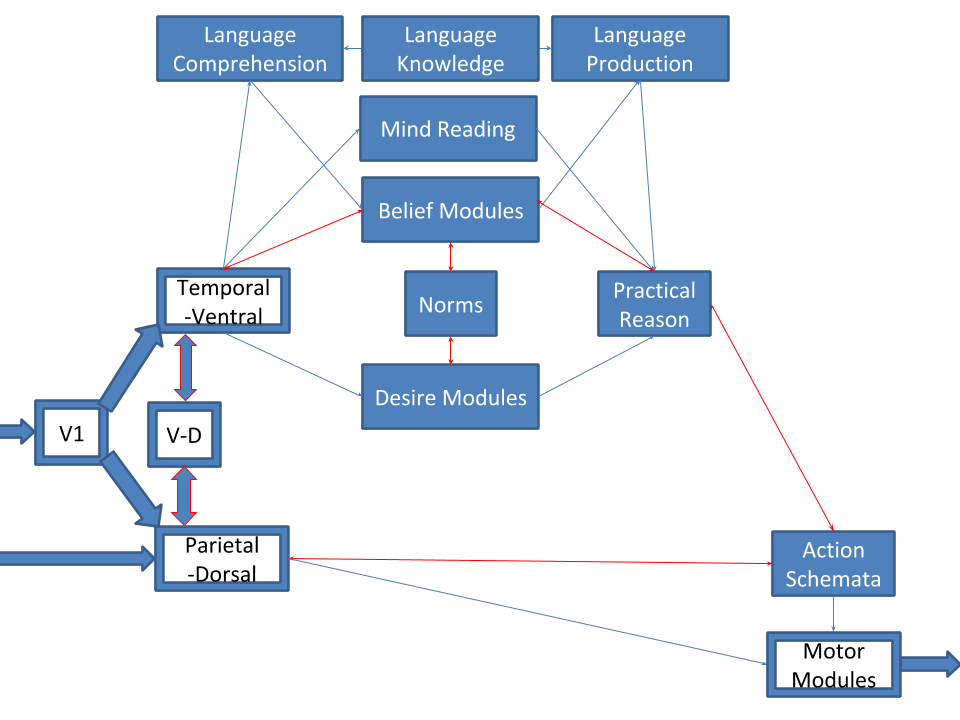
Let me first appeal to cognitive architecture as a whole.  I’ll leverage a model developed by Carruthers, because I am fond of its generality.

Mental Architecture (1)

I’ll have to leave an exploration of this schematic for another time.  The model is obviously incomplete, but sufficient for our purposes. The four hollow boxes on the left represent the sense of vision (more specifically, they capture the two streams of vision).

As Carruthers is careful to explain, the vision modules aren’t claimed to be the only input to the human mind.  Other sense modalities reside parallel to it, also serving as inputs to belief modules and desire modules.  Regrettably, Carruthers does a poor job at exploring how these different data vectors diverge, and how they interact.

Let me recapitulate what senses are.  How human beings sense is so much more than sight, sound, smell, touch & taste.  The Five Senses idiom stems from Aristotle and is as wrong as his physics.  An updated list:

  • Ophthalmoception (sight)
  • Audioception (hearing)
  • Olfacception (smell)
  • Gustaoception (taste)
  • Tactioception (touch)
  • Thermoception (temperature)
  • Proprioception (kinesthetic)
  • Nociception (pain)
  • Equilibrioception (balance)
  • Interoception (a word-bucket for various forms of internal chemical processes)

(It is currently fashionable to leverage -ception words to denote the physiological transduction aspect of sensation, and leave words like “pain” and “smell” to denote the subjective experiences stemming out of such processes.)

Humans engage with the external world with at least the above senses, all of which seem to have their own, distinct, type of sense organ (analogues of rods/cones in the eye).  Pain and touch are delivered by different cell types, etc.  Finally, it is not particularly controversial to claim that some senses provide more information than others.  In the course of human evolution, sight came to further displace smell, with respect to information bearing capacity.

At an early age, Helen lost both her sight and hearing – our two most familiar vehicles of language.  Her teacher attempted to install language via touch.  The mere process of enumerating the above list only now has inspired me to wonder how effectively language can be imprinted on still-other mediums.  There are no information-theoretic reasons why language cannot become embedded within pin pricks, within temperature, within smell… why then, is it rarely seen “in the wild”?

Even today, the process by which humans acquire language smells a little magical.  The solution has, as yet, eluded our finest minds.  We know this competency is most strongly expressed in early childhood; and that its awesome powers fade, but do not disintegrate, around the five year mark.  This is why learning a language as an adult “feels especially difficult”.  Anyways, the fact that Helen apparently language for the first time, at seven years old, is noteworthy.

I found myself referring to one of Fodor’s works quite a bit, throughout my experience watching the play (even though I haven’t read the book … haha).  I would characterize Fodor’s thesis as: subvocalization is not the loci of mental activity; rather, the mind reasons through its own language.  Let’s call this private language Mentalese.  This competency precedes language, is basal to our species – it is the stuff that enables the mind to refer.  On this model, even deafblind people like Helen have a concept of, say, her mother.  Her mother appears at certain times, feels a certain way; she expresses a range of behavior quite distinct from that of her father.  It is false to claim that Helen cannot form a thought. Although it is difficult for us to conceive of conscious rumination without linguistic subvocalization, that simply does not impair the functioning of working memory entirely.

It seems, then, that Helen can already refer to WATER in Mentalese.  What is the significance, then, of linking this representation to ASL?  I can think of two plausible benefits.

One is that languages (like English, or ASL) is theorized to imbue Mentalese with improved flexibility.  Language comprehension, and language production, modules may afford the subject with expanded powers of simulation and creativity.  This is where my lack of research into weak versions of linguistic relativity comes to bite me…

Another plausible benefit, is that marrying ASL to Mentalese allows other people to streamline the chain of communication.  Instead of translating Mentalese concepts to motor modules to complex behavior, they can instead encode those same concepts into ASL in a more compressed format.  Thus, instead of inferring behavior-triggered displeasure from repeatedly being constrained, Helen can more quickly infer her social milieu via an ASL encoding of “don’t hit people”.  This is where my lack of research into Theory of Mind (ToM), especially its maturation phases during childhood, comes to bite me…

The thrust of the above musings is that Helen’s “breakthrough” was themed her language modules and ToM modules contributing to her mental life in new ways.  This is much less naive than an appeal to “semantics” or to “intelligence outsmarting disability”.   However, the fact that I cannot even construct an compelling alternative theory, to contrast with the above Fodorian vision, speaks to the amateurish nature of these musings.

In addition to language, another theme explored in the play was Helen’s tantrums.  Specifically, her family had a permissive attitude towards this behavior (excusing it due to her condition); whereas her teacher was more willing to enforce social rules (with positive results in the long term).  I don’t yet understand the reasons behind tantrums, and I don’t understand why perpetually giving in seems to yield, on average, less happy children.

My instinct is that tantrums are an evolutionarily old mechanism by which one attempts to improve ones social status.  Perhaps, in children, discovering that you are not at the top of the dominance hierarchy, more effectively inculcates a desire to learn the social nuances of ones environment.  Perhaps the existence of boundaries simply provides more social information (in algorithmic complexity theory, a string of 1s has less information-content than a more balanced distribution).  But these are just musings that have not yet matured into theories…

In conclusion, I am not yet capable of producing a conclusion.  🙂  Fin.

Stanovitch: The Robot’s Rebellion: Dysrationalia

Consider Jack.  As a child, Jack did well on an aptitude test and early in his schooling got placed in a class for the gifted.  he did well on the SAT test and was accepted at Princeton.  He did well on the LSAT test and went to Harvard Law school.  He did well in his first and second year courses there and won a position on the Law Review.  He passed the New York Bar Exam with flying colors.  He is now an influential attorney, head of a legal division of Merrill-Lynch on Wall Street.  He has power and influence in the corporate world and in his community.  Only one thing is awry in this story of success: Jack thinks the Holocaust never happened and he hates Jewish people.

Jack thinks that a Jewish conspiracy controls television and other media.  Because of this, he forbids his children to watch “Jewish shows” on TV.  Jack has other habits that are somewhat “weird.”  He doesn’t patronize businesses owned by Jewish people.  There are dozens of business establishments in his community, but Jack always remembers which ones are owned by Jewish people (his long-term storage and retrieval mechanisms are quite good).  When determining the end-of-year bonuses to give his staff, Jack shaves off a little from the Jewish members of the firm.  He never does it in a way that might be easily detectable, though (his quantitative skills are considerable).  In fact, Jack wishes he had no Jewish staff members at all and attempts not to hire them when they apply for positions.  He is very good at arguing (his verbal skills are impressive) against a candidate in a way that makes it seem like he has a principled objection to the candidates qualifications (his powers of rationalization are immense).  Thus, he manages to prevent the firm from hiring any new Jewish members without, at the same time, impeaching his own judgment.  jack withholds charitable contributions from all organizations with ‘Jewish connections” and he makes sizable contributions from his large salary to political groups dedicated to advancing ethnocentric conspiracy theories.

The point is that Jack has a severe problem with belief formation and evidence evaluation – but none of the selection mechanisms that Jack had passed through in his lifetime were designed to indicate his extreme tendencies toward belief perseveration and biased evidence assimilation. They would indeed have been sensitive – indeed, would have quickly raised alarm bells – if Jack’s short-term memory capacity were 5.5 instead of 7. But they were deadly silent about the fact that jack thinks Hitler wasn’t such a bad chap.

In fact, Jack has a severe cognitive problem in the area of epistemic rationality – he is severely dysrationalic in the epistemic domain. yet he has a leading role in the corporate structure that is a dominant force in American society. Does it make sense that our selection mechanisms are designed to let Jack slip through – given that he has a severe problem in epistemic regulation (and perhaps in cognitive regulation as well) – and to screen out someone with normal epistemic mechanisms but with a short-term memory capacity 0.5 items less than Jack’s?

Although Jack’s problem in belief formation may seem to be “domain specific”, it is clear from this brief description that such unjustified beliefs can affect action in many areas of modern life. In a complex society, irrational thinking about economics, or about the nature of individual differences among people of different races or genders can – when it occurs in people of social influence – have deleterious influences that are extremely widespread. Besides, some domains are more important than others. When the domains involved become too large and/or important that it seems ill-advised to assuage concern about irrational thinking by arguing that it is domain specific. To say “Oh well, it only affects his/her thinking about other races and cultures” seems somewhat Panglossian in the context of modern technological and multicultural societies. Domain specificity is only a mitigating factor in the case of irrational thought when it can be demonstrated that the domain is truly narrow and that our technological society does not magnify the mistake by propagating it through powerful information and economic networks.

Finally, it is equally possible that Jack’s thinking problems are really not so domain specific. It is possible that careful testing would have revealed that Jack is sub-par in a variety of tasks of human judgment: He might well have displayed greater than average hindsight bias, extreme overconfidence in his probability assessments, belief perseverance, and confirmation bias. Of course, none of this would have been known to the law school admissions committee considering Jack’s application. They, as had many others in Jack’s life, conferred further social advantages on him by their decisions, and they did so without knowing that he was dysrationalic.

Obviously, I have concocted this example in order to sensitize the read to the social implications of mismatches between cognitive capacities and rationality. However, as a dysrationalic, Jack is unusual only in that society bears most of the cost of the disability. Mos dysrationalics probably bring most of the harm onto themselves. In contrast, Jack is damaging society in myriad ways, despite the face that his cognitive capacities may be allowing him to “efficiently” run a legal department in a major corporation. Ironically, then, Jack is damaging the very society that conferred numerous social advantages on him because of his intelligence. The maintenance worker who cleans Jack’s office probably has cognitive capacities inferior to Jack’s and has been penalized (or denied rewards) accordingly. However the fact that the maintenance worker does not share Jack’s irrational cognition has conferred no advantage on the maintenance worker – just as the presence of dysrationalia has conferred no disadvantage on Jack. Perhaps if we assessed rationality as explicitly throughout educational life as we do cognitive capacity, it would.
(Stanovitch, Robot’s Rebellion, page 167-169)