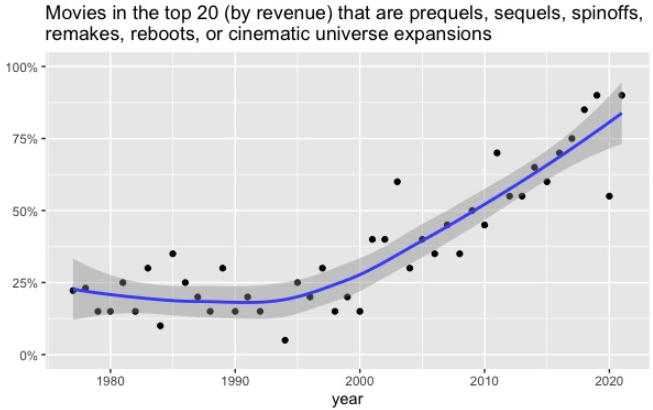
Chart-topping original movies have gone extinct. People have a lot of explanations for this, but they’re all incomplete because they don’t realize the same thing is happening everywhere. An oligopoly has conquered all of popular culture.
Godel’s Loophole: a design flaw in the US Constitution, which would permit the American democracy to be legally turned into a dictatorship.
Labor market explanation of the Flynn effect. Contrast with the education revolution hypothesis.
Artificial Intelligence
Gato, a scalable generalist agent that uses a single transformer with exactly the same weights to play Atari, follow text instructions, caption images, chat with people, control a real robot arm, and more.
What if the reason we dream is similar to the reason MLEs add noise to their models: to promote generalization?
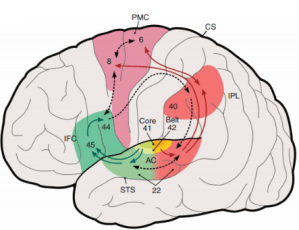
Lesions in the left precuneus are associated with distorted time perception. “Minutes felt like hours… each time he would check his watch he’d be surprised how little time had passed.”
How does literature evolve? One birth at a time. Contrary to belief that literature changes due to external events like 9/11, 54% of the style of literature is solely driven by when its popular authors were born. After their 20s, authors don’t change much.
Biology
“If there is a God, why does he love crabs so much?” Carcinization in fish.
Salvage epistemology: on the dangers of contrarianism in the rationality community.
The Backwards March of Christology is a theory of how Christian interpretations of Jesus evolved over time. In the earliest writings, many Christians seemed to view him as a human prophet elevated to divinity at his resurrection: “God fulfilled his promise by resurrecting Jesus, as also it is written in the second psalm, ‘You are my Son; today I have fathered you.” These views became more elaborate as the decades passed.
Is social media driving political dysfunction? Haidt & Obama argue yes, Zeitzoff argues no.
Health
Last month, EBV found to be necessary in the development of MS. Now we learn: it’s not just a trigger, but may be a driver. New trial with transplanted immune cells that fight EBV has managed to stop progression of MS.
Ivermectin update: Strongyloides hypothesis is now peer-reviewed, and new large RCT shows null effects.
Status vs health. Oscar winners really do gain immortality (or at least a longer life). Oscar-winning actors and actresses live 5 years longer. Though later papers found a smaller boost to lifespan, the life-extending effects of winning also apply to Olympic medalists, Nobel winners & politicians.
Cognitive Science
Humans do some weird things without noticing. Every 3 minutes, humans touch their face. Why? First thought to be self-directed stress behavior, chemosignaling research suggests the function is rather to smell our hands. But it’s not just about self-sampling. After shaking someone’s hand, we are 100% more likely to unconsciously sniff that hand than normal, but only if we shake hands with someone of our gender. Otherwise we unconsciously sniff our other hand, likely as a form of self-reassurance! Video, paper.
Hot hand in tennis is real… but only for male players. Men who put the ball just inside during a point instead of just outside are more likely to win the next point. (data from 2m serves) Why women respond differently isn’t clear yet. Likely linked to testosterone and the so-called winner effect.
Growing up in rural areas produces better spatial navigation than being raised in cities, particularly for cities with grid-pattern streets (paper and explainer)
AI
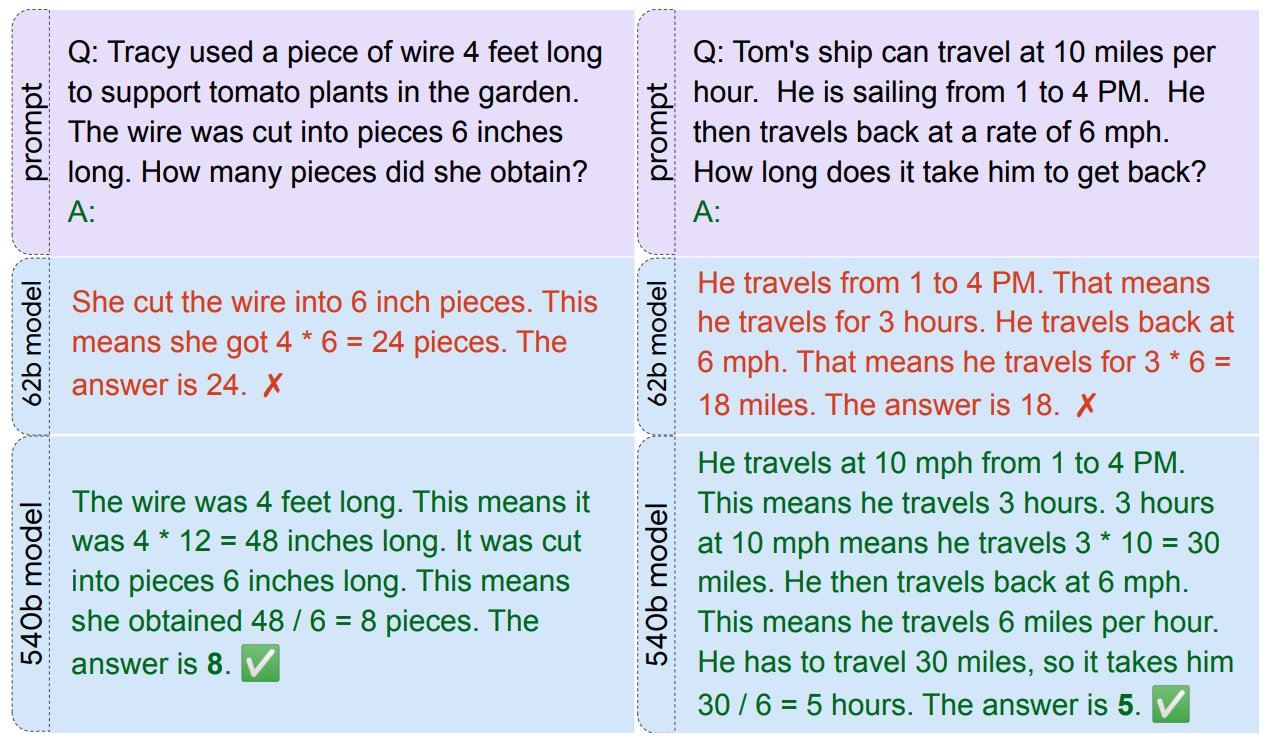
Two extremely impressive models dropped: AI-generated art with Dall-E 2 (example), and natural language PaLM 540b (example). Neither open-sourced yet though..
Socratic Models. With multiple foundation models “talking to each other”, we can combine commonsense across domains, to do multimodal tasks like zero-shot video Q&A or image captioning, no finetuning needed.
Data poisoning is an adversarial attack that tries to manipulate the training dataset in order to control the prediction behavior of a trained model such that the model will label malicious examples into a desired classes (e.g., labeling spam emails as safe).
Weaponizing copyright law to thwart accountability: Cops blare Disney songs from their car to ensure citizen videos of them on the job get copyright flagged & taken down.
TIL most of the story in Catch Me If You Can is probably fake. Frank Abignale, who DiCaprio plays in the film, fabricated a thrilling backstory when he was mostly in prison.
You may recall the EEG study on effects of poverty. It was flawed. This argues that so-called policy relevant social science is mostly a fraud.
What is life? Schodinger (1944) argued that life is a negentropy phenomenon: free energy is concentrated locally, in the face of surrounding energy dissipation. This explains several facts of biology:
Inference. Jaynes (1957) famously argued that both statistical and biological inference derive from free energy minimization.
Abiogenesis. England (2013) argues that replication can be understood in thermodynamic terms, and view abiogenesis as driven by negentropy.
Metabolism. The field of bioenergetics (Cheetham 2010) has discovered metabolism to be consistent with this thermodynamical principle.
Homeostasis was described by Bernard (1878) as, “all vital mechanisms, however varied they may be, have only one object, that of preserving constant the conditions of life in the internal environment.” It has a thermodynamic interpretation: life is buffeting its internal milieu from the dissipative vagaries of the environment.
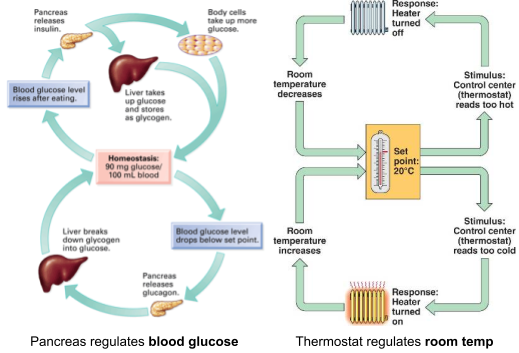
For example, blood sugar concentration is a biologically defended variable. Too much glucose causes energy poisoning, too little causes cellular starvation. The pancreas regulates blood sugar levels between 70 and 140 mg/dl. When blood sugar is too low, the pancreas releases glucagon to raise serum glucose; when too high, the pancreas releases insulin to reduce the level.
The pancreas here plays a similar role as a thermostat which is engineered to regulate room temperature. Thermostat design is heavily influenced by engineering control theory. The set point (i.e., the desired value) is specified, and the error term (difference between observation & set point) is computed. The error term can be used in two different ways:
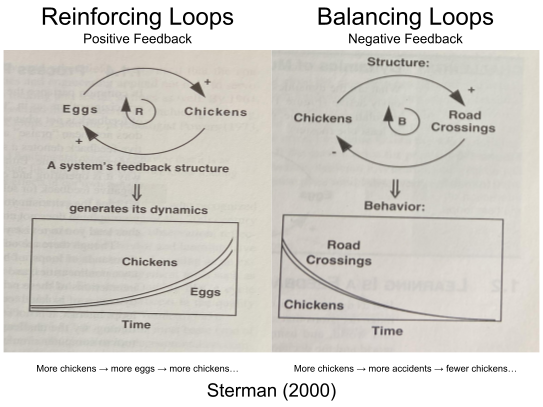
Positive feedback tends to produce exponential growth. Evolutionary arms races are a biological example, microphone squealing is an electronic example.
Negative feedback tends to stabilize a system. Physiological regulation may be a useful example…
Feedback loops are a central organizing principle of business dynamics (i.e., systems thinking). According to Sterman (2000): “all systems, no matter how complex, consist of overlapping networks of positive and negative feedbacks, and all dynamics arise from the interaction of these loops with one another.
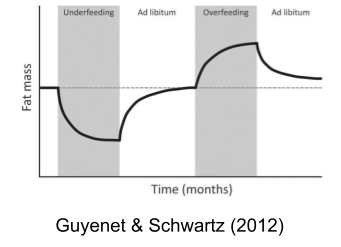
The brain regulates body adiposity via the lipostat (Cabanac & Richard 1996), largely mediated by the leptin system (Zhang et al 1994).
After overfeeding (Sims et al 1968), the body will attempt to lose weight (more metabolism & less food intake).
After underfeeding (Key et al 1950), the body engages a starvation response to gain weight (less metabolism & more food intake)
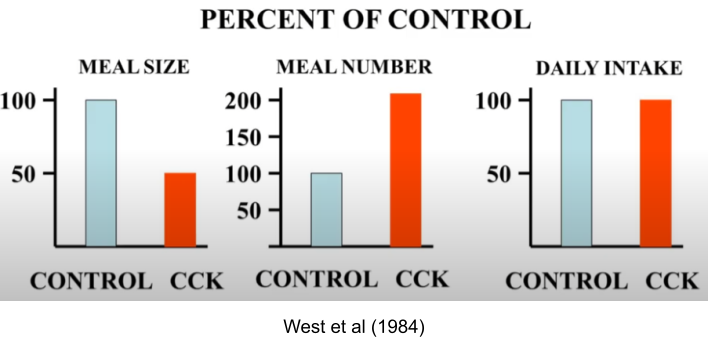
Taken together, these effectors work to maintain a constant level of stored calories (adiposity). Adiposity is biologically defended, which is why willpower-based dieting interventions so often fall short. If you inject a satiety hormone cholecystokinin (CCK) into a rat, meal size roughly halves.. but the number of meals initiated doubles to compensate.
The accuracy of your body’s regulatory systems is remarkable. For eating, annual energy intake is 955,570 calories; gaining one pound is 4,000 calories. In other words, your lipostat adjusts your energy intake to equal energy output with an error of 0.4%, or 11 calories per day. That’s a potato chip.
Adjustable Set Points
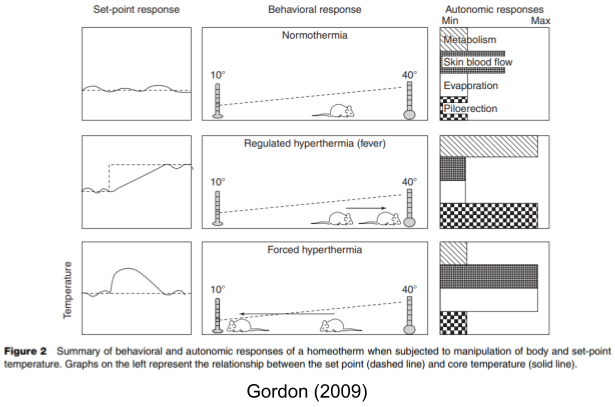
When Cannon (1929) first introduced homeostasis, he emphasized set point constancy. Yet set points can change; these are called rheostatic adjustments (Mrosovsky 1990). Consider body temperature. When a rat encounters an overly hot room (a forced change), it will compensate via three cooling effectors: skin blood flow, evaporation, and behavior to find a cooler environment.
Body temperature can also become elevated in response to infection, which helps the immune system combat pathogens. But this regulated change is handled differently by the body; with fever, warming effectors are engaged: metabolism increase (shivering), piloerection (goosebumps), and behavioral motivation to find a warmer environment. Only in fever is the set point adjusted.
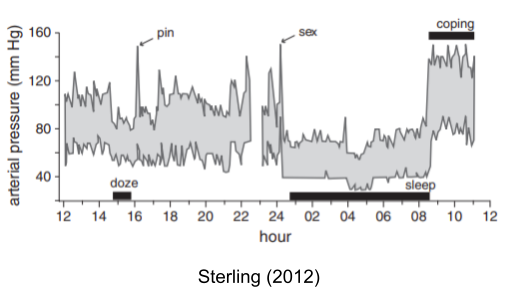
Other set points change too. The blood pressure set point is also dynamically altered from normal waking (~85 mmHg), sleep (~60 mmHg) and periods of extended stress (~120 mmHg).
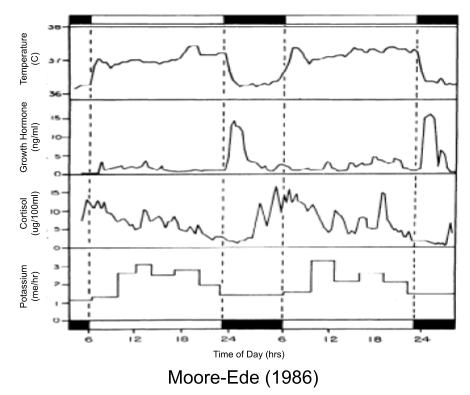
Many other example of circadian rheostatic adjustments exist:
Why? What is the relationship between physiology and chronobiology?
Reactive vs Predictive Homeostasis
Homeostasis is a central organizing principle of the viscera. But chronobiological rhythms is another such principle. Scientists once believed that such rhythms were direct responses to zeitgebers (environmental time cues). In 1729, a French astronomer placed a plant in a dark closet where it was no longer subject to daily variations in illumination. To his surprise, the plant continued to raise and lower its leaves on schedule. De Mairan (1729) concluded the plant had an internal clock for telling the time. This clock endogeneity result was shelved for a century, but was ultimately replicated.
Why should the nervous system mold behavior into such predictable rhythms? As Moore-Ede (1986) puts it,
Amidst the random variations in environmental opportunities and challenges, two highly regular geophysical cycles – the year and the day – stand out. They dominate multiple aspects of our environment, most directly illumination and temperature. One of the most important features of these environmental cycles is extreme predictability. The time it takes for the rising sun to return to shine on the same spot on the spinning Earth (the solar day) varies by no more than a few minutes in any 1 year, and the average period of the Earth’s daily rotation has only slowed by 20 seconds during the course of the last million years. Since these cyclic changes are so predictable, it is scarcely surprising that circadian and circannual adaptive mechanisms have evolved to take advantage of this predictability.
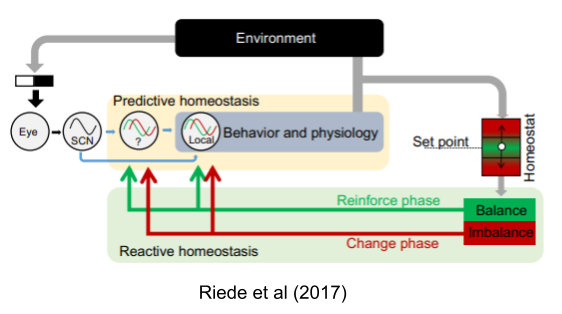
Circadian rhymes manifest in sleep-wake behavior, feeding-fasting cycles, drinking behavior, melatonin synthesis, and locomotor activity. In the controlled atmosphere of the lab, they rarely change; but in natural settings they do. Their phase flexibly responds to changing energetic conditions: a kind of temporal niche switching (Riede et al 2017).
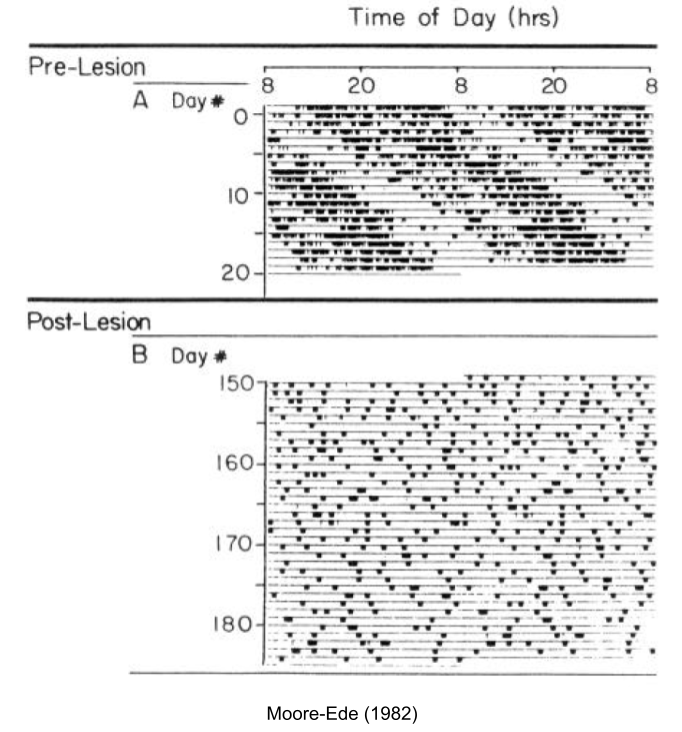
Lesions of the suprachiasmatic nucleus (SCN) in the hypothalamus abolish these rhythms (e.g., Eastman et al 1984). Here, for example, is drinking record of a squirrel monkey – SCN lesions do not change the overall volume intake, but it does result in arrhythmia.
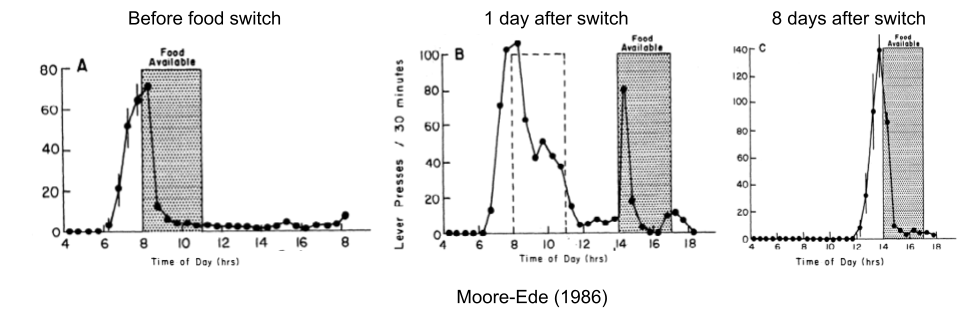
Consider a rat food dispenser that dispenses calories only during a 3h window. The rat will ramp up its food seeking behavior (lever presses) about an hour before the food is available. If the food availability window is shifted forward by six hours, the predictive behavior occurs on schedule, but the reactive behavior only occurred when the press of the lever first produced a pellet at 2pm. Over the course of the next eight days, the predictive component gradually slid towards the new window.
If a rat becomes motivated to eat only when it is hungry, that is too late. Foraging is a time consuming behavior. And the body itself needs time to prepare for a meal: blood glucose decreases before a meal, which serves to blunt the postprandial rise in glucose. These anticipatory cephalic phase responses (CPRs) enable animals to cope with the imbalance created when food is restored.
Decoupling of predictive and reactive components has been replicated in myriad other domains (Moore-Ede 1986, Schulkin & Sterling 2019). In general, phase adjustments occur when the original rhythms fail (Riede et al 2017). Errors in predictive homeostasis promote exploration of alternative temporal niches.
Finally, predictive homeostasis is not limited to circadian clocks. Arbitrary cues can elicit homeostatic responses.
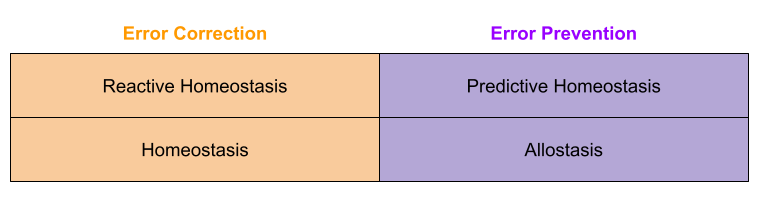
Can the concept of homeostasis include predictive, error preventive components. Researchers disagree. Moore-Ede (1986) says yes, Schulkin & Sterling (2019) says no and reserves the term allostasis for the latter concept. Much of this dispute is taxonomic, and centers on interpreting Cannon (1929)’s original meaning. In the final analysis, however, both sides have converged on a dual process theory of regulation.
Balance Point Theory
The concept of set point may need to be discarded. To understand why, let’s return to thermoregulation.
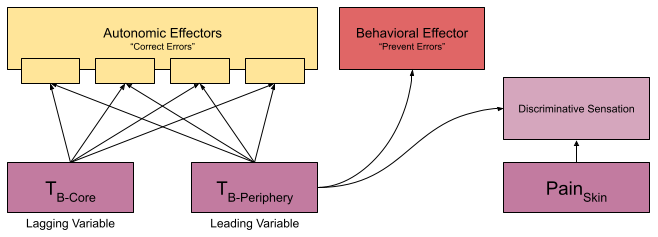
In humans, we think of a single set point of 98.6 F. But your CNS measures two quantities: peripheral temperature (e.g., in the skin) and core temperature (e.g., in the stomach). Peripheral temperature sensors are not used exclusively by thermoregulation, they also push fine-grained spatial data to the insula for more specific interactions with the environment (e.g., burn prevention).
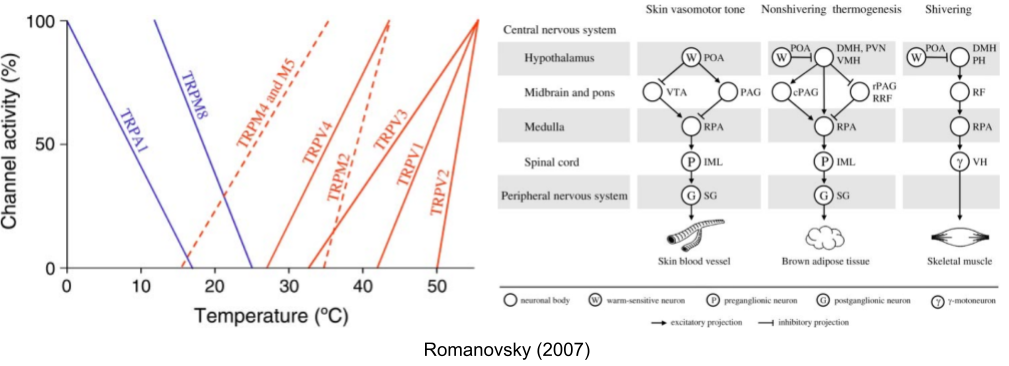
Due to thermal inertia, the core changes more slowly than the periphery (especially in large animals). This makes the periphery a leading variable. Because skin is more predictive than core, its sensors are more likely to evoke a preventative behavioral response (Romanovsky 2007).
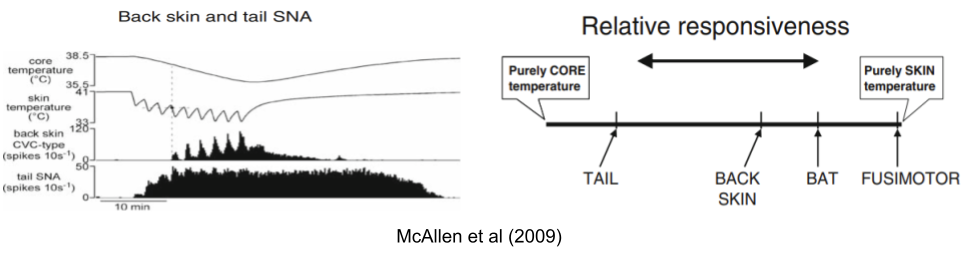
Some autonomic effectors are more responsive to core temperature and vice versa. McAllen et al (2009) report experiments where they immersed a rat in water & rapidly altered the skin temperature. By measuring effector neurons during this experience, they showed that these effectors do not respond univocally – they differ in responsiveness to changes in core and skin.
These effectors not only respond to different inputs. Each input responds to different temperatures, and each output flows through an independent anatomical pathway:
The classical theory of homeostatic set point requires a central controller, which aggregates across temperature sensors to compute a mean temperature & coordinate its responses. But the anatomical basis for such a system remains elusive. And we have seen that thermoregulation effectors have independent inputs, functions, and outputs.
Satinoff (1978) proposes that the central controller does not exist, and neither does a single set point. She modeled multiple, independent sensor-effector loops, whose arithmetic sum of activity across activated effectors comprise the biologically defended range. As the subpopulation of active sensor-effector loops changes, so too does the aggregate balance point (Romanovsky 2007).
Decentralized control systems envisioned by balance point theory are self-organizing. They have important advantages, including flexibility and robustness to loss of system components (Seeley 2002). This comes at a price: decentralized systems cannot guarantee optimality, in part because of inefficient coordination of the distributed subsystems. Decentralized control may explain the following phenomena:
Opponent Processes. Simultaneous use of the furnace and air conditioner wastes fuel and contributes to wear and tear on both pieces of equipment. In the same way, it is hard to imagine a central controller producing such an inefficient result, but balance point theory explains the phenomenon quite nicely. One popular model of addiction assumes that reward and hedonia are physiologically regulated and that sensor-effector loops exist that influence the value of these variables (Koob & Le Moal 2008). Addiction is viewed as competition between a generic antireward mechanism versus a specific cue being ascribed increasing amounts of incentive salience.
Asymmetric Enforcement. For adiposity, mammals are very efficient at responding to underfeeding (and surgical removal of fat), but their response to overfeeding (or surgical implantation of fat) is much less robust. Leptin in particular seems to enforce the lower threshold alone (Wade 2004). For temperature, mammals exposed to severe stressors (e.g., endotoxins) will shut down thermogenesis and revert to poikilothermy – the upper threshold is still defended, but the lower defended threshold drops by tens of degrees (Romanovsky 2004).
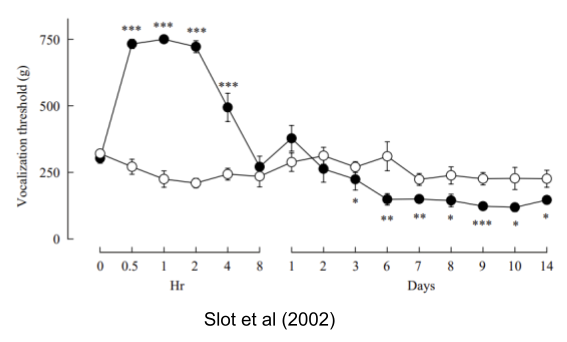
Overcompensation. Cold-challenged armadillos resulted in persistent and excessive increases in core temperature and oxygen consumption that exceeded the pre-perturbation values (discussed in Ramsay & Woods 2014). Similarly, Slot et al (2002) show that exposure to fentanyl at first produces pain tolerance, but over time leads to pain intolerance (hyperalgesia):
Overcompensation may be involved in many modern-day examples of cumulative movement of the balance point (aka rheostatic drift), including
why BMI began increasing in the 1970s (James et al 2001);
why sperm count is declining (Levine et al 2017);
why body temperature is falling (Protsiv et al 2020);
why autoimmune diseases are on the rise (Brady 2012); and
why the placebo effect is strengthening (Tuttle et al 2015).
Market-based control (Clearwater 1996) represents one way to formalize balance point theory. Consider blood pressure. The body must balances between demand (organs requiring nutrient-rich blood) and supply (the heart-lung system which distributes these resources). Blood pressure can be interpreted as a price equilibrating supply and demand: higher blood pressure benefits organs but places a strain on the heart, and vice versa (Fink 2005). This interpretation of blood pressure casts new light on the strong associations between the hypertension, obesity, and hyperglycemia (i.e., metabolic syndrome): they are equilibria of an energy surplus.
Interloop Effectors
In Two Cybernetic Loops, we saw how the nervous system can be dichotomized as a world-oriented cold loop and body-oriented hot loop. Our discussion of homeostasis has centered on internal bodily variables being regulated by internal effectors. But one of the key functions of the hot loop is to “cross state lines” and motivate foraging behavior (i.e., external effectors) in service of the body.
The relationship between hot loop & reward system is complicated to tease apart. Activity in agouti-related protein (AgRP) neurons, aka hunger neurons, cause sensations of hunger, and also transmit a sustained positive valence signal that conditions both Pavlovian and instrumental learning (Chen et al 2016). When an animal sees food, AgRP neurons are immediately silenced, but the reward system nevertheless promotes consummatory behavior.
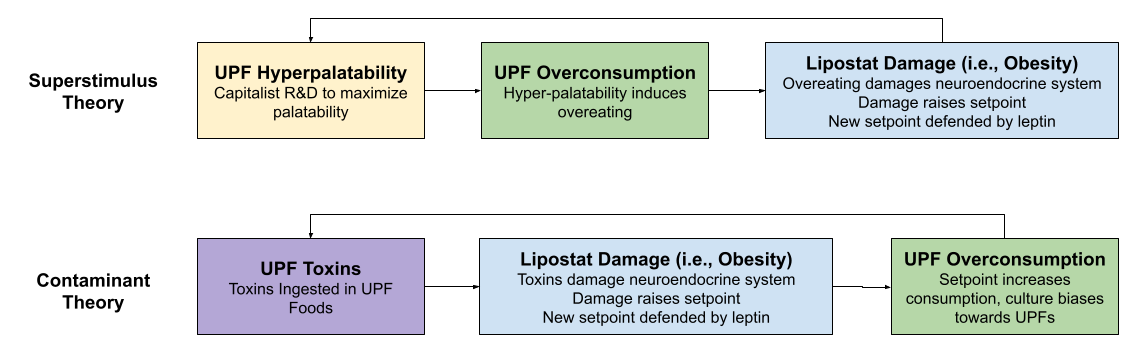
In obesity, we know that ultra-processed foods (UPF) play a role (Hall et al 2019). But we still don’t know which system is to blame! Is the epidemic caused by toxins (e.g Alharbi et al 2018) interfering with our internal effectors? Or by superstimulus (hyperpalatable foods) overwhelming our reward system (Guyenet 2017)? The jury is out.
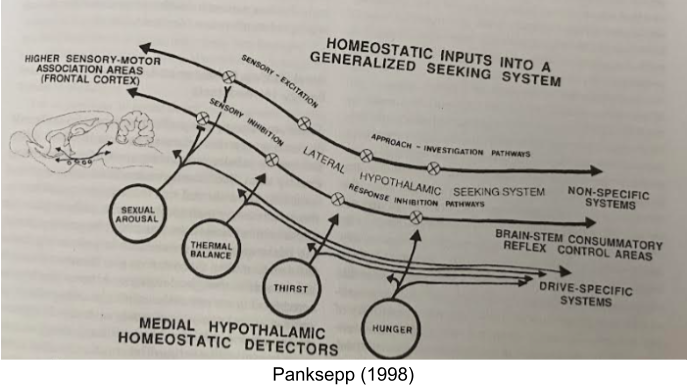
Panksepp (1998) describes the basal ganglia as the SEEKING system, a generic mechanism that promotes both appetitive and consummatory motor behaviors. Activation of this system generates emotional experiences of curiosity, engagement, wanting, and motivation. Homeostatic detectors in the medial hypothalamus activate SEEKING via the lateral hypothalamus:
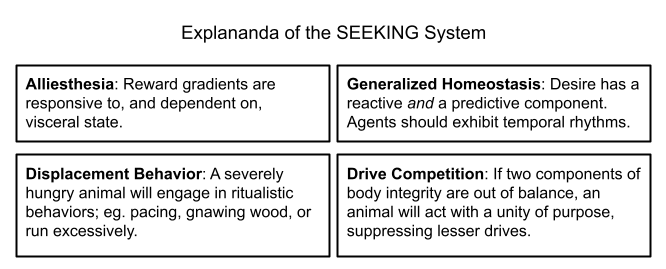
The reward value of a stimulus increases with the effectiveness of that stimulus in restoring bodily equilibrium (homeostasis). This effect, known as alliesthesia, is well-documented for food rewards, which are more pleasurable when they relieve a hunger state (Burnett et al 2019). Further, on different visceral states (e.g., hungry vs thirsty), the reward topography will change, despite the absence of any phasic DA learning signals.
Wanting is the substrate of arousal, or motivation. Its purpose is to control metabolic expenditure. We can see evidence for this in adjunctive behaviors. If a starving rat is given some food, but not enough to mitigate the drive, it will engage in ritualistic behaviors, such as pacing, gnawing wood, or running excessively. This phenomenon of behavior substitution was also discovered by ethologists under the heading of displacement behaviors. For example, two skylarks in combat might suddenly cease fighting and peck at the ground with feeding movements. These behaviors rely on the mesolimbic dopamine system (Robbins & Koob 1980).
Formal models (such as reinforcement learning and active inference) aspire to model the behavioral profile of the SEEKING system. Yet many models do not include these visceral influences. I look forward to the day a simulated agent can reproduce these phenomena.
Until next time.
References
Alharbi et al (2018). Health and environmental effects of persistent organic pollutants
Bernard (1878). Les phenomenes de la vie
Brady (2012). Autoimmune Disease: A Modern Epidemic?
Burnett et al (2019). Need-based prioritization of behavior
Cabanac & Richard (1996). The nature of the ponderostat: Hervey’s hypothesis revived
Cannon (1929). Organization for physiological homeostasis.
Cheetham (2010) Introducing biological energetics
Chen et al (2016). Hunger neurons drive feeding through a sustained, positive reinforcement signal.
Clearwater (1996). Market-based control: a paradigm for distributed resource allocation.
De Mairan (1729). Observation botanique.
England (2013). Statistical physics of self-replication
Falk (1970). The nature and determinants of adjunctive behavior
Fink (2005). Hypothesis: the systemic circulation as a regulated free-market economy. A new approach for understanding the long-term control of blood pressure
Gordon (2009). Autonomic Nervous System: Central Thermoregulatory Control
Guyenet (2017). The Hungry Brain: Outsmarting the Instincts That Make Us Overeat
Guyenet & Schwartz (2012). Regulation of Food Intake, Energy Balance, and Body Fat Mass: Implications for the Pathogenesis and Treatment of Obesity
Eastman et al (1984). Suprachiasmatic nuclei lesions eliminate circadian temperature and sleep rhythms in the rat
Hall et al (2019). Ultra-Processed Diets Cause Excess Calorie Intake and Weight Gain: An Inpatient Randomized Controlled Trial of Ad Libitum Food Intake
James et al (2001). The worldwide obesity epidemic
Jaynes (1957). Information theory and statistical mechanics
Key et al (1950). The biology of human starvation.
Koob & Le Moal (2008). Addiction and the brain antireward system.
Levine et al (2017). Temporal trends in sperm count: a systematic review and meta-regression analysis
McAllen et al (2010). Multiple thermoregulatory effectors with independent central controls.
Modell et al (2015). A physiologist’s view of homeostasis
Moore-Ede (1986). Physiology of the circadian timing system: predictive versus reactive homeostasis
Mrosovsky (1990). Rheostasis: the physiology of change
Panksepp (1998). Affective Neuroscience
Protsiv et al (2020). Decreasing human body temperature in the United States since the Industrial Revolution
Romanovsky (2007). Thermoregulation: some concepts have changed. Functional architecture of the thermoregulatory system.
Romanovsky (2004). Do fever and anapyrexia exist? Analysis of set point-based definitions
Ramsay & Woods (2014). Clarifying the roles of homeostasis and allostasis in physiological regulation
Robbins & Koob (1980). Selective disruption of displacement behaviour by lesions of the mesolimbic dopamine system
Satinoff (1978). Neural organization and the evolution of thermal regulation in mammals.
Schulkin & Sterling (2019). Allostasis: a brain-centered, predictive mode of physiological regulation
Schrodinger (1944). What is life?
Seeley (2002) When is self-organization used in biological systems?
Sims et al (1968). Experimental Obesity in Man.
Sterman (2000). Business Dynamics
Sterling (2012) Allostasis: a model of predictive regulation
Slot et al (2002). Sign-reversal during Persistent Activation in l-Opioid Signal Transduction
Tuttle et al (2015). Increasing placebo responses over time in U.S. clinical trials of neuropathic pain
Wade (2004) Regulation of body fat content?
West et al 91994). Cholecystokinin persistently suppresses meal size but not food intake in free-feeding rats
Wing & Phelan (2005). Long-term weight loss maintenance
Zhang et al (1994). Positional Cloning of the Mouse Obese Gene and its Human Homologue
Part Of: Politics sequence Content Summary: 1000 words, 5 min read
Dominance and Fitness
In many species, dominance hierarchies are fairly easy to measure. Submissive chimpanzees, for example, emit pant-hoots to dominants, which clarify their relationship. Systematically counting these events in a community, and the latent social structure will reliably reveal itself.
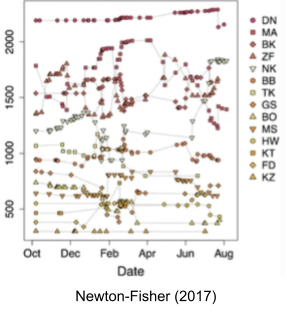
The Elo rating system, used in chess, is an efficient method to estimate rank. Just as chess harnesses observable outcomes (game results) to estimate a hidden variable (player ability), researchers use Elo to estimate latent status from observable pant-hoots:
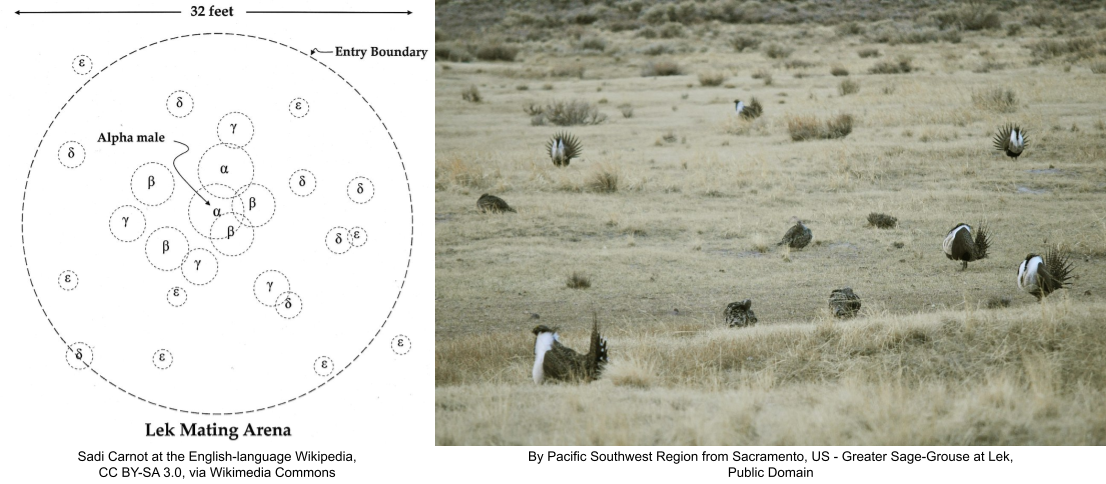
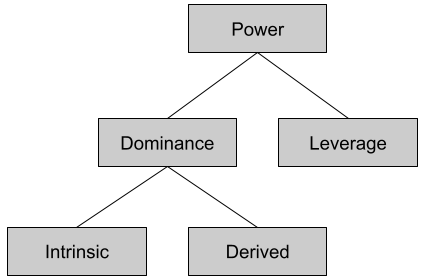
Intrinsic dominance is underwritten with physical strength, or resource holding potential (RHP). A dramatic illustration of this is lekking behavior, with males gathering in one area and physically competing for prime real estate (near the center). These examples of contest competition amongst male can be deadly, especially among species with sexual selected weapons like antlers on red stags.
Here we illustrate a lek amongst sage-grouse. Females enter the lek and preferentially, although not exclusively, mate with high status males. High status males thus enjoy reproductive benefits, and the species exhibits strong reproductive skew. It is sometimes difficult to verify paternity via behavioral measures alone, but new genetic approaches confirm the hypothesis that dominance bestows fitness benefits (Di Fiore 2003).
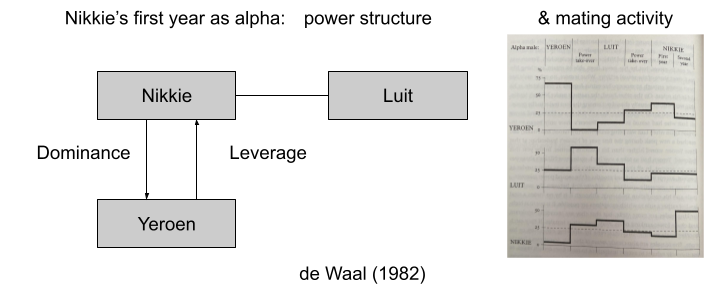
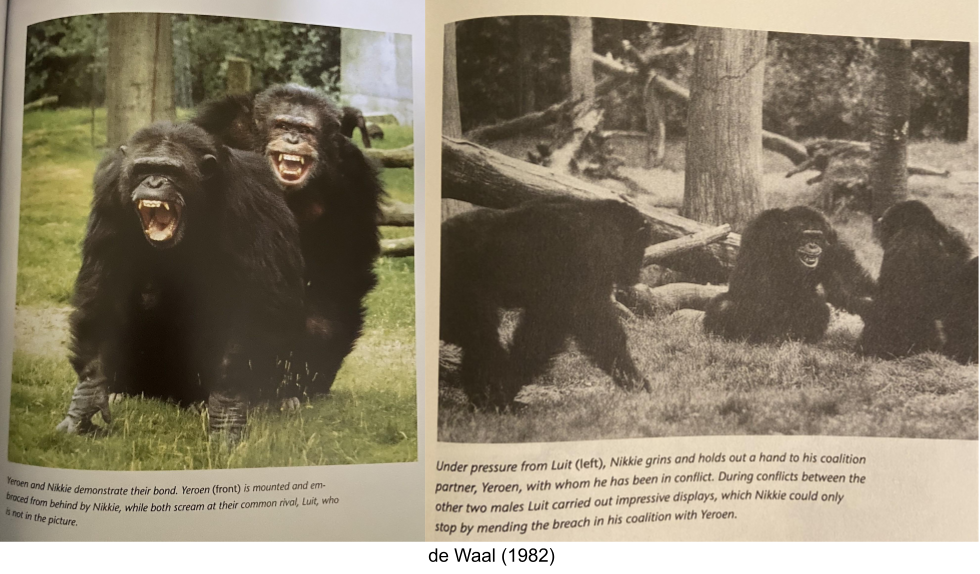
In many species, physical formidability is the primary determinant of dominance. But other species feature political microcoalitions, where multiple subordinates forge alliances to challenge the status of a dominant. For example, de Waal (1982) describes this in a triangular relationship amongst chimpanzee males. After the alpha Yeroen is displaced by a strong Luit, he forms a coalition with the young Nikkie, who together displaced a physically stronger Luit. While his intrinsic dominance was lower, Nikkie’s derived dominance (Hand 1986) propelled him into an alpha position.
Dominance vs Leverage
Yet, there is more to power than dominance. You can see this in the relationship between Nikkie, Yeroen and Luit. Despite being beta, Yeroen engaged in more mating activity than Yeroen. Alphas normally interfere in subordinate mating, but Nikkie did not. Why?
While Nikkie possessed dominance, his position was dependent on Yeroen. Yeroen had leverage over Nikkie, at least until Nikkie’s power was consolidated during his second year.
We can define leverage as dependence-based power, with a unique resource exchanged for a common resource. This phenomenon is largely independent of dominance rank:
Estrus vs Food Tolerance. During estrus, female primates experience advantageous changes in their relationships without changing rank, because their eggs represent an inalienable commodity. Male food tolerance transiently increases – sexual associations could end if males refused to share food (Van Noordwijk and van Schaik 2009).
Foraging Skill vs Grooming. Stammbach (1988) reported an experiment in which a single subordinate male long-tailed macaque was trained to use a relatively complex procedure to obtain food. Once he had completed the task, other animals had access to food. As a result, the trained animal began to receive significantly more grooming. The trained animal received significantly more grooming than before the training, which suggests that he had leverage independent of his dominance rank.
Infant Access vs Grooming. Monkeys, particularly females, find young infants extremely attractive, and frequently approach and try to interact with the newborn infant. Some mothers will grant access to their newborns in exchange for such access (Silk, 2002).
The taxonomy of Smith et al (2002) delineates these different facets of power (a.k.a., status). This aligns with certain sociological theories of power in humans (Emerson 1962), as argued in Chapais (1991).
Primate status is promoted by competence. Dominance requires not just physical formidability, but skill in coalition formation, tactical deception, and combat tactics. Similarly, leverage isn’t restricted to resource ownership – foraging skill can be another route to power.
Dominance Produces Leverage
But dominance and leverage are not independent. Dominance is itself a unique resource, which can in turn produce leverage.
Alphas often engage in bridging alliances, where a dominant backs a subordinate to increase his derived dominance rank. More generally, Seyfarth (1977) proposed the grooming for support model, with three subcomponents.
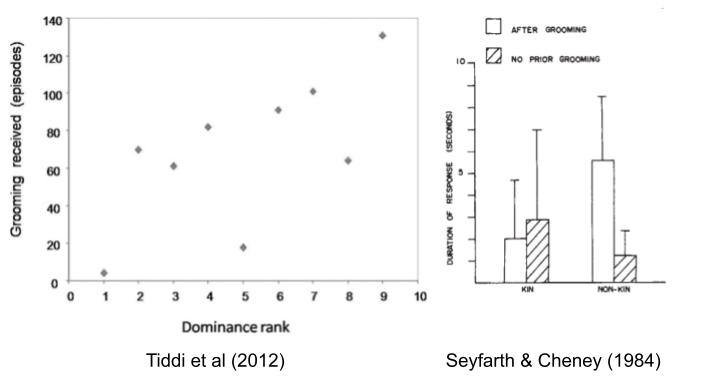
Status Attraction: grooming directed up the dominance hierarchy. Supportive results in Tiddi et al (2012), Schino (2001). But in other species, grooming can be directed downwards (Parr et al 1997, Saunder 1988), or in no specific direction (Silk et al 1999).
Grooming Reciprocity: dominants were more likely to support subordinates. Supportive results in Seyfarth & Cheney (1984), Hemelrijk (2004)
Affiliative Competition: subordinates compete for grooming access to dominant. Supportive results in Schino (2007).
Dominants have leverage! Here they exchange a unique resource (coalitional support) for common resources (grooming).
The status attraction phenomenon shows that subordination is more than unalloyed fear and avoidance. Primate dominance thus exhibits a kind of proto-prestige (admiration for the powerful), which is quite elaborate in Homo Sapiens.
Other resources besides dominant-provided political support can generate leverage. Grooming for food tolerance exchanges are documented in Henzi et al (2003). Subordinate support for sexual tolerance exchanges are documented in Duffy et al (2007). Besides these dyadic exchanges, alpha chimpanzees also produce public goods. They engage in dispute resolution (a proto-judiciary!), impartially prying apart disputants to keep the peace, and underdog advocacy to protect the weak. These public goods may also provide leverage.
Until next time.
References
Chapais (1991). Primates and the origins of aggression, power, and politics among humans.
Chapais (2015). Competence and the evolutionary origins of status and power in humans
Di Fiore (2003). Molecular genetic approaches to the study of primate behavior, social organization, and reproduction
Duffy et al (2007). Male chimpanzees exchange political support for mating opportunities
Emerson (1962). Power-Dependence Relations
Hand (1986). Resolution of social conflicts: dominance, egalitarianism, spheres of dominance, and game theory.
Henrich & Gil-White (2000). The evolution of prestige: freely conferred deference as a mechanism for enhancing the benefits of cultural transmission
Henzi et al (2003). Effect of resource competition on the long-term allocation of grooming by female baboons: evaluating Seyfarth’s model
Hemelrijk (2004) Support for being groomed in long-tailed macaques
Lewis (2002). Beyond dominance: the importance of leverage
Newton-Fisher (2017). Modeling Social Dominance: Elo-Ratings, Prior History, and the Intensity of Aggression
Parr et al (1997). Grooming down the hierarchy: allogrooming in captive brown capuchin monkeys
Saunder (1988). Ecological, social, and evolutionary aspects of baboon (Papio cynocephalus) grooming behavior
Schino (2001). Grooming, competition and social rank among female primates: a meta-analysis
Schino (2007). Grooming and agonistic support: a meta-analysis of primate reciprocal altruism.
Seyfarth (1977). A model of social grooming among adult female monkeys
Seyfarth & Cheney (1984). Grooming, alliances, and reciprocal altruism in vervet monkeys
Silk et al (1999). The structure of social relationships among female savannah baboons in Moremi Reserve, Botswana.
Silk (2002). Using the ‘f’-word in primatology.
Stammbach (1988). Group responses to specially skilled individuals in a Macaca fascicularis group
Tiddi et al (2012). Grooming up the hierarchy: the exchange of grooming and rank-related benefits in a New World primate.
Von Noordwijk & van Schaik (2009). Intersexual food transfer among orangutans: do females test males for coercive tendency? Maria A. van Noordwijk & Carel P. van Schaik
Russian strategy as raiding. “A raid is an operation to destroy the target’s economy & military, culminating in a planned withdrawal. It is precisely because of US investments in the nuclear and conventional military realms that we have made raiding lucrative.”
A timeline on nuclear close calls. Most estimates of accidental nuclear war, using this data, peg the risk at 0.4 +/- 0.3% per year. That translates to a 25% lifetime risk.
A superforecaster estimates the risk of nuclear war during the Ukraine crisis. Related: a checklist someone made for “when to leave London”.
Tetlock famously claimed that superforecasters can outperform CIA analysts with privileged information. Is it true? A review of the evidence.
Overnight drift: almost all the gains of the stock market are due to overnight returns.
AI
DeepMind AlphaCode in competitive programming contests. Some perspective, “54th percentile, while insane, only corresponds to only about 1 or 2 problems per contest (in div 2). The final rating they achieved (~1200), corresponds to solving ~20% of Codeforce’s problems. On APPS, they still only get to 8%.”
DeepMind is now using deep reinforcement learning to control tokamak plasmas (nuclear fusion).
Escher sentences are sentences which initially seem acceptable but upon further reflection have no well-formed meaning. Ex: “More people have been to Berlin than I have”.
Nearly all mammals inhabit dominance hierarchies. But the elaboration of dominance behaviors varies widely across species. In egalitarian species, competition for food and mates is muted; displays of dominance or submissive signaling are rare; and status rivalry contests are absent. In despotic species, dominance behavior is very elaborated: with coalitionary behavior, easily discernible status cues, and robust resource competition. Boehm (1999) describes dominance drive in chimpanzee males as follows:.
Every young male, as he approaches or reaches adolescence, becomes driven by political aspirations. First, he displays at low-ranking adult females until they begin to pant-brunt submissively when they greet him. Then he moves on to the more formidable females. Sometimes he suffers reverses along the way, particularly if the females have allies to help them, Eventually he will dominate all the females and begin to direct his displays at lower-ranking adult males. (Goodall 1986). If he is successful in that pursuit, he keeps working his way up the male hierarchy until he can go no further.
This continuum of dominance steepness can be quantified. Several powerful metrics (Vehrencamp 1983, De Vries 2006) can measure the political nature of a given species: is it more despotic or egalitarian?
What is the political nature of Homo Sapiens? While philosophical arguments can clarify disagreements, only behavioral dataare diagnostic. What happens when we apply behavioral measurements, these highly reliable instruments for understanding non-human animal sociality, and turn them on ourselves?
It depends on which human communities you examine. If you limit your search to modern states, the data are clear: human beings are despotic – their dominance relations are steep. Yet foragers do not feature resource competition, nor status displays.
What’s going on?
The Egalitarian Ethos
An ethos is a set of values that guide behavior. The egalitarian ethos is a value system shared across nearly all forager bands surveyed. A desirable leader is likely to be of high social standing, generous, wise, experienced, successful in what he does, and self-assertive in general. It also helps if he is fair-minded, tactful, reliable, morally upright, apt at resolving disputes, and a competent speaker (Boehm 1993). Here is a brief example of egalitarian consensus-seeking:
All the adults are free to participate, and in a protracted discussion various opinions are weighed by the group. Silberbauer (1982) provides an astute assessment of Kalahari G/wi hunters and their decision process. Unlike tribes, whose members all tend to assemble for a decision meeting, the G/wi discuss their alternatives in small subgroups, sometimes privately and sometimes publicly, looking to arrive at a consensus. This type of political process seems to be widespread (Knauft 1991, Boehm 1996). As group opinion begins to emerge, strong social pressure can be exerted on those holding a minority opinion to agree to the majority strategy. The reason for such pressure is obvious to foragers and anthropologists alike. A divided band will fission.
With the domestication of plants and animals, Neolithic societies began transitioning from bands (foraging economy) to tribes (food production economies). Tribes were much larger (from a few hundred members to many thousands) and seem to have invented intensive warfare. Yet such warrior societies managed to remain egalitarian, with military decisions made via group consensus. Boehm (1993) again surveys the ethnographic literature, and confirms that the egalitarian ethos apply equally well in band societies. Only with the advent of chiefdoms did our politics resume their hierarchical character.
This U-shaped curve of human political history demands an explanation (Knauft 1991). Why did our species abandon its despotic roots for millennia, only to rediscover coercion later in the Neolithic?
What leveling mechanisms promote human egalitarianism? There are several hypotheses:
Relational mobility: unstable long-term group membership
Economic redundancy: non-specialized production
Redistribution of big game
Nomadic lifestyle constrains accumulation of material.
These ecological hypotheses do possess explanatory power. Surplus and heritable property in particular does seem to promote our despotic potential. But two other considerations should give us pause.
First, human egalitarianism remains viable across radically different ecological circumstances. Tribesmen were able to stay egalitarian even as their communities developed surplus, became increasingly warlike, and grew in size (from a few hundred to many thousands). The stability of egalitarian instinct speaks to the viability of biological hypotheses, to complement the above ecological hypotheses.
Second, even in the most egalitarian bands on record, hunter-gatherer behavior diverges strongly from other egalitarian species, such as squirrel monkeys. Squirrel monkeys don’t form political coalitions. Humans do. Squirrel monkeys don’t signal dominance and submission. Humans do, via the emotions of hubristic pride & shame, respectively.
How does a primate with an elaborate dominance psychology still manage to form egalitarian groups?
Sanctions as Leveling Mechanisms
Egalitarian societies forbid any behaviors that threaten the autonomy of the group. Within most forager households, the male is free to dominate his wife and children; however, imposing his will on other men is proscribed. Those upstarts who violate the ethos are subject to sanctions designed to lower the status of the recipient. These leveling mechanisms are often employed pre-emptively:
Even after his show of modesty, other band members preemptively take pains to put down the successful hunter. When they go to carry in the kill they express their “disappointment” boisterously. “You mean to say you have dragged us all the way out here to make us cart home your pile of bones? Oh, if I had known it was this thing I wouldn’t have come. To think I gave up a nice day in the shade for this. At home we may be hungry but at least we have nice cool water to drink.”
The actual feelings of the critics, who simultaneously are joking and deadly serious, is revealed in the words of a culture member: “When a young man kills much meat, he comes to think of himself as a chief or a big man, and he thinks of the rest of us as his servants or inferiors. We can’t accept this. We refuse one who boasts, for someday his pride will make him kill somebody. So we always speak of his meat as worthless. In this way we cool his heart and make him gentle.”
In fact, leveling mechanisms can be expressed in a wide range of behaviors. A group will climb the sanctions ladder: begin with mild interventions, and escalate if deemed necessary. This apex of sanctioning behaviors is, of course, capital punishment. An example from Lee (1979):
A man named /Twi had killed three other people, when the community, in a rare move of unanimity, ambushed and fatally wounded him in full daylight. As he lay dying, all the men fired at him with poisoned arrows until, in the words of one informant, “he looked like a porcupine.” Then, after he was dead, all the women as well as the men approached his body and stabbed him with spears, symbolically sharing the responsibility for his death.
Boehm (1993) goes on to survey other types of sanctions (including disobedience, ostracism, and exile) and how these behaviors are ubiquitous in the ethnographic literature.
Humans punish their alphas as a unified moral community. We do not see this behavior in chimpanzees. Sanctions are a human universal, yet also unique to our species. They forestall coercive dominance.
Simple egalitarian species like squirrel monkeys do not wish to rule, because for them coercive dominance does not beget reproductive success. Not so for humans. Human egalitarianism is ambivalent. As Schneider said, “All men seek to rule, but if they cannot rule they prefer to be equal.” Perhaps sanctions explains why our species is so apt towards political confabulation. As de Waal (1982) writes:
Politicians, for example, are vociferous about their ideals and promises but are careful not to disclose personal aspirations for power. This is not meant to be a reproach, because after all everyone plays the same game. I would go further and say that we are largely unaware that we are playing a game and hide our motives not only from others but also ourselves. Chimpanzees, on the other hand, are quite blatant about their “baser” motives. Their interest in power is not greater than that of humanity; it is just more obvious.
The hominin lineage diverged from Pan 6mya. How did sanction psychology evolve?
The Logic of Reverse Dominance
To come to grips with human-specific political adaptations, we must first understand chimpanzee politics. Beyond basic dominance perception and pursuit, chimpanzees males form micro-coalitions to help them gain status. For example, dethroned alphas often support other males in their bid for alpha status (like the aging Yeroen in de Waal 1982). These ex-leaders often support weak candidates, whose very dependence leads to the ex-leaders garnering significant political & sexual privileges.
Chimpanzee male sociality is not purely competitive. There are certain scenarios when the entire troop unite in macro-coalitions to solve collective action problems (CAPs) such as predator defense, territory defense, and warlike raids. Chimp macro-coalitions typically address challenges outside, not inside, the group.
Perhaps because chimpanzees must strike a balance between cooperation and competition, after rivalry fights, chimpanzees do engage in reconciliation behaviors. Sometimes females encourage these behaviors, which suggests it is in their interest that peace should be restored (de Waal 1982)
When both parties were reluctant, reconciliation was always facilitated by (non-estrous) adult female. After the conflict between the two rivals had died down, the female mediator would walk up to one of them and kiss him or groom him for a short time. After she had presented herself to him and he had inspected her genitals, she would walk slowly over to his opponent. The first male would follow her, sniffing at her vulva every now and again and without looking at his opponent. The male’s decided interest in the mediating female’s behind was unusual. In other situations an adult male would not follow a female who had just presented herself to him, especially if she did not have a sexual swelling. (In fact females with a sexual swelling have never been seen to act as mediators. This is understandable, because they would only be a source of further disagreement.) The male probably followed the female mediator as a kind of excuse to approach his opponent. When she and the male reached his opponent, the female would sit down and both males would proceed to groom her, one on each side. When the female discreetly withdrew a few minutes later the two males would continue grooming as if nothing had happened, but now, of course, they would be grooming each other.
Chimpanzees do find submission subversive (who wouldn’t), but also express a form of moral indignation at especially coercive alpha behaviors. These are manifest in the waa bark. An example from de Waal (1996):
Jimoh once detected a secret mating between Socko, an adolescent male, and one of Jimoh’s favorite females. Socko and the female had wisely disappeared from view, but Jimoh had gone looking for them. Normally, the old male would merely chase off the culprit, but for some reason perhaps because the female had repeatedly refused to mate with Jimoh himself that day–he this time went full speed after Socko and did not give up. He chased him all around the enclosure- Socko screaming and defecating in fear, Jimoh intent on catching him. Before he could accomplish his aim, several females close to the scene began to waa bark. This indignant sound is used in protest against aggressors and intruders. At first the callers looked around to see how the rest of the group was reacting; but when others joined in, particularly the top-ranking female, the intensity of their calls quickly increased until literally everyone’s voice was part of a deafening chorus. The scattered beginning almost gave the impression that the group was taking a vote. Once the protest had swelled to a chorus, Jimoh broke off his attack with a nervous grin on his face; he got the message. Had he failed to respond, there would no doubt have been concerted female action to end the disturbance.
The evolution of egalitarian sanctions is now easier to comprehend. Sanctions evolved as human macro-coalitions began to reliably punish despotic behavior.
The Evolution of Morality
What changed? Boehm (1999) argues that weapons were the precipitating cause. Attempting to kill a truly intimidating alpha is extremely risky for a forager to do with their bare hands – but weapons dramatically reduce the risk.
We have already seen that humans were under strong selection against reactive aggression, and that our skeletons begin to exhibit domestication syndrome in the Pleistocene (100-400 kya). Sanctioning behaviors likely evolved then. But weapons long predate the Pleistocene. Wrangham (2021) argues that improvements to the expressive potential in our language made possible targeted conspiratorial killing (TCK).
Once the coordinative machinery of sanctions was in place, the scope of proscribed behaviors could expand. Morality may have started as a single norm against bullying, but it gradually expanded to other social ills. The resultant norm psychology, stabilized through cultural transmission, provided a template of desirable and undesirable behaviors. The sanctioning ladder thus became weaponized against reactive aggression (incl. murder), rape, and free-riding among others.
Both Boehm (1999) and Wrangham (2019) use proscriptions on free-riding to explain the altruism and food sharing manifest in foraging societies. But I suspect human altruism predates morality. Rather its roots may reside in cooperative breeding.
Until next time.
References
Boehm (1993). Egalitarian behavior and reverse dominance hierarchy
Boehm (1996). Emergency decisions, cultural-selection mechanics, and group selection
Boehm (1999). Hierarchy in the Forest
De Waal (1982). Chimpanzee Politics
Goodall (1986). The Chimpanzees of Gombe: Patterns of Behavior
Hobson et al (2015). The socioecology of monk parakeets: insights into parrot social complexity
Knauft (1991). Violence and Sociality in Human Evolution.
Lee (1979). The !Kung San: Men, Women, and Work in a Foraging Society.
Silberbauer (1982). Political process in G/wi bands
Vehrencamp (1983). A model for the evolution of despotic versus egalitarian societies
Wrangham (2019). The Goodness Paradox
Wrangham (2021). Targeted conspiratorial killing, human self-domestication and the evolution of groupishness
Excerpt From: William James (1887) What is an Instinct? Content Summary: 240 words, 1 min read
Richard Dawkins writes:
There is an anesthetic of familiarity, a sedative of ordinariness which dulls the senses and hides the wonder of existence. For those of us not gifted in poetry, it is at least worth while from time to time making an effort to shake off the anesthetic. What is the best way of countering the sluggish habituation brought about by our gradual crawl from babyhood? We can’t actually fly to another planet. But we can recapture that sense of having just tumbled out to life on a new world by looking at our own world in unfamiliar ways.
To illustrate, the excerpt from William James:
It takes a mind debauched by learning to carry the process of making the natural seem strange, so far as to ask for the why of any instinctive human act.
To the learned man alone can such questions occur as: Why do we smile, when pleased, and not scowl? Why are we unable to talk to a crowd as we talk to a single friend? Why does a particular maiden turn our wits so upside-down?
The common man can only say, of course we smile, of course our heart palpitates at the sight of the crowd, of course we love the maiden, that beautiful soul clad in that perfect form, so palpably and flagrantly made for all eternity to be loved!
And so, probably, does each animal feel about the particular things it tends to do in the presence of particular objects. … To the lion it is the lioness which is made to be loved; to the bear, the she-bear. To the broody hen the notion would probably seem monstrous that there should be a creature in the world to whom a nestful of eggs was not the utterly fascinating and precious and never-to-be-too-much-sat-upon object which it is to her.
Thus we may be sure that, however mysterious some animals’ instincts may appear to us, our instincts will appear no less mysterious to them.
Part Of: Politics sequence Excerpt From: de Waal (1982). Chimpanzee Politics Content Summary: 1400 words, 7 min read
Example 1
On a hot day two mothers, Jimmie and Tepel, are sitting in the shadow of an oak tree while their two children play in the sand at their feet (playfaces, wrestling, throwing sand). Between the two mothers the oldest female, Mama, lies asleep. Suddenly the children start screaming, hitting, and pulling each other’s hair. Jimmie admonishes them with a soft, threatening grunt, and Tepel anxiously shifts her position. The children go on quarreling, and eventually Tepel wakes Mama by poking her in the ribs several times. As Mama gets up Tepel points to the two quarreling children. As soon as Mama takes one threatening step forward, waves her arm in the air, and barks loudly the children stop quarreling. Mama then lies down again and continues her siesta.
INTERPRETATION. In order to understand this interpretation fully, it is important to know two things: first, that Mama is the highest-ranking female and is greatly respected; and second, that conflicts between children regularly engender such tension between their mothers that they too come to blows. This tension is probably caused by the fact that each mother wishes to help her own child and to prevent the other from interfering in the quarrel. In the case of the example above, when the children’s game turned to fighting, both mothers found themselves in a painful situation. Tepel solved the problem by activating a dominant third party, Mama, and pointing out the problem. Mama obviously realized at a glance that she was expected to act as arbitrator.
Example 2
Yeroen hurts his hand during a fight with Nikkie. Although it is not a deep wound, we originally think that it is troubling him quite a bit, because he is limping. The next day a student, Dirk Fokkema, reports that in his opinion Yeroen limps only when Nikkie is in the vicinity. I know Dirk as a keen observer, but this time I find it hard to believe him. We go to watch, and it turns out that he is indeed right: Yeroen walks past the sitting Nikkie from a point in front of him to a point behind him and the whole time Yeroen is in Nikkie’s field of vision he hobbles pitifully, but once he has passed Nikkie his behavior changes and he walks normally again. For nearly a week Yeroen’s movement is affected in this way whenever he knows Nikkie can see him.
INTERPRETATION. Yeroen was playacting. He wanted to make Nikkie believe that he had been badly hurt in their fight. The fact that Yeroen acted in an exaggeratedly pitiful way only when he was in Nikkie’s field of vision suggests that he knew that his signals would only have an effect if they were seen; Yeroen kept an eye on Nikkie to see whether he was being watched. He may have learned from incidents in the past in which he had been seriously wounded that his rival was less hard on him during periods when he was (of necessity) limping.
Example 3
Wouter, a young male chimpanzee of almost three, gets into a quarrel with Amber and screams at the top of his voice. At the same time he advances aggressively towards Amber. His mother, Tepel, goes over to him and quickly places her hand over her son’s mouth, smothering his screams. Wouter calms down and the quarrel is over.
INTERPRETATION. Noisy conflicts attract attention. If they last too long, one of the adult males will come over and put an end to them. When a bluffing male approaches, Wouter will automatically seek refuge near his mother. This means that she runs the risk of receiving the punishment meant for her son. Tepel wanted to avoid this risk by shutting up Wouter before things went too far.
This is not the only known instance of enforced silence. I have also seen a mother place a finger over the small mouth of her baby when the latter started barking aggressively at a dominant group member from the safety of her lap. Once again this was probably due to the mother’s reluctance to get drawn into difficulties because of a social faux pas committed by her child.
Example 4
Dandy is the youngest and lowest ranking of the four grown males. The other three, and in particular the alpha male, do not tolerate any sexual intercourse between Dandy and the adult females. Nevertheless every now and again he does succeed in mating with them, after having made a “date.” When this happens the female and Dandy pretend to be walking in the same direction by chance, and if all goes well they meet behind a few tree trunks. These “dates” take place after the exchange of a few glances and in some cases a brief nudge.
This kind of furtive mating is frequently associated with signal suppression and concealment… On one occasion Luit was making advances to a female while Nikkie, the alpha male, was lying in the grass about 50 meters away. When Nikkie looked up and got to his feet, Luit slowly shifted a few paces away from the female and sat down, once again with his back to Nikkie. Nikkie slowly moved towards Luit, picking up a heavy stone on his way. His hair was standing slightly on end. Now and then Luit looked round to watch Nikkie’s progress and then he looked back at his own penis, which was gradually losing its erection. Only when his penis was no longer visible did Luit turn around and walk towards Nikkie. He briefly sniffed at the stone Nikkie was holding, then he wandered off leaving Nikkie with the female…
INTERPRETATION. In all these examples sexual signals are either concealed or suppressed… The males are faced with the problem that the evidence of their sexual arousal cannot disappear on command, but they too have their solutions. The audacity of Luit actually sniffing at the weapon Nikkie held in his hand only goes to show how sure he was that the alpha male would find no cause to proceed against him.
This behavior is in marked contrast to an incident I once witnessed between two male macaques. The alpha male met another male several minutes after the latter had secretly mated, Alpha could not possibly have known anything about this, but the other male acted unnecessarily timidly and submissively. His behavior was so exaggerated that, If the alpha male had had a chimpanzee’s social awareness, he would certainly have realized what the matter was. Luit’s behavior after his abortive adventure was very different. There was no trace of a “guilty conscience.” Chimpanzees are masters of pretense and will seldom put an idea into the head of the unsuspecting.
Social Intelligence Hypothesis
Once we have witnessed a number of striking instances of social manipulation and recognized that chimpanzees are more than highly Intelligent, we are forced to consider the nature of the extra faculty they have which most other species appear to lack: the ability to think purposefully. Some goal-directed behavior occurs among chimpanzees, however, without there being any past proof of the effectiveness of the result. They seem to be able to devise effective, on-the-spot solutions, such as in example 1, when Tepel woke Mama and pointed to the two quarreling children, or in example 3, where she effectively silenced her son.
The ability to combine past experiences in order to achieve a goal is best described as reasoning and thought; no better words exist. Instead of testing a particular course of action through actual trial and error, chimpanzees are able to weigh the consequences of a choice in their heads. The result is rational behavior. Primates take such a mass of social information into account, and are so finely attuned to the moods and intentions of others, that it has been speculated that their high intelligence evolved in order to deal with an increasingly complex group life. This idea, known as the social intelligence hypothesis, may also apply to the enormous brain expansion in our own lineage.
Addendum
These examples, and dozens of others from other primate species, were collated in Whiten & Bryne (1988). They distinguish between forms of deception, including concealment, distraction, image projection etc.
Whiten & Byrne (1988). Tactical deception in primates
Ukraine government suffers from cyberattack, US alleges Russia planning a false flag operation. Metaculus estimate for invasion climbs from 25% to 50% in less than a week. Most useful analyses I’ve seen: historical context, tactical overview.
Analysis on how Russia perceives the CIA (or NED) as actively causing the unrest in Kazakhstan, increasing willingness to act in Ukraine.
CPI inflation in US reaches 7%. Consensus amongst top economists: this is not about greed, and cannot be solved with antitrust.
A deep dive into China’s slow moving real estate crisis.
NYT Story: US bombed a Syrian dam and could have have killed tens of thousands. To prevent that from happening, the Syrian government, ISIS and the US stopped fighting to allow repairs.
When plasma collected from mice that run a lot is transfused into sedentary rodents, the recipients show enhanced learning & memory, and dampened inflammation in the brain. This appears to be mediated by clusterin, a protein boosted by physical activity.
“Long Mono” found to cause most if not all cases of multiple sclerosis. “When the original studies were done with cigarette smoking and lung cancer, they found a 25-fold risk factor for people who smoked more than 25 cigarettes a day. This is even higher.”Here’s hoping an EBV/MS vaccine will arrive soon.
EBV doesn’t only cause multiple sclerosis. It also causes rheumatoid arthritis, and an astonishing 1.5% of all cancer deaths. Germ Theory 2.0 advocates claim that most so-called chronic diseases (incl cancer and heart disease) are not “environment-gene interactions” nor “evolutionary mismatch” but are in fact long-term repercussions from viral infection.
Germ Theory 2.0 attributes most cancer ailments to sexually transmitted pathogens. Consider a virus under strong selective pressure to persist in the body. The immune system operates outside the cell. If a virus can figure out how to spread under the cloak of the cell wall, it can persist. Imagine a virus hacking the cell a) to make more infected cells, b) to prevent cellular suicide, c) to move to other parts of the body… sounds a lot like cancer, right?
Germ Theory 2.0 approach of cardiovascular disease (CVD): Chlamydia pneumonia (Cpn) kills 600,000 Americans every year via CVD. The deadliest germ known to the human race. Most people catch it in grade school, and their immune systems never get rid of it. People with CVD are much more likely to have Cpn than controls, Cpn pathogens are preferentially located in atherosclerotic plaques, Cpn explains why traditional risk factors matter, and infecting animals with Cpn has been shown to accelerate the development of CVD.
When humans were hunting whales, the whales were sharing tips about avoiding hunters. “Our analysis provides substantial support for rapid (less than 20% generation time, so much too fast for genetic evolution) social learning over large spatial scales.”
Synchronization of 32 metronomes. If you put dozens of out-of-phase metronomes on a movable surface, they will synchronize themselves according to what is called a Kuramoto model of synchronization. Relevant to how the brain entrains its resident oscillators.