Part Of: Demystifying Language sequence
Content Summary: 1200 words, 12 min read.
The Structure of Reason
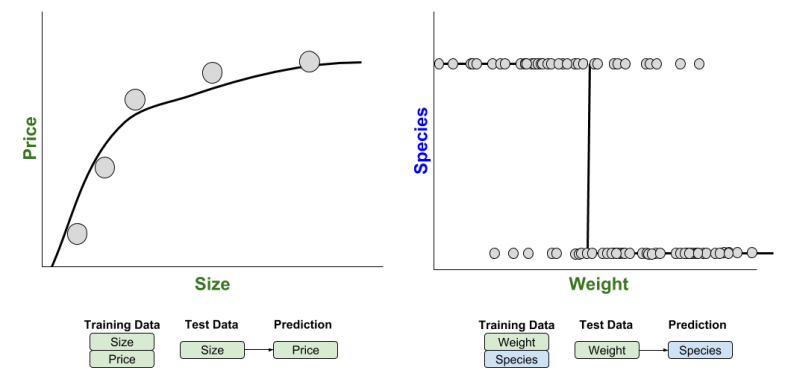
Learning is the construction of beliefs from experience. Conversely, inference predicts experience given those beliefs.
Reasoning refers to the linguistic production and evaluation of an argument. Learning and inference are ubiquitous across all animal species. But only one species are capable of reasoning: human beings.
Argument can be understood by the lens of deductive logic. Logical syllogisms are a calculus that maps premises to conclusions. An argument is valid if the conclusions follow from the premises. An argument is sound if it is valid, and its premises are true.
Premises can be evaluated directly via intuition. The relationship between argument structure and intuition parallels decision trees versus evaluative functions.
Two Theories of Reason
Why did reasoning evolve? What is its biological purpose? Consider the following theories:
- Epistemic theory: reasoning is an extension of our individual cognitive powers.
- Argumentative theory: reasoning is a device for social communication.
One way to adjudicate these rival theories is to examine domain gradients. Roughly, a biological mechanism performs optimally when situated in contexts for which they were originally designed. Our cravings for sugars and fats mislead us today, but encourage optimal foraging in the Pleistocene epoch.
Reasoning is used in both individual and social contexts. But our theories disagree on which is the original domain. Thus, they generate opponent predictions as to which context will elicit the most robust performance.

Here we see our first direct confirmation of the argumentative theory: in practice, people are terrible at reasoning in individual contexts. Their reasoning skills become vibrant only when placed in social contexts. It’s a bit like Kevin Malone doing mental math. 🙂
Structure of Argumentative Reason
All languages ever discovered contain both nouns and verbs. This universal distinction reflects the brain’s perception-action dichotomy. Nouns express perceptual concepts, and verbs express action concepts.
Recall that natural language has two processes: speech production & speech comprehension. These functions both accept nouns and verbs as arguments. Thus, we can express the cybernetics of language as follows:

Argumentative reasoning is a social extension of the faculty of language. It consists of two processes:
- Persuasion deals with arguments to support beliefs.
- Justification deals with reasons to justify our actions.
Persuasion and justification draw on perceptual and action concepts, respectively. Thus, the persuasion-justification distinction mirrors the noun-verb distinction, but at a higher level of abstraction. Here is our cybernetics of reasoning diagram.

We return to phylogeny. Why did reasoning-as-argumentation evolve?
For communication to persist, it must benefit both senders and receivers. But stability is often threatened by senders who seek to manipulate receivers. We know that humans are gullible by default. Nevertheless, our species does possess lie detection devices.
The evolution of argumentative reason was shaped by a similar set of ecological pressures as that of language. Let me cover these hypotheses in another post.
For now, it helps to think of belief as clothes, serving both pragmatic and social functions. A wide swathe of biases stems from persuasive arguments performing social rather than epistemic ends. This is not to say that truth is irrelevant to reasoning. It is simply not always the dominant factor.
On Persuasion
Persuasion processes involve arguments about beliefs. It has two subprocesses: argument production (listener persuasion) and argument evaluation (argument quality inspection). These two processes are locked in an evolutionary arms race, developing ever more sophisticated mechanisms to defeat the other.
Argument production is responsible for the two most damning biases in the human repertoire. There is extensive evidence that we are subject to confirmation bias: the attentional habit to preferentially examine evidence that helps our case. We are also victim to motivated reasoning, which biases our judgments towards our self-interest. We often describe instances of motivated reasoning as hypocrisy.
Consider the following example:
There are two tasks one short & pleasant, the other long & unpleasant. Selectors are asked to select their task, knowing that the other task is giving to another participant (the Receiver). Once they are done with the task, each participant states how fair the Selector has been. It is then possible to compare the fairness ratings of Selectors versus those of the Receivers.
Selectors rate their decisions as more fair than the Receivers, on the average. However, if participants are distracted when they asked their fairness judgments, the ratings were identical and showed no hint of hypocrisy. If reasoning were not the cause of motivated reasoning but the cure for it, the opposite would be expected.
In contrast to production, argument evaluation involves two subprocesses: trust calibration and coherence checking. The ability to distrust malevolent informants has been shown to develop in stages between the ages of 3 and 6.
Coherence checking is less self-serving than production mechanism. In fact, it is responsible for the phenomenon of truth wins. For example, in group puzzles the person whoever stumbles on the solution will successfully persuade her peers, regardless of her social standing. In practice, good arguments tend to be more persuasive than bad arguments.
On Justification
Justification processes involve reasons about behavior. This is not to be confused with motivations for behavior, which happen at the subconscious level. In fact, there is evidence to suggest that the reasons we acquire by introspection are not true. It has been consistently observed that attitudes based on reasons are much less predictive of future behaviors (and often not predictive at all) than were attitudes stated without recourse to reasons.
The justification module produces reason-based choice; that is, we tend to choose behaviors that are easy to justify to our peers. Reason-based choice explains an impressive number of documented human biases. For example,
The sunk cost fallacy is the tendency to continue an endeavor once an investment has been made. It doesn’t occur in children or non-human animals. If reasoning were not the cause of this phenomenon but the cure for it, the opposite would be expected.
The disjunction effect, endowment effect, and decoy effect can similarly be explained in terms of reason-based choice.
This is not to say that justification is insensitive to the truth. Better decisions are usually easier to justify. But when a more easily justifiable decision is not a good one, reasoning still drives us towards ease of justification.
Theory Evaluation
I was initially skeptical of the argumentative theory because it felt “fashionable” in precisely the wrong sense, underwritten by postmodern connotations of narrative-is-everything and epistemic nihilism. Another warning flag is that the theory draws from the field of social psychology, which has been quite vulnerable to the replication crisis.
However, the evidential weight in favor of the argumentative theory has recently persuaded me. For a comphrehensive view of that evidence, see [MS11]. I no longer believe argumentative reason entails epistemic nihilism, and I predict its evidential basis will not erode substantially in coming decades.
I am also attracted to the theory because it helps tie together several other theories into a comprehensive meta-theory: The Tripartite Mind. Let me sketch just one of example of this appeal.
The heuristics and biases literature has uncovered a bewildering variety of errors, shortcuts, and idiosyncrasies in human cognition. Responses to this literature vary widely. But too many voices take such biases as “conceptual atoms”, or fundamental facts of the human brain. Neuroscience can and must identify the mechanisms underlying these phenomena.
The argumentative theory is attractive in that it explains a wide swathe of the zoo.

Takeaway
Reason is not a profoundly flawed general mechanism. Instead, it is an efficient linguistic device adapted to a certain type of social interaction.
References
[MS11]. Mercer & Sperber (2011). Why do humans reason? Arguments for an argumentative theory.